

 Trump’s China Visit Signals New Phase in US-China Relations


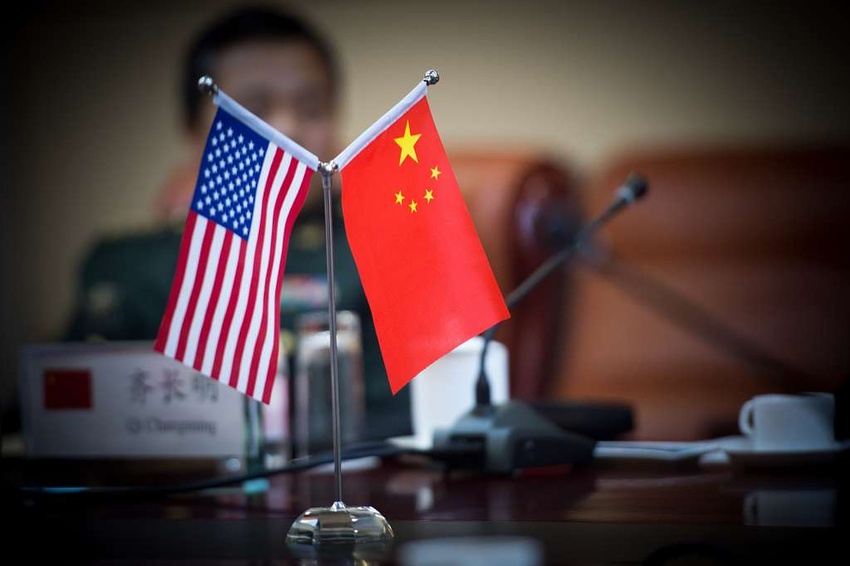
Almost a decade has passed since a sitting U.S. president made an official state visit to China. As President Donald Trump begins his visit to Beijing, both countries find themselves at a crucial point in shaping a strategic, stable, and constructive partnership under a renewed model of major-power relations.
Although China-U.S. ties have experienced periods of tension over the years, the relationship has generally remained resilient. Leadership-level engagement has consistently played a central role in maintaining stability and guiding bilateral cooperation forward. Over the past year, Chinese President Xi Jinping and President Trump have stayed in regular contact through phone conversations and a face-to-face meeting in Busan, South Korea. Since their meeting in October last year, relations between the two nations have continued on a relatively steady and positive path, drawing support from citizens and observers around the world.
At a time when global challenges are becoming increasingly complicated, cooperation between China and the United States is more important than rivalry. President Xi has repeatedly stressed that dialogue is preferable to conflict and that both nations should focus on long-term shared interests. The year 2026 will carry symbolic significance for both countries. China has launched its 15th Five-Year Plan (2026–2030), which outlines the country’s medium-term development goals, while the United States will celebrate the 250th anniversary of its independence. China is also preparing to host the APEC Economic Leaders’ Meeting, while the U.S. is set to organize the G20 Summit, creating additional opportunities for bilateral coordination.
As the world’s largest developing economy and largest developed economy, China and the U.S. benefit far more from collaboration than confrontation. In a period marked by geopolitical uncertainty and shifting global dynamics, maintaining stable ties between the two powers is increasingly critical for international peace and stability. Analysts from both countries view the presidential summit as an important mechanism for reducing the risk of strategic misunderstandings and preventing tensions from escalating into broader economic and technological separation that could disrupt global commerce and innovation.
The international landscape remains highly uncertain. China’s major international initiatives—including the Global Development Initiative (GDI), Global Security Initiative, Global Civilizations Initiative, and Global Governance Initiative (GGI)—are presented as frameworks aimed at promoting global cooperation and stability. According to China International Development Cooperation, the GDI has generated more than $23 billion in funding and supported over 1,800 projects worldwide.
These initiatives seek to narrow development gaps, encourage peaceful solutions to disputes, and promote mutual respect among different cultures and nations. The GGI, built around principles such as sovereign equality, multilateral cooperation, rule of law, people-focused governance, and practical outcomes, is intended to strengthen and modernize the United Nations-centered international system rather than replace it.
By working together, China and the United States have the opportunity to deepen constructive cooperation and provide greater stability and predictability in an increasingly uncertain world.
Although China-U.S. ties have experienced periods of tension over the years, the relationship has generally remained resilient. Leadership-level engagement has consistently played a central role in maintaining stability and guiding bilateral cooperation forward. Over the past year, Chinese President Xi Jinping and President Trump have stayed in regular contact through phone conversations and a face-to-face meeting in Busan, South Korea. Since their meeting in October last year, relations between the two nations have continued on a relatively steady and positive path, drawing support from citizens and observers around the world.
At a time when global challenges are becoming increasingly complicated, cooperation between China and the United States is more important than rivalry. President Xi has repeatedly stressed that dialogue is preferable to conflict and that both nations should focus on long-term shared interests. The year 2026 will carry symbolic significance for both countries. China has launched its 15th Five-Year Plan (2026–2030), which outlines the country’s medium-term development goals, while the United States will celebrate the 250th anniversary of its independence. China is also preparing to host the APEC Economic Leaders’ Meeting, while the U.S. is set to organize the G20 Summit, creating additional opportunities for bilateral coordination.
As the world’s largest developing economy and largest developed economy, China and the U.S. benefit far more from collaboration than confrontation. In a period marked by geopolitical uncertainty and shifting global dynamics, maintaining stable ties between the two powers is increasingly critical for international peace and stability. Analysts from both countries view the presidential summit as an important mechanism for reducing the risk of strategic misunderstandings and preventing tensions from escalating into broader economic and technological separation that could disrupt global commerce and innovation.
The international landscape remains highly uncertain. China’s major international initiatives—including the Global Development Initiative (GDI), Global Security Initiative, Global Civilizations Initiative, and Global Governance Initiative (GGI)—are presented as frameworks aimed at promoting global cooperation and stability. According to China International Development Cooperation, the GDI has generated more than $23 billion in funding and supported over 1,800 projects worldwide.
These initiatives seek to narrow development gaps, encourage peaceful solutions to disputes, and promote mutual respect among different cultures and nations. The GGI, built around principles such as sovereign equality, multilateral cooperation, rule of law, people-focused governance, and practical outcomes, is intended to strengthen and modernize the United Nations-centered international system rather than replace it.
By working together, China and the United States have the opportunity to deepen constructive cooperation and provide greater stability and predictability in an increasingly uncertain world.
 Companies