

 Salta Stroke 360°: Transforming Stroke Care Through Telemedicine


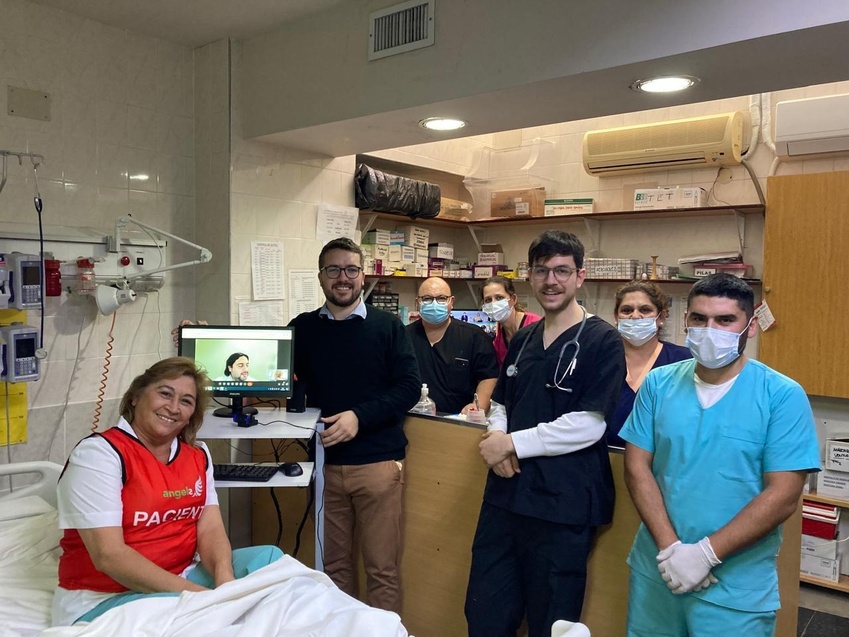
What began as a stroke-response simulation quickly became something far more significant. During a training exercise, clinicians were working through hypothetical emergency scenarios when an actual patient arrived with obvious symptoms of an acute stroke. Instead of pausing to reassess, the team immediately put its training into action. Care was delivered quickly and collaboratively, and the patient survived.
Remarkably, the same thing happened again only a few days later.
Two genuine stroke emergencies handled successfully in quick succession demonstrated that the results were not simply a matter of chance. The teams were prepared. These incidents provided some of the earliest tangible evidence of what Salta Stroke 360° was designed to achieve: creating a coordinated healthcare system capable of responding effectively when a real emergency occurs and every second can influence the outcome.
When Distance Can Shape a Patient's Future
Stroke remains among the world's major causes of death and lasting disability. In geographically challenging areas such as Salta province in northwestern Argentina, the problem can be even more difficult. Communities are widely dispersed, while specialist medical expertise is not always readily available.
For stroke patients, the clock can begin working against them well before they arrive at a hospital. Long travel distances, delays in accessing appropriate care, and disconnected healthcare pathways can all reduce the opportunity for effective treatment. In a condition where rapid intervention is critical, these barriers can determine whether a patient makes a meaningful recovery or faces permanent disability.
Across rural Salta, local health centers serve as important links between remote and specialized healthcare. They support families living far from major medical facilities, often across difficult terrain and in areas where healthcare resources are limited. Indigenous communities in particular can face significant challenges in reaching specialized stroke services.
Salta Stroke 360° was developed in response to these realities. The program brings together Boehringer Ingelheim Argentina, hospitals, public authorities, NGOs, and international organizations, with formal backing from the Ministry of Health.
A central figure in the clinical effort is Dr. Gabriela Orzuza, a neurologist and Medical Director of the Stroke Unit at Hospital San Bernardo. Under her leadership, the unit earned international recognition as an Essential Stroke Unit from the World Stroke Organization.
For Dr. Orzuza, the mission is also personal. A native of Salta, she has spent years developing multidisciplinary networks aimed at strengthening stroke services in one of Argentina's most underserved regions. Rural and Indigenous populations, in particular, can experience significant difficulties accessing specialized healthcare.
“When I first imagined a tele-stroke network,” she recalls, “I saw both the need and the obligation to offer equity. But at the time, it felt like an impossible dream—something we could only approach in very small steps.”
Turning an Ambition Into an Operating System
Those incremental efforts eventually developed into a functioning healthcare network.
Telemedicine now allows neurologists based in Salta's capital to connect with healthcare professionals in remote hospitals, providing specialist guidance in real time when traveling to see a specialist is not practical. Making such a system work requires more than a video connection. Reliable communications, high-quality diagnostic imaging, rapid decision-making, and close coordination all have to work together.
The initiative also recognizes that effective stroke response starts outside the hospital.
Emergency responders, community representatives, and personnel working in places where large numbers of people gather—including airports, businesses, and public institutions—are being taught how to identify stroke symptoms and initiate the appropriate emergency procedures. By preparing these locations in advance, the province is creating a wider network of environments capable of responding to neurological emergencies.
Community education is another important component. NGOs and schools help spread information about recognizing stroke and understanding the importance of seeking immediate medical assistance. In communities that have historically been underserved, communications are tailored to local cultural contexts and, where appropriate, delivered in Indigenous languages. This helps ensure that the message is understandable, relevant, and accessible.
A Commitment to Equity Backed by Action
The underlying purpose of the initiative is also reflected in its leadership.
Martín Cottone, General Manager of Boehringer Ingelheim Argentina, describes one of the early realizations that shaped the program: a person's chances of surviving a stroke could vary significantly depending on how far they lived from appropriate medical care.
For Cottone, that disparity created a responsibility to reconsider how stroke services were being delivered.
The initiative therefore became an opportunity to challenge conventional approaches and create new forms of collaboration between government authorities, medical professionals, and local communities.
The results are increasingly visible. Remote hospitals that previously faced major barriers to delivering timely stroke care are now demonstrating that rapid treatment is possible even outside major urban centers. These outcomes show what can happen when a clear social purpose is combined with practical implementation.
“Seeing remote hospitals treat patients on time for the first time shows what’s possible when purpose and execution come together,” said Martín Cottone, General Manager & Human Pharma Head APUB (Argentina, Paraguay, Uruguay & Bolivia).
Creating a Sustainable System Rather Than a Standalone Program
Salta Stroke 360° is not based on one technology, one training program, or one medical intervention. Its strength lies in connecting multiple elements of stroke care so that they support one another.
Clinical training is being combined with improved infrastructure, community education, partnerships, and public policy. Together, these components are helping create a more resilient stroke-care system.
Reliable diagnostic equipment is a critical part of that effort. Older CT scanners—the diagnostic tools that allow clinicians to see what is happening inside the brain—are being replaced with dependable modern equipment. Partnerships are also helping make advanced technologies available in locations where they were previously difficult to access.
Public-sector involvement has provided another foundation for long-term progress.
In early 2024, Provincial Law No. 8420 formally established a Stroke Network in Salta, creating a framework to support prevention, diagnosis, and treatment. The province also introduced a Tele-Stroke Network, allowing hospitals without neurologists on site to access specialist expertise remotely.
This represents an important shift in the initiative's evolution. What began as a collaborative project is increasingly becoming part of the public healthcare infrastructure. By embedding stroke services within the health system itself, Salta Stroke 360° is positioned not merely as a temporary intervention, but as a model capable of continuing, expanding, and reaching more patients across the province.
 Companies