

 Industrial Robotics Market Expected to Grow at 5.0% CAGR


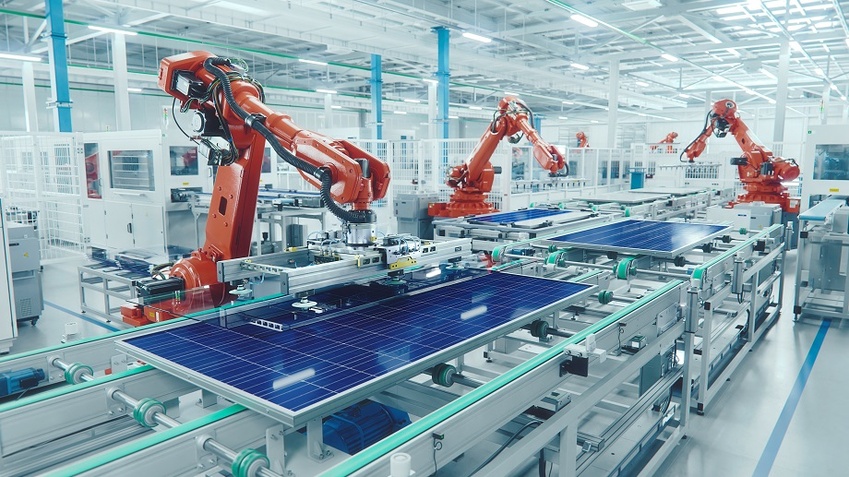
According to a report by MarketsandMarkets, the global industrial robotics market is anticipated to expand from USD 15.50 billion in 2026 to USD 20.80 billion by 2032, reflecting a compound annual growth rate (CAGR) of 5.0% over the forecast period.
Industrial Robotics Market Size and Forecast
- Historical and forecast coverage: 2021–2032
- Market value in 2026: USD 15.50 billion
- Expected market value by 2032: USD 20.80 billion
- CAGR (2026–2032): 5.0%
Key Market Trends and Insights
The industrial robotics sector is experiencing robust growth, driven by the increasing implementation of automation technologies and smart manufacturing practices across various industries. Organizations are integrating robotic systems into operations such as material handling, welding, assembly, packaging, and quality inspection to enhance productivity, precision, and operational efficiency. Furthermore, rising investments in Industry 4.0 initiatives, intelligent manufacturing systems, and factory automation are accelerating market expansion. The demand for agile, high-speed production environments is also contributing significantly to market growth.
Key findings include:
Key findings include:
- Traditional industrial robots represented the largest revenue-generating robot category in 2025.
- Robots with payload capacities of up to 16 kg are expected to account for the largest market share, reaching 51.2% in 2025.
- The software and programming segment is projected to achieve the fastest growth among offerings, with a CAGR of 3.9% during the forecast period.
- Processing applications are anticipated to register the highest growth among industrial robot applications.
- The Asia-Pacific region accounted for 67.3% of global industrial robotics revenue in 2025.
Growing Demand for Flexible Manufacturing
The increasing emphasis on product customization and adaptable manufacturing processes is driving wider adoption of industrial robotics. Manufacturers are leveraging robotic solutions to rapidly modify production lines, accommodate diverse product configurations, and respond more effectively to changing market demands. These systems enable quicker production changeovers, greater operational flexibility, and cost-effective small-batch manufacturing while maintaining productivity levels. Demand for personalized products in sectors such as automotive, electronics, and consumer goods continues to reinforce this trend.
Traditional Industrial Robots Lead the Market
Traditional industrial robots are expected to maintain the largest market share throughout the forecast period. Their extensive use across industries including automotive, electronics, metal fabrication, food and beverage, and logistics stems from their effectiveness in tasks such as welding, assembly, painting, packaging, and material handling. The ongoing shift toward automated factories, smart production facilities, and continuous manufacturing operations is strengthening demand for these systems.
Technological advancements in artificial intelligence, machine vision, and sensor technologies are enhancing robot capabilities, improving accuracy, adaptability, and overall performance. Companies are increasingly investing in robotic automation to minimize reliance on manual labor, improve product consistency, and streamline manufacturing processes.
Technological advancements in artificial intelligence, machine vision, and sensor technologies are enhancing robot capabilities, improving accuracy, adaptability, and overall performance. Companies are increasingly investing in robotic automation to minimize reliance on manual labor, improve product consistency, and streamline manufacturing processes.
Collaborative Robots Expected to Record the Fastest Growth
Collaborative robots, commonly referred to as cobots, are forecast to achieve the highest CAGR among robot categories during the study period. Their ability to operate safely alongside human workers without extensive safety infrastructure makes them particularly attractive to small and medium-sized enterprises.
Industries including automotive, electronics, healthcare, food and beverage, and logistics are increasingly deploying cobots for assembly, inspection, packaging, and material-handling applications. Factors such as user-friendly programming, lower implementation costs, and productivity enhancements are accelerating adoption. The growing preference for flexible manufacturing environments and smart production systems is expected to further support the rapid expansion of the collaborative robotics segment.
Industries including automotive, electronics, healthcare, food and beverage, and logistics are increasingly deploying cobots for assembly, inspection, packaging, and material-handling applications. Factors such as user-friendly programming, lower implementation costs, and productivity enhancements are accelerating adoption. The growing preference for flexible manufacturing environments and smart production systems is expected to further support the rapid expansion of the collaborative robotics segment.
Asia-Pacific Remains the Largest Regional Market
Asia-Pacific held the dominant position in the industrial robotics market in 2025, supported by its extensive manufacturing base in countries such as China, Japan, South Korea, and India. Increasing adoption of automation technologies, substantial investments in smart manufacturing, and strong demand from automotive, electronics, semiconductor, and metal-processing industries continue to drive regional growth.
Additional factors supporting expansion include government initiatives promoting industrial modernization, ongoing manufacturing capacity expansion, and rising labor costs. Growth in electronics manufacturing, electric vehicle production, and warehouse automation is creating further demand for advanced robotic solutions. The presence of major robotics manufacturers and sustained investment in Industry 4.0 technologies positions Asia-Pacific as the leading region for long-term market growth.
Additional factors supporting expansion include government initiatives promoting industrial modernization, ongoing manufacturing capacity expansion, and rising labor costs. Growth in electronics manufacturing, electric vehicle production, and warehouse automation is creating further demand for advanced robotic solutions. The presence of major robotics manufacturers and sustained investment in Industry 4.0 technologies positions Asia-Pacific as the leading region for long-term market growth.
Major Industry Participants
Prominent companies operating in the industrial robotics market include:
- ABB (Switzerland)
- YASKAWA ELECTRIC CORPORATION (Japan)
- FANUC Corporation (Japan)
- KUKA SE & Co. KGaA (Germany)
- Mitsubishi Electric Corporation (Japan)
- Kawasaki Heavy Industries, Ltd. (Japan)
- DENSO CORPORATION (Japan)
- Nachi-Fujikoshi Corp. (Japan)
- Seiko Epson Corporation (Japan)
- Dürr Group (Germany)
These organizations continue to invest in innovation, automation technologies, artificial intelligence, and advanced robotics solutions to strengthen their positions in the evolving global industrial robotics landscape.
 Companies