

 Ragan Unveils 2026 Future of Communications Conference Agenda


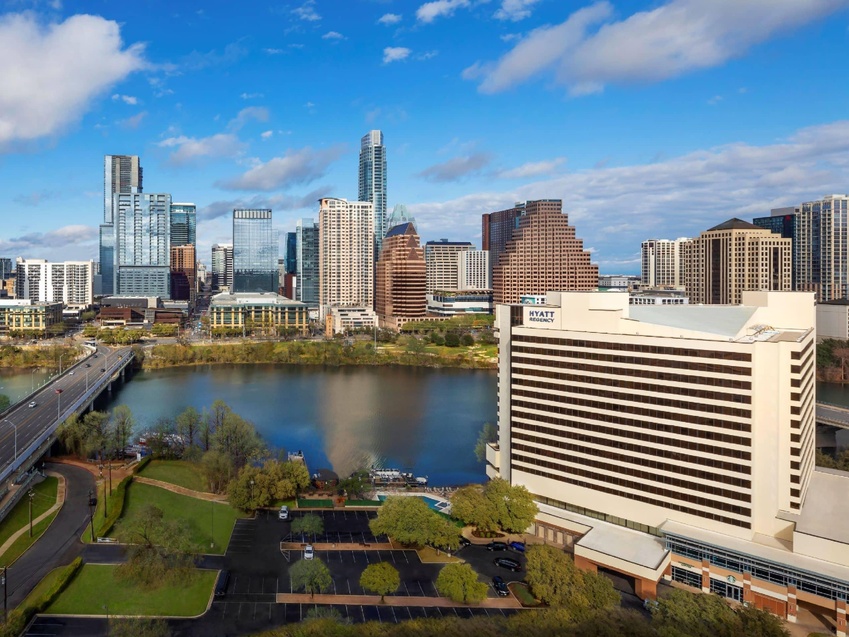
Ragan Communications has announced the complete agenda and speaker roster for its upcoming Future of Communications Conference, which will bring hundreds of communications professionals to the Hyatt Regency Austin from Nov. 11-13 as part of Communications Week 2026.
The three-day conference will focus on a central challenge facing communications leaders:
How can organizations prepare their communications functions for 2027 and beyond?
Rapid advances in artificial intelligence are reshaping everything from content development and search to reputation management and day-to-day communications operations. At the same time, employees are seeking greater clarity from their employers, executives are communicating through an expanding range of platforms and traditional media influence is becoming increasingly dispersed. Communications teams are also under mounting pressure to demonstrate how their efforts support business objectives and produce measurable outcomes.
Ragan’s finalized program addresses these developments through more than 30 keynotes, workshops, case studies, fireside conversations, panel discussions and peer-to-peer sessions. More than 50 senior communications executives, industry specialists and organizational leaders will participate throughout the event.
The speaker lineup includes representatives from organizations such as Lockheed Martin, United Airlines, Dell Technologies, Notion, State Farm, IBM, Colgate-Palmolive, Hachette Book Group, Mozilla, Dow Jones, Anker, Code for America, Cotality and Coca-Cola Bottlers’ Sales & Services.
Keynote Speakers Examine AI and Authenticity
Shira Lazar, founder of What’s Trending, will deliver the keynote “Think Like a Creator: Thriving at the Intersection of AI, Trust and the Future of Communications.” Her presentation will examine how artificial intelligence and creator-driven culture are influencing the expectations placed on brands, executives and communications teams. The session will also explore why authenticity, human oversight and professional judgment could become increasingly valuable as organizations expand their use of AI.
The second day will begin with a keynote from Dr. Marcus Collins, a professor at the University of Michigan’s Ross School of Business. His presentation, “Being Real: The Human Voice in an AI World,” will explore why audiences can quickly identify communications that lack a genuine human perspective.
Collins will also discuss how communications professionals can bring newsroom-style thinking to AI-supported content creation and executive communications. Another focus will be on determining how trust, audience resonance and influence can be evaluated as AI-generated material becomes increasingly common across communication channels.
Artificial Intelligence Takes Center Stage
AI will feature prominently throughout the conference, with sessions examining subjects ranging from governance and agentic workflows to brand voice, synthetic content, deepfakes, AI-driven search and the continuing importance of human decision-making.
The wider program will also cover executive communications, reputation and crisis management, employee communications, public affairs, organizational transformation, measurement, emerging media platforms, employee advocacy and leadership within the communications profession.
Participants will consider a number of pressing questions, including how Generative Engine Optimization (GEO) and Answer Engine Optimization (AEO) are affecting brand discoverability within AI-generated responses. Other discussions will address preparations for synthetic media and emerging misinformation threats, ways to introduce AI into communications workflows without undermining brand credibility, and strategies for proving the business value of communications to senior executives.
Pre-Conference Experiences Begin Nov. 11
The conference will get underway Nov. 11 with several immersive pre-event options.
Participants can choose from practical workshops or attend Ragan’s Center for AI Strategy Summit. The summit will examine the current state of enterprise AI adoption, including areas where organizations are making progress and challenges that continue to prevent broader implementation.
The sessions will also focus on developing practical and repeatable AI workflows while addressing issues such as governance, legal exposure, employee confidence and brand safety.
The primary conference program will run Nov. 12-13 and will feature separate tracks for internal and external communications. This structure will allow attendees to focus on the topics and professional challenges most relevant to their responsibilities.
Networking and Peer Engagement
Beyond the formal sessions, the conference will provide numerous opportunities for attendees to connect with other communications professionals. Hundreds of industry peers are expected to gather in Austin, with networking opportunities ranging from organized activities and interactive table discussions to receptions, peer exchanges and informal conversations.
The event forms part of Communications Week, Ragan’s annual gathering for the communications industry. Taking place Nov. 9-13, the week brings professionals and organizations together for educational programs, networking opportunities and discussions about the future direction of the communications profession.
For communications leaders preparing their teams and organizations for 2027, the Future of Communications Conference is positioned as an opportunity to examine current industry practices, reconsider established approaches and gain practical strategies that can be applied after returning to the workplace.
The next registration pricing deadline is Oct. 9.
Readers of 3BL Media can receive an additional $500 discount on registration by using the code 3BL.
The complete agenda, speaker information and registration details are available through Ragan’s Future of Communications Conference website at Ragan.com.
The three-day conference will focus on a central challenge facing communications leaders:
How can organizations prepare their communications functions for 2027 and beyond?
Rapid advances in artificial intelligence are reshaping everything from content development and search to reputation management and day-to-day communications operations. At the same time, employees are seeking greater clarity from their employers, executives are communicating through an expanding range of platforms and traditional media influence is becoming increasingly dispersed. Communications teams are also under mounting pressure to demonstrate how their efforts support business objectives and produce measurable outcomes.
Ragan’s finalized program addresses these developments through more than 30 keynotes, workshops, case studies, fireside conversations, panel discussions and peer-to-peer sessions. More than 50 senior communications executives, industry specialists and organizational leaders will participate throughout the event.
The speaker lineup includes representatives from organizations such as Lockheed Martin, United Airlines, Dell Technologies, Notion, State Farm, IBM, Colgate-Palmolive, Hachette Book Group, Mozilla, Dow Jones, Anker, Code for America, Cotality and Coca-Cola Bottlers’ Sales & Services.
Keynote Speakers Examine AI and Authenticity
Shira Lazar, founder of What’s Trending, will deliver the keynote “Think Like a Creator: Thriving at the Intersection of AI, Trust and the Future of Communications.” Her presentation will examine how artificial intelligence and creator-driven culture are influencing the expectations placed on brands, executives and communications teams. The session will also explore why authenticity, human oversight and professional judgment could become increasingly valuable as organizations expand their use of AI.
The second day will begin with a keynote from Dr. Marcus Collins, a professor at the University of Michigan’s Ross School of Business. His presentation, “Being Real: The Human Voice in an AI World,” will explore why audiences can quickly identify communications that lack a genuine human perspective.
Collins will also discuss how communications professionals can bring newsroom-style thinking to AI-supported content creation and executive communications. Another focus will be on determining how trust, audience resonance and influence can be evaluated as AI-generated material becomes increasingly common across communication channels.
Artificial Intelligence Takes Center Stage
AI will feature prominently throughout the conference, with sessions examining subjects ranging from governance and agentic workflows to brand voice, synthetic content, deepfakes, AI-driven search and the continuing importance of human decision-making.
The wider program will also cover executive communications, reputation and crisis management, employee communications, public affairs, organizational transformation, measurement, emerging media platforms, employee advocacy and leadership within the communications profession.
Participants will consider a number of pressing questions, including how Generative Engine Optimization (GEO) and Answer Engine Optimization (AEO) are affecting brand discoverability within AI-generated responses. Other discussions will address preparations for synthetic media and emerging misinformation threats, ways to introduce AI into communications workflows without undermining brand credibility, and strategies for proving the business value of communications to senior executives.
Pre-Conference Experiences Begin Nov. 11
The conference will get underway Nov. 11 with several immersive pre-event options.
Participants can choose from practical workshops or attend Ragan’s Center for AI Strategy Summit. The summit will examine the current state of enterprise AI adoption, including areas where organizations are making progress and challenges that continue to prevent broader implementation.
The sessions will also focus on developing practical and repeatable AI workflows while addressing issues such as governance, legal exposure, employee confidence and brand safety.
The primary conference program will run Nov. 12-13 and will feature separate tracks for internal and external communications. This structure will allow attendees to focus on the topics and professional challenges most relevant to their responsibilities.
Networking and Peer Engagement
Beyond the formal sessions, the conference will provide numerous opportunities for attendees to connect with other communications professionals. Hundreds of industry peers are expected to gather in Austin, with networking opportunities ranging from organized activities and interactive table discussions to receptions, peer exchanges and informal conversations.
The event forms part of Communications Week, Ragan’s annual gathering for the communications industry. Taking place Nov. 9-13, the week brings professionals and organizations together for educational programs, networking opportunities and discussions about the future direction of the communications profession.
For communications leaders preparing their teams and organizations for 2027, the Future of Communications Conference is positioned as an opportunity to examine current industry practices, reconsider established approaches and gain practical strategies that can be applied after returning to the workplace.
The next registration pricing deadline is Oct. 9.
Readers of 3BL Media can receive an additional $500 discount on registration by using the code 3BL.
The complete agenda, speaker information and registration details are available through Ragan’s Future of Communications Conference website at Ragan.com.
 Companies