

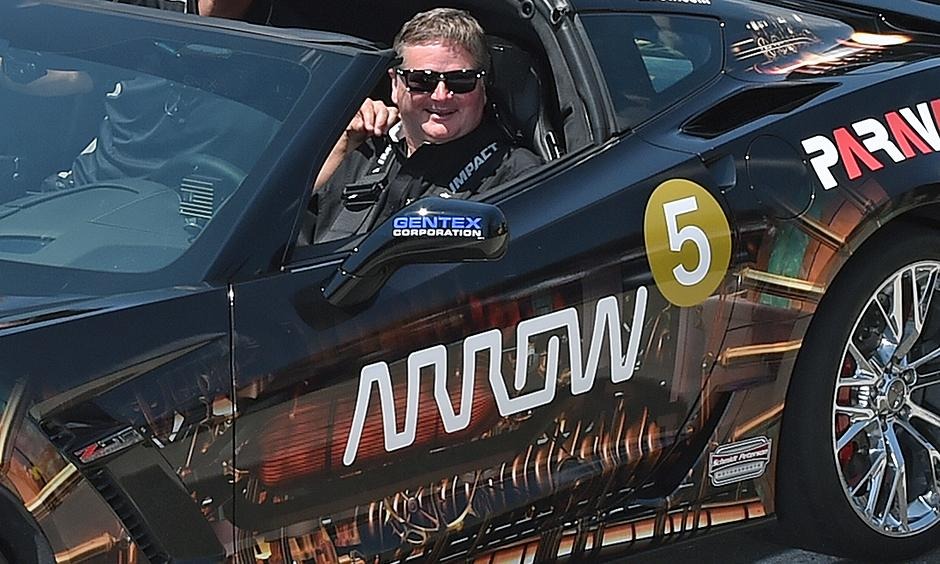
Former IndyCar driver Sam Schmidt believed his racing days had ended after a devastating crash in 2000 left him paralysed from the neck down.
“I crashed, backed into the wall and just disintegrated my C3, C4, and C5 vertebrae,” Schmidt recalled. “I was paralyzed from the neck down. You know, that was that.”
However, in 2013, technology company Arrow Electronics approached Schmidt with an opportunity to return to the cockpit using a vehicle equipped with semi-autonomous driving technology.
The partnership led to the creation of the Arrow SAM (Semi-Autonomous Motorcar) Car Project. The initiative adapts high-performance cars with electronic control systems that allow Schmidt to drive at racing speeds using head movements, breath-based inputs and voice commands.
His remarkable return to the racetrack is featured in a film titled Getting Back on the Racetrack, produced for Arrow by BBC StoryWorks. The film forms part of All In, a content series exploring how technological innovation can improve accessibility for people with disabilities.
Since the project began, Schmidt has driven specially modified race cars in numerous high-speed demonstrations. These have included appearances at the Indianapolis 500, the Pikes Peak International Hill Climb in Colorado and England’s Goodwood Festival of Speed.
Stephen Harper, a principal field applications engineer at Arrow, praised Schmidt’s fearlessness behind the wheel. “Like, you get in the car and he’s six inches from the wall at 200 miles an hour,” Harper said.
Schmidt currently drives a modified 2021 McLaren 720S Spyder. The vehicle uses head movements for steering, sip-and-puff technology to control acceleration and braking, and additional voice commands to operate other functions.
As Schmidt’s driving abilities and the underlying technology have advanced, Arrow has continued to refine the system. Recent upgrades include an AI-powered steering solution based on NVIDIA’s Jetson Orin platform, along with a redesigned sip-and-puff controller for managing the throttle and brakes.
The steering system uses edge artificial intelligence (Edge AI), which combines AI processing with computing performed close to the source of the data. It analyses Schmidt’s head movements in real time and adjusts the steering angle within milliseconds, enabling quicker and more responsive control.
“I’m controlling the brakes, I’m controlling the gas, and it’s all on me, and it’s completely changed my life. It’s amazing,” Schmidt said.
Beyond helping Schmidt return to motorsport, the SAM Car Project has become a platform for developing technologies with potential applications in other fields. Its innovations could eventually benefit assistive mobility devices, autonomous machinery and vehicles used in agriculture and transportation.
Harper believes the project’s wider potential is substantial. “If we can do this in a race car, we can do this in just about anything – wheelchairs, autonomous machines, tractors and farming, trucking,” he said.