

 Georgia-Pacific Uses 3D Printing to Drive Manufacturing Innovation


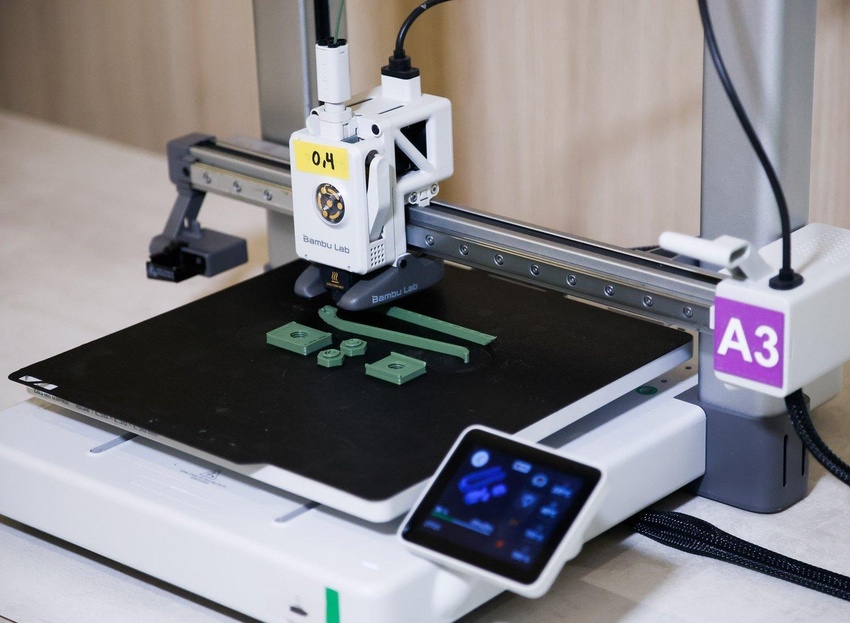
Georgia-Pacific's use of 3D printing directly on the plant floor demonstrates how teams can replace expensive, slow-to-source solutions with faster and more practical alternatives. It is an example of what can be described as creative destruction—using innovation to rethink established processes and replace them with more effective approaches.
Across Georgia-Pacific facilities, employees are applying 3D printing to address manufacturing challenges with solutions that can be developed more quickly, improve safety and cost considerably less than conventional alternatives. A key feature of this approach is that innovation originates at the operational level. Employees who work closely with machinery and processes every day are often best positioned to identify problems and develop practical solutions.
At facilities including Muskogee, Oklahoma, and Brewton, Alabama, 3D printing has evolved into an internal resource for components that may otherwise be expensive, difficult or time-consuming to obtain. Engineers and maintenance personnel can design and manufacture customised parts, protective equipment and other solutions based on specific requirements identified within their facilities. This approach can reduce procurement delays and eliminate some of the frustrations associated with conventional sourcing.
How Georgia-Pacific Applies 3D Printing in Manufacturing
At the Muskogee facility, drafter Nate Yarbrough plays a leading role in developing 3D-printed solutions, using computer-aided design (CAD) software to create digital models. Many of the concepts originate with equipment operators and mechanics who encounter specific problems during their daily work.
As Nate explains, 3D printing is not appropriate for every application, but it can provide an effective solution for many operational challenges.
One example involves small tabs fitted to junction boxes used with Laser Guided Vehicles (LGVs). Previously, damage to a single tab could require the replacement of the entire junction box. Instead, the team can now reproduce only the damaged component using a 3D printer. This significantly lowers the replacement cost and can reduce equipment downtime.
Other solutions developed by Nate include customised mounts for turnstile cameras and protective cages for drones. The latter allow drones to operate safely in confined areas while reducing the possibility of damage to the equipment.
Improving Human Factors and Operational Efficiency
At Brewton, maintenance learning and development lead Kyle Null has incorporated 3D printing into efforts to improve both operational reliability and employee safety.
A particular challenge existed in the demineralised water area, where operators needed to collect several process samples. Previously, each sample was placed in a separate glass beaker, requiring operators to carry several containers between their fingers. This created additional handling and breakage risks while also increasing the possibility of samples being confused.
The team developed a customised 3D-printed holder to keep the beakers together and organised. With the new system, operators can gather the required samples in one trip while keeping the containers secure and clearly arranged. The design reduces the likelihood of breakage, supports consistent procedures and can make the process easier for new operators to learn.
Utilities field operator Orlando Gandy described the practical benefit of the solution, noting that the new cart and water-sample organiser make the task safer and more efficient. He also highlighted that the design eliminates broken glass cylinders and makes it immediately clear where he left off if his work is interrupted.
Safer sampling through design: a customised 3D-printed holder keeps glass beakers secure, organised and readily accessible during water sampling at Brewton.
Safety, Compliance and Responsible Innovation
Safety and regulatory compliance are considered throughout the design and manufacturing process. Before a 3D-printed component is put into service, it must undergo the appropriate review and approval. Components intended for safety-related applications may also be manufactured in designated colours to make them readily identifiable.
Teams also take intellectual-property and right-to-repair considerations into account. Designs are developed with care to avoid reproducing patented components while still allowing Georgia-Pacific-owned equipment to be repaired safely and effectively.
The Future of 3D Printing at Georgia-Pacific and Koch
Additive manufacturing technology continues to advance, with developments such as metal 3D printing potentially expanding the range of applications. Teams are already investigating more capable printers that could enable them to manufacture increasingly robust and sophisticated components.
Prototype supervisor Matt Williquette, who leads the Krē8 lab at the Neenah Technical Center in Wisconsin, has also contributed expertise and support to these efforts.
Although many current applications are being developed within Georgia-Pacific, interest in additive manufacturing is expanding throughout Koch. The Additive Manufacturing workstream within the Koch Republics group connects employees across the wider organisation, creating opportunities to exchange designs, experience and proven practices.
As this network grows, collaboration can help teams adopt 3D printing more quickly by sharing successful applications and lessons learned across facilities.
As Kyle Null observes, there are significant opportunities emerging throughout the company's facilities. From customised glue-head guards designed to reduce burn risks to inexpensive replacement components, these applications demonstrate how additive manufacturing can address practical problems within established manufacturing environments.
More importantly, the experience shows the value of giving employees the tools and freedom to develop solutions to the challenges they encounter firsthand.
 Companies