

 Recycled Concrete Aggregates Market Driven by Sustainable Construction


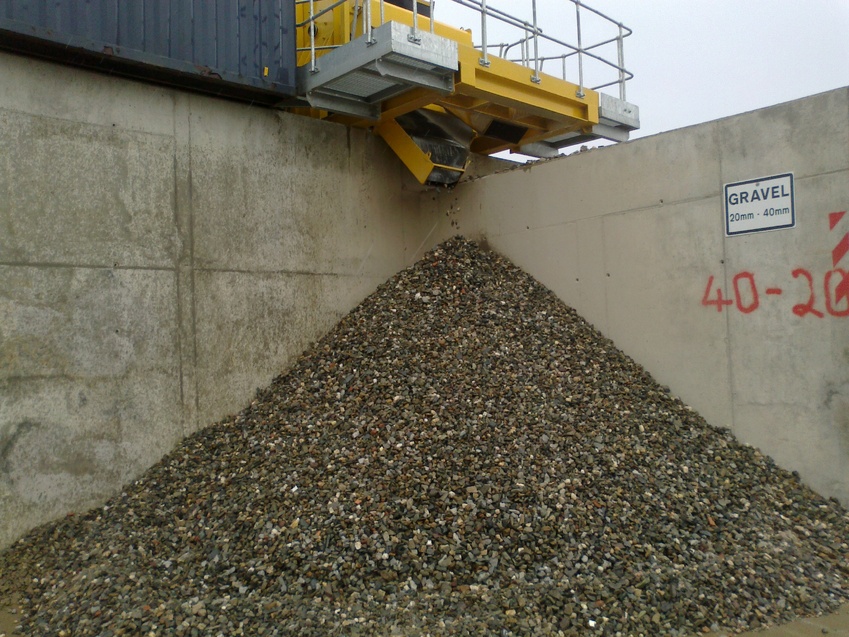
Recent industry assessments by Future Market Insights indicate that the global recycled concrete aggregates (RCA) market is entering a period of sustained expansion, driven by the growing emphasis on sustainable construction and efficient resource utilization. Governments, contractors, and construction material suppliers are increasingly adopting circular economy principles, creating significant opportunities for recycled aggregates.
The market is projected to increase from USD 11.4 billion in 2026 to approximately USD 24.7 billion by 2036, reflecting a compound annual growth rate (CAGR) of 8.0% over the forecast period. This upward trajectory is supported by stricter environmental regulations, greater use of recycled materials in public infrastructure projects, urban redevelopment initiatives, and investments in low-carbon building solutions.
Market Overview
Recycled concrete aggregates have evolved beyond their traditional role as demolition waste. Today, they are recognized as high-value construction materials capable of replacing natural aggregates across a wide range of applications, including highways, pavements, commercial developments, and structural concrete.
Technological advancements in crushing, screening, contaminant removal, sensor-assisted sorting, and carbon mineralization are significantly improving material quality while contributing to carbon reduction objectives across the construction sector.
The RCA market has become one of the fastest-growing segments within the construction materials industry. Demand is shifting from basic recycling activities toward the production of standardized, certified aggregates that satisfy modern engineering and quality requirements. The anticipated market expansion reflects both increased construction activity and the industry's broader transition toward sustainable sourcing practices.
Major Growth Factors
Several key factors are supporting market growth:
The market is projected to increase from USD 11.4 billion in 2026 to approximately USD 24.7 billion by 2036, reflecting a compound annual growth rate (CAGR) of 8.0% over the forecast period. This upward trajectory is supported by stricter environmental regulations, greater use of recycled materials in public infrastructure projects, urban redevelopment initiatives, and investments in low-carbon building solutions.
Market Overview
Recycled concrete aggregates have evolved beyond their traditional role as demolition waste. Today, they are recognized as high-value construction materials capable of replacing natural aggregates across a wide range of applications, including highways, pavements, commercial developments, and structural concrete.
Technological advancements in crushing, screening, contaminant removal, sensor-assisted sorting, and carbon mineralization are significantly improving material quality while contributing to carbon reduction objectives across the construction sector.
The RCA market has become one of the fastest-growing segments within the construction materials industry. Demand is shifting from basic recycling activities toward the production of standardized, certified aggregates that satisfy modern engineering and quality requirements. The anticipated market expansion reflects both increased construction activity and the industry's broader transition toward sustainable sourcing practices.
Major Growth Factors
Several key factors are supporting market growth:
- Stricter landfill regulations and rising disposal costs are encouraging concrete recycling.
- Government procurement policies increasingly promote the use of recycled construction materials.
- Urban redevelopment projects generate substantial quantities of recoverable concrete.
- Growing adoption of circular economy practices across the construction industry.
- Rising demand for low-carbon building materials that contribute to LEED and BREEAM certification.
- Technological improvements in crushing, screening, and contaminant removal have enhanced product quality.
- Ongoing transportation infrastructure projects require significant volumes of road base and sub-base materials.
Technology and Innovation
Continuous technological innovation is improving both the performance and commercial viability of recycled concrete aggregates.
Modern crushing and precision screening systems now produce high-quality aggregates suitable for demanding structural and infrastructure applications. Sensor-based sorting technologies and AI-enabled robotic systems efficiently eliminate contaminants such as wood, plastics, and glass, improving consistency and purity.
Carbon mineralization has emerged as one of the sector's most promising developments. Companies including Neustark are incorporating captured carbon dioxide into recycled concrete materials, enhancing aggregate performance while permanently storing CO₂ within construction products. This innovation strengthens the environmental benefits of recycled aggregates and supports broader decarbonization efforts.
Mobile crushing units are also becoming increasingly popular, enabling contractors to process demolition waste directly on-site. This reduces transportation expenses, lowers emissions, and improves overall project efficiency.
Market Challenges
Although market prospects remain highly favorable, several challenges continue to influence industry growth.
Maintaining consistent material quality is essential for structural applications, requiring advanced processing equipment and rigorous quality control procedures. Smaller recycling companies often face financial limitations that restrict investment in sophisticated processing technologies.
Regulatory requirements differ considerably across countries, creating barriers to market standardization. Additionally, fragmented supply chains and inconsistent reporting of recycled aggregate production complicate capacity planning and investment decisions.
Public perception also remains a challenge, although increasing evidence demonstrating performance comparable to virgin aggregates is gradually strengthening market acceptance.
Segment Insights
Among product categories, Gravel & Crushed Stone is expected to account for approximately 45.0% of the market in 2026, supported by its widespread use in road construction and its ability to effectively replace quarried stone.
By product form, Processed Aggregates are projected to represent 65.0% of market demand, reflecting growing customer preference for certified, screened, and contaminant-free materials suitable for commercial and structural projects. Continued investment in advanced processing technologies is expected to reinforce this segment's leadership.
In terms of application, Roads & Pavements remain the dominant segment, capturing around 38.0% of total demand, driven by ongoing transportation infrastructure development and government initiatives encouraging recycled material usage.
From an end-use perspective, Non-Residential Construction is anticipated to maintain the largest market share at 58.0%, supported by commercial buildings, industrial facilities, logistics centers, and public infrastructure projects pursuing sustainability objectives.
Regional Outlook
Europe continues to lead global adoption of recycled concrete aggregates due to comprehensive environmental regulations and strong circular economy policies.
Among European countries, Poland is forecast to record the highest growth rate at 9.0% CAGR, supported by infrastructure modernization, rising landfill taxes, and compliance with European Union waste management regulations.
The Netherlands follows with an expected 8.4% CAGR, benefiting from ambitious national targets to establish a fully circular economy by 2050, together with advanced urban mining initiatives and limited landfill capacity.
Spain is projected to expand at 8.1% CAGR, driven by investments in transportation infrastructure and Green Public Procurement programs that encourage the use of recycled construction materials.
The United Kingdom is expected to grow at 7.6% CAGR, supported by the Aggregates Levy, which enhances the competitiveness of recycled materials. France, with an estimated 7.4% CAGR, continues to benefit from RE2020 regulations aimed at reducing the carbon footprint of new buildings.
Beyond Europe, both North America and the Asia-Pacific region are increasing investments in construction waste recycling as infrastructure development and sustainability initiatives gain momentum.
Competitive Landscape
Competition within the recycled concrete aggregates industry is increasingly centered on integrated circular construction models.
Leading building materials companies are expanding vertically by combining demolition services, recycling operations, logistics capabilities, and aggregate production. This integrated approach improves raw material availability while enhancing operational efficiency.
Technology-focused companies are differentiating themselves through AI-powered sorting solutions, mobile recycling technologies, and carbon mineralization systems capable of producing premium, low-carbon recycled aggregates.
Leading Industry Participants
Major companies operating in this market include Heidelberg Materials, Holcim, CRH, CEMEX, Tarmac, VINCI Construction, Vulcan Materials Company, Martin Marietta, Dura Vermeer, Neustark, Recycleye, Everox, Porr, and PreZero.
These organizations continue investing in expanded recycling infrastructure, regional processing facilities, and advanced quality assurance systems. Competitive success increasingly depends on logistics efficiency, technological capability, product certification, and comprehensive circular construction services.
Recent investments demonstrate the industry's accelerating maturity
In June 2025, Heidelberg Materials North America acquired selected assets of Concrete Crushers Inc., strengthening recycled aggregate production capacity across Western Canada.
During the same month, YTL Cement launched Malaysia's first commercial-scale recycled concrete processing facility, marking a significant milestone for Southeast Asia's construction recycling industry.
In December 2025, CRH expanded its North American recycling footprint by acquiring North American Aggregates, reinforcing operations throughout the northeastern United States.
Additional investments include Porr's participation in a €165 million waste treatment project in Poland and Everox's new recycling facility in the Netherlands, which is capable of processing approximately 150,000 tons of concrete waste annually.
Future Outlook
The recycled concrete aggregates industry is expected to transition from a waste management activity into a mainstream segment of the global construction materials market.
Ongoing developments in automated sorting, digital quality monitoring, carbon capture integration, and mobile processing technologies will continue improving both product performance and commercial competitiveness. Increasing regulatory pressure to reduce embodied carbon, combined with infrastructure investment and expanding circular economy initiatives, will further accelerate market adoption.
As construction companies increasingly prioritize resilient supply chains, localized sourcing, and environmentally responsible materials, recycled concrete aggregates are expected to become an indispensable component of sustainable construction worldwide.
FMI Custom Research: Enabling Smarter Strategic Decisions
In an increasingly dynamic business environment, organizations require more than standard market reports—they need customized insights aligned with their strategic priorities. FMI's Custom Research services address specific business challenges by helping organizations evaluate market opportunities, validate investments, understand competitive dynamics, and reduce uncertainty before making critical decisions.
Combining extensive industry expertise, primary research, and proprietary market intelligence, FMI delivers actionable insights that enable faster, evidence-based decision-making.
Executive Advantages
Continuous technological innovation is improving both the performance and commercial viability of recycled concrete aggregates.
Modern crushing and precision screening systems now produce high-quality aggregates suitable for demanding structural and infrastructure applications. Sensor-based sorting technologies and AI-enabled robotic systems efficiently eliminate contaminants such as wood, plastics, and glass, improving consistency and purity.
Carbon mineralization has emerged as one of the sector's most promising developments. Companies including Neustark are incorporating captured carbon dioxide into recycled concrete materials, enhancing aggregate performance while permanently storing CO₂ within construction products. This innovation strengthens the environmental benefits of recycled aggregates and supports broader decarbonization efforts.
Mobile crushing units are also becoming increasingly popular, enabling contractors to process demolition waste directly on-site. This reduces transportation expenses, lowers emissions, and improves overall project efficiency.
Market Challenges
Although market prospects remain highly favorable, several challenges continue to influence industry growth.
Maintaining consistent material quality is essential for structural applications, requiring advanced processing equipment and rigorous quality control procedures. Smaller recycling companies often face financial limitations that restrict investment in sophisticated processing technologies.
Regulatory requirements differ considerably across countries, creating barriers to market standardization. Additionally, fragmented supply chains and inconsistent reporting of recycled aggregate production complicate capacity planning and investment decisions.
Public perception also remains a challenge, although increasing evidence demonstrating performance comparable to virgin aggregates is gradually strengthening market acceptance.
Segment Insights
Among product categories, Gravel & Crushed Stone is expected to account for approximately 45.0% of the market in 2026, supported by its widespread use in road construction and its ability to effectively replace quarried stone.
By product form, Processed Aggregates are projected to represent 65.0% of market demand, reflecting growing customer preference for certified, screened, and contaminant-free materials suitable for commercial and structural projects. Continued investment in advanced processing technologies is expected to reinforce this segment's leadership.
In terms of application, Roads & Pavements remain the dominant segment, capturing around 38.0% of total demand, driven by ongoing transportation infrastructure development and government initiatives encouraging recycled material usage.
From an end-use perspective, Non-Residential Construction is anticipated to maintain the largest market share at 58.0%, supported by commercial buildings, industrial facilities, logistics centers, and public infrastructure projects pursuing sustainability objectives.
Regional Outlook
Europe continues to lead global adoption of recycled concrete aggregates due to comprehensive environmental regulations and strong circular economy policies.
Among European countries, Poland is forecast to record the highest growth rate at 9.0% CAGR, supported by infrastructure modernization, rising landfill taxes, and compliance with European Union waste management regulations.
The Netherlands follows with an expected 8.4% CAGR, benefiting from ambitious national targets to establish a fully circular economy by 2050, together with advanced urban mining initiatives and limited landfill capacity.
Spain is projected to expand at 8.1% CAGR, driven by investments in transportation infrastructure and Green Public Procurement programs that encourage the use of recycled construction materials.
The United Kingdom is expected to grow at 7.6% CAGR, supported by the Aggregates Levy, which enhances the competitiveness of recycled materials. France, with an estimated 7.4% CAGR, continues to benefit from RE2020 regulations aimed at reducing the carbon footprint of new buildings.
Beyond Europe, both North America and the Asia-Pacific region are increasing investments in construction waste recycling as infrastructure development and sustainability initiatives gain momentum.
Competitive Landscape
Competition within the recycled concrete aggregates industry is increasingly centered on integrated circular construction models.
Leading building materials companies are expanding vertically by combining demolition services, recycling operations, logistics capabilities, and aggregate production. This integrated approach improves raw material availability while enhancing operational efficiency.
Technology-focused companies are differentiating themselves through AI-powered sorting solutions, mobile recycling technologies, and carbon mineralization systems capable of producing premium, low-carbon recycled aggregates.
Leading Industry Participants
Major companies operating in this market include Heidelberg Materials, Holcim, CRH, CEMEX, Tarmac, VINCI Construction, Vulcan Materials Company, Martin Marietta, Dura Vermeer, Neustark, Recycleye, Everox, Porr, and PreZero.
These organizations continue investing in expanded recycling infrastructure, regional processing facilities, and advanced quality assurance systems. Competitive success increasingly depends on logistics efficiency, technological capability, product certification, and comprehensive circular construction services.
Recent investments demonstrate the industry's accelerating maturity
In June 2025, Heidelberg Materials North America acquired selected assets of Concrete Crushers Inc., strengthening recycled aggregate production capacity across Western Canada.
During the same month, YTL Cement launched Malaysia's first commercial-scale recycled concrete processing facility, marking a significant milestone for Southeast Asia's construction recycling industry.
In December 2025, CRH expanded its North American recycling footprint by acquiring North American Aggregates, reinforcing operations throughout the northeastern United States.
Additional investments include Porr's participation in a €165 million waste treatment project in Poland and Everox's new recycling facility in the Netherlands, which is capable of processing approximately 150,000 tons of concrete waste annually.
Future Outlook
The recycled concrete aggregates industry is expected to transition from a waste management activity into a mainstream segment of the global construction materials market.
Ongoing developments in automated sorting, digital quality monitoring, carbon capture integration, and mobile processing technologies will continue improving both product performance and commercial competitiveness. Increasing regulatory pressure to reduce embodied carbon, combined with infrastructure investment and expanding circular economy initiatives, will further accelerate market adoption.
As construction companies increasingly prioritize resilient supply chains, localized sourcing, and environmentally responsible materials, recycled concrete aggregates are expected to become an indispensable component of sustainable construction worldwide.
FMI Custom Research: Enabling Smarter Strategic Decisions
In an increasingly dynamic business environment, organizations require more than standard market reports—they need customized insights aligned with their strategic priorities. FMI's Custom Research services address specific business challenges by helping organizations evaluate market opportunities, validate investments, understand competitive dynamics, and reduce uncertainty before making critical decisions.
Combining extensive industry expertise, primary research, and proprietary market intelligence, FMI delivers actionable insights that enable faster, evidence-based decision-making.
Executive Advantages
- Tailored research aligned with business objectives and investment priorities.
- Reduced strategic risk through comprehensive market and competitive validation.
- Greater confidence in market entry by assessing opportunity size, regulatory frameworks, distribution channels, and competitive positioning.
- Access to exclusive intelligence unavailable through syndicated reports.
- Accelerated decision-making for expansion, product development, and portfolio optimization.
- Primary research incorporating real-world customer and stakeholder perspectives.
- Expertise supported by more than 100 analysts, over 20,000 published reports, and more than 1.6 million research hours.
- Proven experience from over 7,000 market-entry engagements across six geographic regions and fourteen industry sectors.
Business Value
FMI enables organizations to transform complex market information into practical strategic insights, helping leadership teams identify growth opportunities, allocate resources more effectively, strengthen competitive positioning, and make critical business decisions with greater confidence.
FMI enables organizations to transform complex market information into practical strategic insights, helping leadership teams identify growth opportunities, allocate resources more effectively, strengthen competitive positioning, and make critical business decisions with greater confidence.
 Companies