

 AI Digital Twins Transform Airport Operations


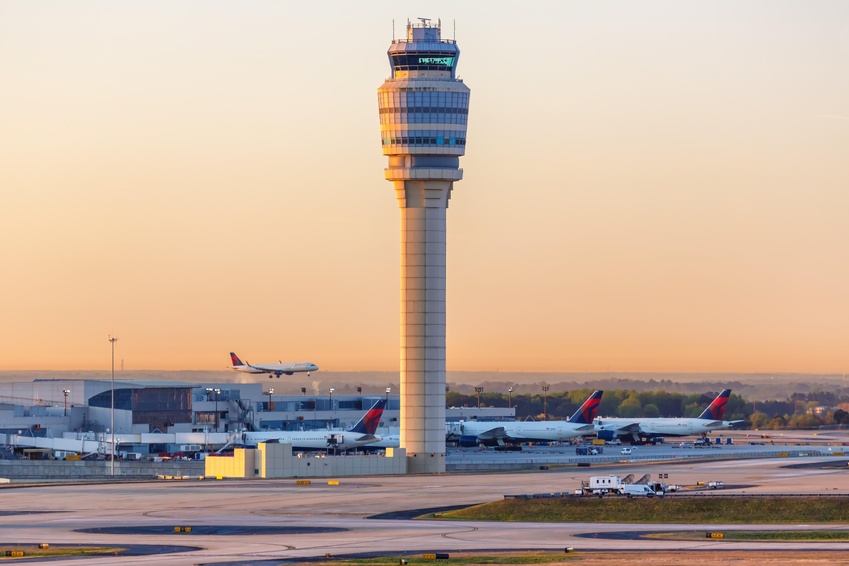
For travelers, airport disruption is a familiar frustration. A delay that begins at 15 minutes can stretch into several hours, baggage can disappear, and passengers may find themselves rushing across terminals to make a connection. Behind these experiences is one of the world's most complicated transportation networks, where a single storm can trigger cascading effects across airports and airlines, disrupting thousands of journeys, creating significant financial costs, and potentially affecting safety.
But what if airport operators could identify the consequences of a disruption before it occurred and test different responses without affecting passengers?
That is the idea behind Autonoma's AutoVerse platform, a high-fidelity digital twin designed to replicate airport operations. Built using Cisco technology and supported through Cisco's Country Digital Acceleration (CDA) program, the platform allows airport and airline teams to examine how operational decisions could affect an entire airport ecosystem.
The technology's development has an unusual origin, beginning with autonomous racing vehicles before moving into one of the world's busiest airports. It also demonstrates how advanced simulation and digital infrastructure can contribute to Cisco's goal of using technology to help create a more inclusive future.
From Autonomous Racing to Airport Operations
Autonoma did not start out developing airport technology. Its origins lie in autonomous transportation, including robotaxis, autonomous trucks and eventually self-driving race cars. The latter brought Autonoma founder and CEO Will Bryan into contact with Cisco through a sponsored racing competition.
During those projects, Bryan's team repeatedly encountered the same challenge: systems that appeared reliable in virtual environments could behave very differently when deployed in the physical world.
To address that gap, the team began developing more sophisticated simulation capabilities. About four and a half years ago, those efforts evolved into Autonoma. Although autonomous vehicles remained an important part of its background, the company recognized that similar simulation challenges existed in airports, cities and other highly interconnected environments.
Cisco's Country Digital Acceleration program works with governments, businesses and academic institutions to support digital transformation and help countries make greater use of technology. Airports represented a natural application because of their importance to national economies.
As Wayne Cuervo, CDA's Director of Business Development, explains, "An airport is the front door to a country and its economy."
Autonoma initially came to the CDA team's attention through Cisco's Fast Future Innovation Awards. The resulting collaboration was subsequently tested in two very different airport environments: Hartsfield-Jackson Atlanta International Airport, the world's busiest airport, and Augusta Regional Airport, a smaller facility that experiences a significant annual increase in traffic associated with the Masters Tournament.
The Partnership
In the following conversation, Bryan and Cuervo discuss how the collaboration developed, how simulation technology is helping airport operators evaluate decisions before implementing them, and how those capabilities could eventually improve the passenger experience.
How did the partnership between Autonoma and CDA get started?
Wayne: We were introduced to Autonoma through the Fast Future Innovation Awards, which invites companies to present technology aimed at addressing practical challenges. Their approach stood out because it targeted an important infrastructure problem using a distinctive technology solution.
That made the company a natural match for CDA. The program is intended to support ambitious solutions to problems with national significance, while airports play a major role in connecting countries and supporting their economies. Autonoma's physics-based simulations can help improve airport operations, an area where Cisco's capabilities in secure computing, resilient networks and IoT integration are particularly relevant.
CDA also offered experience, technical expertise and a framework for validating the technology and helping it expand. The combination of a significant real-world application, an innovative approach and a strong technological fit made the project compelling.
What happened with Delta at Hartsfield-Jackson Atlanta International Airport?
Will: Hartsfield-Jackson is, of course, the world's busiest airport. After receiving the Cisco Innovation Award, we were looking for opportunities to deploy the technology at additional airports. Atlanta was particularly relevant because it is close to our operations and is also Delta's home base.
We had already been talking with Delta, but Cisco's involvement helped accelerate the pilot.
The first area we concentrated on was scheduling and gate allocation. Delta has been developing technology to improve scheduling, make passenger and crew connections smoother and reduce aircraft taxi time, which can also lower fuel consumption. Before making significant changes to its operating processes, however, the airline wanted confidence that those changes would perform as intended.
We therefore created a high-fidelity digital representation of the airport that could be used to evaluate gate assignments before implementing them. The work later expanded into short-term operational forecasting, including examining what the next four to six hours might look like when changing weather conditions are taken into account.
Autonoma has reported a 99% reduction in deployment risk. What does that mean operationally?
Will: We evaluate several measures, including the number of possible scenarios that can be tested virtually before a change is introduced into the real operation.
At Augusta, for example, we examined roughly 40 different aircraft-parking strategies under varying traffic conditions.
With Cisco infrastructure, our simulations can operate hundreds of times faster than real-world time. We can run approximately 50 simulations simultaneously on one machine because the underlying hardware can support that workload.
That changes the scale of testing significantly. Rather than requiring an entire day to model one day of operations, we can simulate months of activity within a single day. That gives airport teams broader scenario coverage and reduces uncertainty around deployment.
What would you tell airports that are reluctant to replace traditional reactive processes with AI and simulation?
Wayne: Traditional approaches, including reliance on spreadsheets and highly manual processes, are becoming inadequate for managing an airport. The complexity of modern airport operations makes it increasingly difficult to coordinate everything manually, particularly when the airport is responsible for critical services.
Airports are also under pressure to reduce their environmental impact. Identifying and addressing operational inefficiencies requires technology capable of analyzing large amounts of information and evaluating alternatives.
When AI and simulation are implemented responsibly, they can contribute to areas such as resilience, security, efficiency and sustainability. They allow operators to identify inefficiencies, compare potential responses and make better-informed decisions while operations are underway.
We expect AI within AutoVerse to develop from a system that helps engineers evaluate thousands of possible scenarios into a capability that can identify potential problems earlier and help operators respond before those problems become major disruptions.
How do you maintain reliability while continuing to innovate?
Will: It is a challenging balance. Moving a technology from a prototype into an enterprise or public-sector environment requires much more than demonstrating that the concept works. The system must be dependable, thoroughly tested and properly validated.
At Autonoma, we aim to develop quickly while simultaneously building the testing, validation and deployment processes required around every new capability. The amount of testing depends on the operational consequences of a feature. Lower-risk capabilities can progress more rapidly, while functions that could influence critical airport operations require substantially more validation.
That is another reason our relationship with Cisco is important. Autonoma contributes its expertise in simulation, operational modeling and rapid development. Cisco provides established infrastructure, extensive experience and capabilities spanning networking, computing and hardware integration.
Together, that combination allows us to continue developing new capabilities while maintaining the level of reliability required in critical operating environments.
How does the project support Cisco's goal of creating an inclusive future?
Will: One of the things we are demonstrating with Autonoma is that simulation can reveal consequences that may be difficult for an individual person to anticipate. The system can examine relationships between events, downstream consequences and cascading effects throughout a complicated environment such as an airport.
Airports are among the most complex operational environments, so solving problems there can provide lessons for other industries as well. The same underlying capability could potentially be applied to smart cities, healthcare and many other areas.
Once a technology has demonstrated that it can operate in an environment with this level of complexity and security requirements, there are numerous possibilities for applying those capabilities elsewhere.
How could these technologies affect ordinary travelers?
Wayne: If the technology is deployed across an airport, passengers could benefit from more efficient journeys and better visibility into delays and weather-related disruptions. Travel could become more predictable, safer and more efficient.
That could mean less time sitting on an aircraft waiting for a gate, fewer baggage problems and more efficient movement between aircraft and terminals. Ultimately, the objective is to improve the experience for passengers.
Will: Consider a parent traveling with three children. The airline sends a notification saying the flight is delayed by 15 minutes. Then the delay becomes 30 minutes, and then another 30 minutes. The uncertainty continues until several hours have passed, leaving the parent exhausted and the children frustrated.
If the airline could determine several hours earlier that the delay was likely to last three hours, the disruption would still exist. But the passenger would have useful information rather than a sequence of constantly changing estimates.
That extra time could allow the family to get something to eat, take care of a baby, or spend time in an airport lounge rather than repeatedly waiting for the next update.
The technology cannot necessarily eliminate every disruption. But turning an unpredictable, stressful experience into one that passengers can plan around can still represent a meaningful improvement.
 Companies