

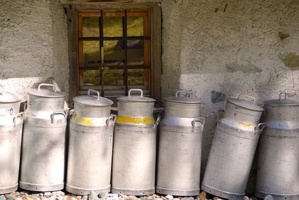
Dailycsr.com – 28 July 2018 – Over the last century, agriculture has come a long way; however much remains to be done yet to meet the “Sustainable Development Goal 2”, whereby ensuring “sustainable food production systems” besides increasing the small-scale farmers’ incomes and ending hunger on the long run.
On the dairy industry’s front, it is said that within the coming decade, the demand for milk will shoot above the supply levels. Therefore, in this challenge of nutrition and food security, the smallholder farmers need to plat a “vital role”. Currently, “339 million tonnes of milk” produced by the small-scale farmers contribute to the “global total of 819 million tonnes”. The dairy sector could be instrumental in cutting down on food waste and ensuring food security, while it can also address the missing link between “smallholder farmers” and the value chain as a potential channel to “create jobs”.
In 2010, Bangladesh witnessed the establishment of the “first Dairy Hub”, which is still operating in Chatmohar. At present, there are five such Dairy Hubs that are running in Bangladesh as they collect milk from over twelve thousand small-scale farmers. Tetra Pak’s “unique Dairy Hub model” helps to build up a “sustainable dairy value chains” which supports small-scale farmers and connects the customers to “higher-quality locally produced milk in seven developing countries across three continents”.
Here is a list of four “sustainable dairy farming” pillars that come to mind while talking of sustainable value chains, as mentioned by Tetra Pak:
- Providing smallholder farmers access to a formal market
- Efficient farm management focusing on long-term profitability
- Utilising best practices in animal health and husbandry
- Minimising environmental impact
The model has yielded success in all over the world by boosting efficiencies and contributing to the enhanced stability in the dairy supply chain. According to the figures obtained in Bangladesh the daily average of per cow’s milk yield has increased by “143%”. As a result, the daily quantity of milk collection has shot up by “1950%”. Similarly, the average monthly income has also multiplied by “81%”.
Moreover, there has been a milk quality increment at the Dairy Hub “from 6.4% to 81% since 2012”. On the other hand, in Sri Lanka, the monthly average incomes of each small-scale farmer went up by 57%. In the word of a local farmer: “We are finally able to stand on our own two feet and provide for our children without being in debt. The project has been a godsend to us.”
References: 3blmedia.com