

Cummins Engines Support Operations at Poland’s KGHM Lubin Mine
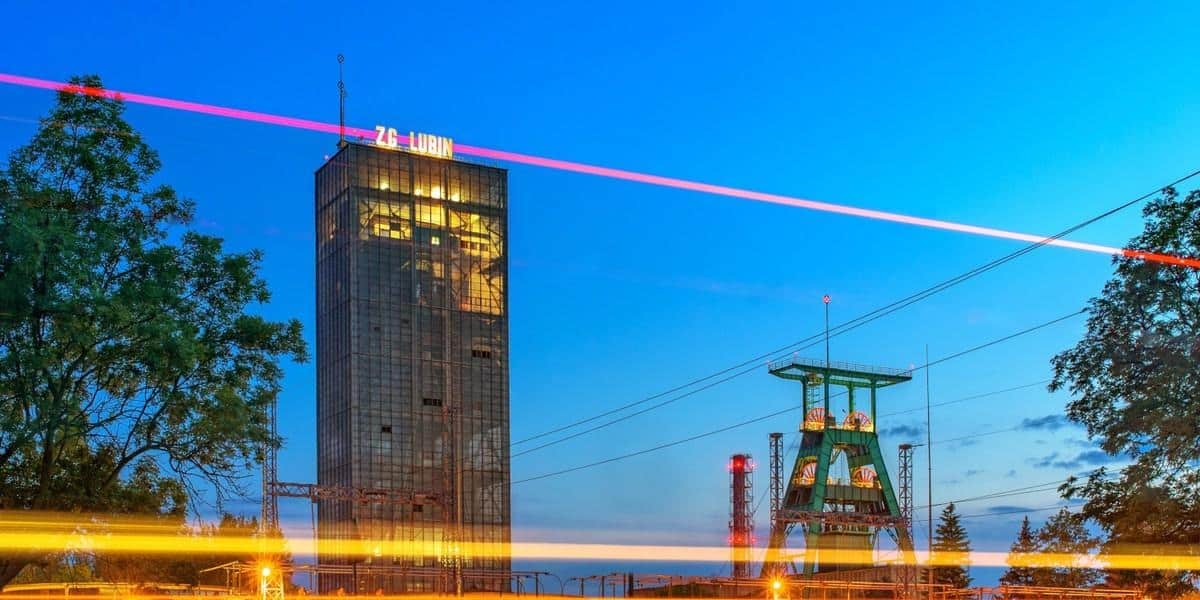
More than 700 Cummins engines at KGHM Lubin mine help power the equipment used to extract copper and silver deep beneath Poland’s Lower Silesia region. Operating in an environment characterised by high temperatures, humidity, corrosive mineral deposits and demanding working conditions, the engines are adapted to meet the requirements of underground mining.
The Lubin mine, operated by KGHM Polska Miedź, is the oldest facility in Poland’s Copper Belt. With more than 60 years of industrial history, it produces between seven and eight million tonnes of ore annually, yielding approximately 92,000 tonnes of copper and over 400 tonnes of silver.
Cummins has worked with KGHM and its equipment manufacturing subsidiary, KGHM ZANAM, for around two decades. The relationship extends beyond engine supply to include engineering modifications, maintenance support and remanufacturing services.
Over the past 10 years alone, Cummins has supplied more than 1,400 engines for the specialised equipment used in KGHM’s mining operations.
Cummins engines powering KGHM’s underground mining fleet
The engines supplied to KGHM are used in a range of underground mining vehicles, including loaders, trucks and bolters. The portfolio includes:
- B6.7 CM2450: Used in loaders and trucks.
- B4.5 CM4250: Supplied for trucks and bolters.
- QSL9 CM2450: Used in high-performance loaders manufactured by Epiroc.
All these engines meet the EU Stage V emissions standard, supporting KGHM’s environmental and social responsibility objectives.
Engineering modifications for harsh underground conditions
The operating environment in Lower Silesia’s copper mines places considerable demands on machinery. High humidity and mineral-rich salts create corrosive conditions that can shorten equipment life and affect the reliability of electrical and mechanical components.
Cummins has developed specific modifications to help its engines withstand these conditions. These include customised wiring harnesses, heavy-duty alternators and reinforced starter motors designed to resist corrosion in the underground atmosphere.
Such adaptations are important for equipment working continuously in abrasive mining conditions. Loaders, for example, must handle heavy quantities of copper ore while maintaining dependable engine performance.
On-site maintenance support at Lubin
Keeping mining equipment operational is essential because unexpected downtime can have a significant financial impact on mine operators.
To support KGHM, Cummins maintains a dedicated branch in Lubin, close to the mining operations. The branch has nine office-based employees and 24 technicians working at the Lubin mine. Their responsibilities include maintaining the fleet of more than 700 Cummins-powered machines and supporting operations around the clock.
“Machine downtime is massively expensive for the operator, so our presence is reassuring to KGHM,” said Waldemar Bilcharski, Lubin branch manager.
Cummins also uses data analytics to monitor engine condition in real time. This allows service teams to identify potential problems, such as sensor faults or falling oil pressure, before they develop into more serious failures.
Another option available to KGHM is a service exchange arrangement. Under this model, an engine requiring attention can be replaced with a fully remanufactured unit, potentially allowing the equipment to return to service within hours.
Engines used for these exchanges are generally maintained locally at Lubin. More extensive overhauls can be handled by Cummins’ European Master Rebuild Centre in Krakow, approximately four hours away by road.
Stage V engines and the move towards cleaner mining
The adoption of EU Stage V-compliant engines is an important part of the partnership. According to Cummins, the latest Stage V engines substantially reduce nitrogen oxide emissions and particulate matter.
There are also potential operational benefits in underground mines. Cleaner-running engines can reduce heat and harmful emissions, helping to ease the demands placed on ventilation systems. Ventilation is a major operating expense in deep underground mining, where air quality and temperature must be managed.
Looking further ahead, Cummins and KGHM are exploring technologies associated with Destination Zero, Cummins’ strategy for moving towards zero-emission mining. The areas under consideration include battery-electric and hydrogen technologies.
Cummins leadership recognises the work of underground technicians
Ann-Kristin de Verdier, Executive Managing Director of Cummins DBU Europe, visited the company’s Lubin offices and the underground mine to see the partnership in operation.
She described the visit as her first experience of being approximately one kilometre underground in an active mine. Her earlier visit to a silver mine had been to a facility that was more like a museum.
“I wanted to meet our amazing technicians, who do such an incredible job in the harshest of environments, and recognise their dedication,” she said.
De Verdier also highlighted the physical demands placed on the technicians. As the mine expands, workshop locations can change, requiring service personnel to carry their toolkits to different working areas.
She said the tools are heavy and working conditions are hot and humid, adding that Cummins is examining ways to reduce the burden on its technicians.
She also reaffirmed the importance of KGHM as a partner and Cummins’ commitment to supporting the company’s continued operations.
The visiting Cummins team pictured at Lubin included Waldemar Bilcharski, Ann-Kristin de Verdier, Karol Walczak, Regional Service Manager, Ewelina Ziemba-Termanowska, People Support Advisor, and Ewelina Kołodziej, HSE Leader.
European Master Rebuild Centre expands mining engine support
Cummins’ European Master Rebuild Centre (MRC) in Krakow is another important part of its support network for the mining sector. The facility provides high-horsepower engine rebuilding services and maintains stock to help reduce customer downtime.
Recently, the centre completed the rebuilding of two QSK50MCRS engines, which have been stocked for use in Hitachi EH3500 and Komatsu HD1500 haul trucks.
The QSK50MCRS engines belong to Cummins’ high-horsepower portfolio and are designed for demanding applications such as large-scale mining operations.
By rebuilding and stocking these engines in Europe, Cummins aims to provide faster replacement options and reduce the time customers spend waiting for major engine repairs. Remanufacturing also offers an alternative to purchasing new engines.
According to Cummins, each rebuild follows its factory specifications and uses 100% Genuine Parts alongside its remanufacturing processes.
The Krakow centre is already preparing additional exchange engines for rebuilding, with the aim of strengthening stock availability and responding to customer requirements across Europe.
The availability of rebuilt QSK50MCRS engines, together with the maintenance and engineering support provided at Lubin, reinforces Cummins’ role in supporting KGHM’s mining fleet. The partnership combines engine supply, local technical assistance and regional remanufacturing capabilities to help keep demanding underground and surface mining operations running.