
Cummins and KGHM Strengthen Two-Decade Partnership at Poland’s Lubin Copper Mine
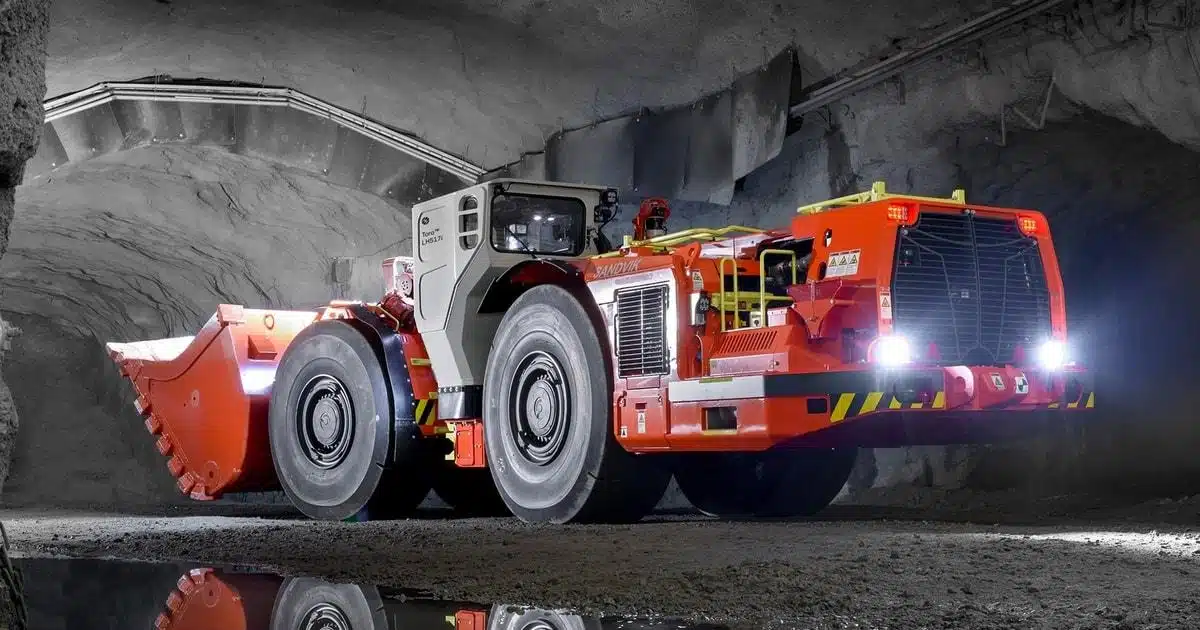
Cummins engines KGHM copper mine operations are central to a long-standing engineering partnership between the American power technology company and Polish mining group KGHM Polska Miedź. More than 700 Cummins engines currently support operations at KGHM’s Lubin mine in Poland’s Lower Silesia region, helping power underground mining equipment and transport extracted ore.
Located approximately 1,000 metres beneath the surface, the Lubin mine operates in an environment characterised by high temperatures, humidity, corrosive mineral deposits and demanding working conditions. Cummins engines are used across specialised mining equipment to support the extraction and movement of copper ore.
The collaboration, which involves KGHM’s equipment manufacturing subsidiary KGHM ZANAM, has been in place for approximately two decades. Cummins says it has supplied more than 1,400 engines to KGHM over the past 10 years alone.
KGHM Lubin Mine Produces Copper and Silver
The Lubin mine is the oldest operation in Poland’s Copper Belt, with an industrial history spanning more than 60 years.
According to the supplied company material, the mine extracts between seven and eight million tonnes of ore annually. This production yields approximately 92,000 tonnes of copper and more than 400 tonnes of silver each year.
The demanding underground environment places considerable pressure on mining machinery, making engine reliability and equipment availability particularly important.
Cummins supplies several engine models for KGHM’s specialised mining fleet, including:
- B6.7 CM2450: Used in loaders and trucks.
- B4.5 CM4250: Deployed in trucks and bolters.
- QSL9 CM2450: Used in high-performance loaders manufactured by Epiroc.
The engines are certified to the European Union’s Stage V emissions standard, supporting KGHM’s environmental and operational objectives.
Cummins Customises Engines for Underground Mining Conditions
Operating underground in Lower Silesia presents particular engineering challenges. High humidity and mineral-rich salts create a corrosive atmosphere that can accelerate equipment deterioration.
To improve reliability, Cummins has introduced modifications specifically designed for the conditions at KGHM’s mines. These include customised wiring harnesses, heavy-duty alternators and reinforced starter motors intended to withstand the corrosive underground environment.
The modifications help protect critical engine components while enabling mining equipment to operate in conditions involving abrasive copper ore and demanding workloads.
Equipment longevity is particularly important in underground mining, where premature component failures and unplanned maintenance can affect productivity.
Dedicated Cummins Service Team Supports KGHM Operations
Minimising equipment downtime is a central part of the Cummins-KGHM partnership. To provide local support, Cummins operates a dedicated branch in Lubin, close to KGHM’s mining operations.
The facility has nine office-based employees and 24 technicians working at the Lubin mine. Together, they provide round-the-clock support for the more than 700 Cummins engines deployed across the operation.
“Machine downtime is massively expensive for the operator, so our presence is reassuring to KGHM,” said Waldemar Bilcharski, manager of Cummins’ Lubin branch.
Cummins also uses data analytics to monitor engine conditions and identify potential problems before they develop into major failures. Monitoring parameters such as sensor performance and oil pressure helps maintenance teams identify warning signs and plan interventions.
Engine exchange and remanufacturing reduce downtime
The two companies can also use a service exchange arrangement in which a worn engine is replaced with a fully remanufactured unit. This allows equipment to return to operation within hours rather than waiting for an extensive overhaul.
Cummins generally maintains these replacement engines locally in Lubin. More complex rebuilding work can be undertaken at its European Master Rebuild Centre (MRC) in Krakow, approximately four hours away by road.
This arrangement provides KGHM with access to local maintenance capabilities as well as more extensive engine rebuilding services.
Stage V Engines Support Cleaner Mining Operations
The adoption of EU Stage V emissions standards represents an important development in the Cummins-KGHM relationship.
Cummins says its latest Stage V engines significantly reduce nitrogen oxide emissions and particulate matter. In underground mines, cleaner engine emissions can also help reduce heat and airborne contaminants.
This has implications for mine ventilation, which is among the major operating expenses in deep underground mining. Lower heat and pollutant levels can help reduce the ventilation burden associated with diesel-powered equipment.
Looking further ahead, KGHM and Cummins are exploring technologies under Cummins’ Destination Zero strategy. The initiative focuses on advancing lower- and zero-emission technologies, including battery-electric and hydrogen-based solutions for mining applications.
The exploration reflects the companies’ interest in technologies that could support the longer-term transition towards cleaner mining operations.
Cummins Executive Visits Lubin Mine and Recognises Technicians
Ann-Kristin de Verdier, Executive Managing Director of Cummins DBU Europe, recently visited the company’s Lubin operations and KGHM’s underground mine to observe the partnership firsthand.
The visit provided an opportunity to meet the technicians responsible for maintaining Cummins engines in the challenging underground environment.
“I’ve been to an silver mine which was more like a museum, but this was my first experience of being a kilometre underground in a working mine,” de Verdier said.
She highlighted the dedication of the technicians working in difficult conditions and said the visit was intended partly to recognise their contribution.
As the mine continues to expand, workshop locations and maintenance areas frequently change. Consequently, technicians sometimes have to carry their toolkits as they move between working areas.
De Verdier acknowledged the physical demands of this work, particularly in the heat and humidity underground, and said Cummins was examining ways to reduce the weight technicians have to carry.
She also reaffirmed the company’s commitment to its relationship with KGHM.
The visiting Cummins delegation included Waldemar Bilcharski, Ann-Kristin de Verdier, Karol Walczak (Regional Service Manager), Ewelina Ziemba-Termanowska (People Support Advisor) and Ewelina Kołodziej (HSE Leader).
European Master Rebuild Centre Expands High-Horsepower Engine Support
Cummins’ European Master Rebuild Centre in Krakow is playing an additional role in supporting mining operations across the region through its high-horsepower engine rebuilding capabilities.
The facility has recently completed the rebuilding of two QSK50MCRS engines and added them to its available stock. These engines are intended for demanding mining applications involving the Hitachi EH3500 and Komatsu HD1500 haul trucks.
The QSK50MCRS belongs to Cummins’ high-horsepower engine portfolio and is designed for heavy-duty applications where performance and reliability are essential.
By rebuilding and stocking engines locally, the Krakow facility aims to shorten turnaround times and reduce customer downtime. The approach also provides an alternative to purchasing new engines.
According to Cummins, each rebuilding process follows factory specifications and uses 100% genuine parts alongside its established remanufacturing procedures.
The centre is already preparing additional replacement engines for rebuilding to strengthen stock availability and respond to customer requirements across Europe.
With demand for high-horsepower engines in the mining sector continuing to create requirements for specialised maintenance and rebuilding services, the Krakow facility is expected to remain an important part of Cummins’ regional support network.
The combined capabilities of the Lubin service operation and the Krakow Master Rebuild Centre reinforce Cummins’ long-term support for KGHM, covering engine supply, maintenance, remanufacturing and the development of cleaner mining technologies.