
Women in Leadership Forum 2026 Explores How Women Build Businesses That Last
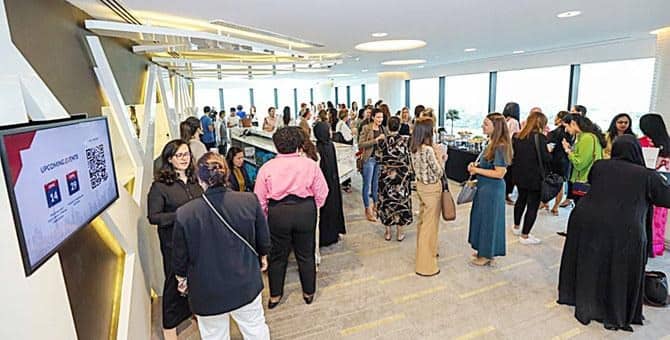
The Women in Leadership Forum 2026, hosted by Cheung Kong Graduate School of Business (CKGSB) on November 26, brought together women entrepreneurs, business leaders and international organisations to examine how companies can achieve lasting success and navigate change.
Held under the theme “The Entrepreneurial Edge,” the forum featured the Cartier Women’s Initiative as its strategic partner and the Swiss Chamber of Commerce in China as a supporting organisation. Discussions focused on women’s contribution to entrepreneurship, the challenges they encounter in building businesses, and the importance of resilience in leadership and the workplace.
Women entrepreneurs and the importance of access to capital
Kanta Singh, Head of Office (ad interim) at the UN Women China Office, highlighted the wider economic and social contribution of women entrepreneurs. Beyond creating jobs, women founders provide examples for younger generations and help expand opportunities for other women.
However, she noted that access to capital remains a significant barrier for women seeking to establish and grow businesses.
“This century belongs to women,” Singh said, underscoring the growing importance of women’s participation in business and economic development.
Workplace Resilience Index highlights differences in senior management
CKGSB Associate Dean Zhang Xiaomeng introduced her Workplace Resilience Index, developed using 35,881 responses collected across China between 2020 and 2026.
The findings indicated that, among senior management respondents, a higher proportion of women than men scored highly on both emotional and cognitive resilience.
Zhang argued that organisations should take a more deliberate approach to strengthening employees’ ability to respond to challenges and adapt to changing circumstances.
“Companies should build employees’ cognitive resilience by adopting customized solutions that help people rethink their status while reducing experiences that drain them to increase organizational resilience,” she said.
The findings placed workplace resilience among the key themes of the forum, linking individual capabilities with the ability of organisations to manage change.
Boston Consulting Group highlights the importance of workplace context
Niamh Dawson, partner and director at Boston Consulting Group (BCG), spoke about the conditions needed to create lasting organisational change.
She argued that sustainable improvements require businesses to reshape the context in which people work, rather than relying on isolated initiatives. According to Dawson, individual measures should serve one clearly defined priority.
Her remarks reinforced the forum’s broader discussion about creating workplaces and business structures that support long-term performance.
Women founders share lessons on building sustainable companies
A panel discussion moderated by CKGSB Assistant Professor of Marketing Li Xilin brought together four women entrepreneurs from different industries:
- Lyu Lulu, Juventas Cell Therapy and CKGSB EMBA alumna
- Qiu Xiaoxin, Axera Semiconductor
- Yao Lingli, MySong KTV and CKGSB EMBA alumna
- Charlotte Wang, Equota Energy
The founders discussed the demands of entrepreneurship, the importance of long-term commitment and the organisational changes required as companies expand.
Lyu encouraged entrepreneurs to remain patient and passionate once they have committed to building a business. She emphasised that founders need to sustain their dedication through the challenges of running a company.
Qiu highlighted the importance of perseverance and building a dependable support network.
“What matters is staying steady and finding people who believe in you and are willing to support you over the long term,” she said.
Charlotte Wang, a two-time Cartier Women’s Initiative awardee and juror, focused on the transition from founding a business to managing its growth. She said entrepreneurs must establish systems, recruit the right people and allow business performance to demonstrate the results.
As she put it, founders need to “put systems in place, find the right people and let the results speak for themselves.”
Yao Lingli offered a perspective on adapting to changing markets. Having expanded MySong KTV to more than 1,200 venues, she challenged the idea that established industries inevitably decline.
“There are no sunset industries, only sunset products,” Yao said, arguing that businesses must continue to evolve their offerings rather than assume their markets have run their course.
Cartier chairman calls for wider participation in advancing women
The forum concluded with a keynote address by Cyrille Vigneron, Chairman of Cartier Culture and Philanthropy.
Vigneron emphasised that the benefits of women’s progress extend beyond women themselves, stating that when women thrive, all of humanity thrives. He also stressed that advancing women’s participation and opportunities requires the active involvement of men.
His remarks broadened the discussion from women’s individual achievements to the shared responsibility of businesses and society in supporting gender equality.
CKGSB and Cartier continue their partnership supporting women entrepreneurs
The 2026 forum builds on the partnership between CKGSB and Cartier, formalised in 2024. The collaboration aims to support women entrepreneurs and promote business for good.
By bringing together founders, corporate leaders and international organisations, the event provided a platform to exchange perspectives on entrepreneurship, leadership and organisational resilience.
The discussions highlighted a common theme: building businesses that last requires more than a strong initial idea. It also calls for sustained commitment, access to resources, supportive networks, effective organisational systems and the ability to adapt as markets and workplaces change.