

 New Holland’s Methane-Powered Tractor Wins Major ESG and Sustainability Awards


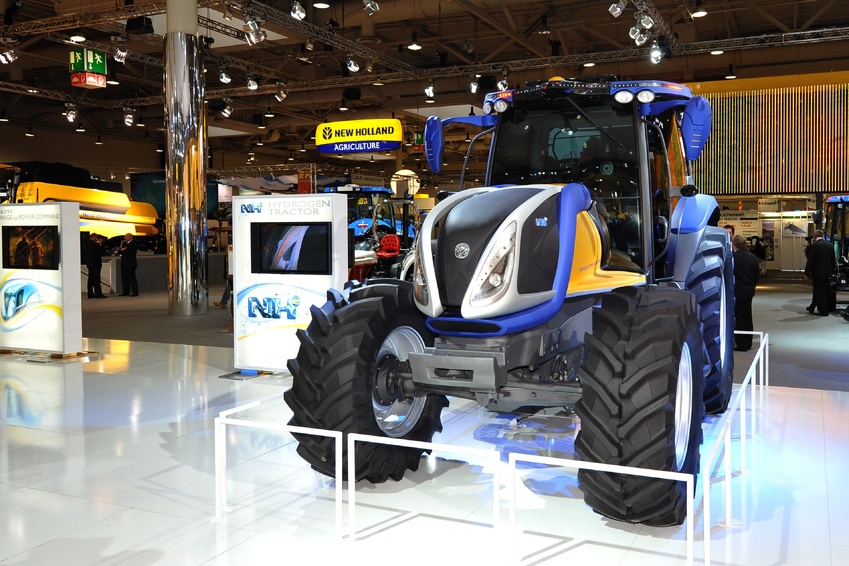
Following its 2025 ESG Award win for “Technological Innovation in ESG,” CNH brand New Holland has earned another major accolade for its T6.180 Methane Power tractor. The biomethane-powered machine—recognized as the world’s first agricultural tractor to run on this renewable fuel—was recently honored with the ECO Innovation and Sustainability Award in São Paulo, Brazil.
New Holland’s journey toward alternative energy began in 2006 with the launch of its alternative fuels leadership strategy. Over the years, the brand explored multiple clean-energy solutions, including tractors powered by biodiesel and hydrogen. This innovation path led to the unveiling of the first methane-powered T6 series prototype in 2013, underscoring New Holland’s long-standing commitment to environmental responsibility and reducing carbon emissions.
Environmental benefits
Commercially introduced in 2022, the T6.180 Methane Power is now available to agricultural producers in Brazil. Its biomethane propulsion system delivers significant environmental gains, cutting regulated pollutant emissions by up to 80% and lowering CO₂ emissions by as much as 84% compared to conventional diesel engines. In addition, operating on biomethane can reduce fuel costs by approximately 25% to 40%, while maintaining performance and operating range comparable to a diesel tractor of the same class.
In 2023, New Holland further advanced its sustainability vision by unveiling the concept of the energy-independent farm. Developed in collaboration with leading biomethane companies, this initiative created an integrated ecosystem for producing renewable gas from animal waste. The system—comprising a biodigester, biogas purification unit, generator, tractors, and heavy-duty trucks—represents a first for Brazil and marks a major shift in the nation’s biogas landscape.
This approach enables farmers to generate and use biogas directly on their own operations, turning agricultural waste into a reliable energy source. By closing the energy loop, farms can become more self-sufficient, environmentally sustainable, and resilient. The result is lower operating costs, simplified fuel management, and reduced dependence on the volatility of the fossil fuel market.
New Holland’s journey toward alternative energy began in 2006 with the launch of its alternative fuels leadership strategy. Over the years, the brand explored multiple clean-energy solutions, including tractors powered by biodiesel and hydrogen. This innovation path led to the unveiling of the first methane-powered T6 series prototype in 2013, underscoring New Holland’s long-standing commitment to environmental responsibility and reducing carbon emissions.
Environmental benefits
Commercially introduced in 2022, the T6.180 Methane Power is now available to agricultural producers in Brazil. Its biomethane propulsion system delivers significant environmental gains, cutting regulated pollutant emissions by up to 80% and lowering CO₂ emissions by as much as 84% compared to conventional diesel engines. In addition, operating on biomethane can reduce fuel costs by approximately 25% to 40%, while maintaining performance and operating range comparable to a diesel tractor of the same class.
In 2023, New Holland further advanced its sustainability vision by unveiling the concept of the energy-independent farm. Developed in collaboration with leading biomethane companies, this initiative created an integrated ecosystem for producing renewable gas from animal waste. The system—comprising a biodigester, biogas purification unit, generator, tractors, and heavy-duty trucks—represents a first for Brazil and marks a major shift in the nation’s biogas landscape.
This approach enables farmers to generate and use biogas directly on their own operations, turning agricultural waste into a reliable energy source. By closing the energy loop, farms can become more self-sufficient, environmentally sustainable, and resilient. The result is lower operating costs, simplified fuel management, and reduced dependence on the volatility of the fossil fuel market.
 Companies