
Healthy Buildings Can Improve Employee Well-being and Workplace Productivity
Healthy buildings are increasingly being recognised as an important part of improving employee well-being, addressing labour shortages and strengthening workplace productivity. By investing in better indoor air quality, natural lighting, thermal comfort and occupational health programmes, businesses can create environments that encourage employees to remain with their employers while reducing absenteeism.
Research indicates that healthier workplaces can deliver benefits beyond physical comfort. Employees who feel that their health and well-being are valued are more likely to experience greater job satisfaction, remain engaged and contribute effectively. Companies such as ECOS and Built demonstrate how these principles can be applied across both manufacturing facilities and construction operations.
How healthy buildings address workplace challenges
Labour shortages and employee retention remain important considerations for businesses. Improving workplace conditions offers one way to address these challenges by creating environments that support employees’ physical and mental health.
Better ventilation, appropriate lighting and comfortable indoor temperatures can contribute to healthier working conditions. Visible investments in employee well-being can also strengthen the relationship between employers and their workforce, helping staff feel valued.
The benefits extend to both office-based employees and people working in industrial or outdoor environments. However, implementing healthy building strategies requires businesses to consider the specific health risks associated with different workplaces.
ECOS integrates health and sustainability into manufacturing facilities
ECOS, a brand of environmentally conscious cleaning products manufactured by Earth Friendly Products, has WELL Certified manufacturing plants and offices in every region of the United States.
Its facilities demonstrate how health-focused building strategies can be incorporated into manufacturing environments, even where conventional access to daylight is limited.
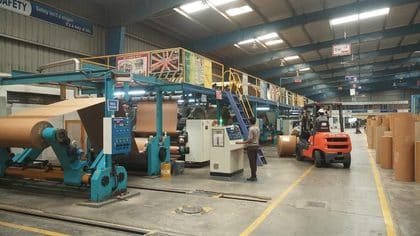
Most manufacturing plants have no windows, including those operated by ECOS. Architect Evdoxia Giovannopoulou addressed this limitation by introducing natural daylight through skylights and solar tubes.
The facilities also use murals and images of nature instead of actual plants in manufacturing areas, where biological materials could potentially contaminate products.
Air quality is another important consideration. ECOS installed MERV 16 filters in all its HVAC systems and placed air quality monitors throughout its facilities to maintain high indoor air quality standards.
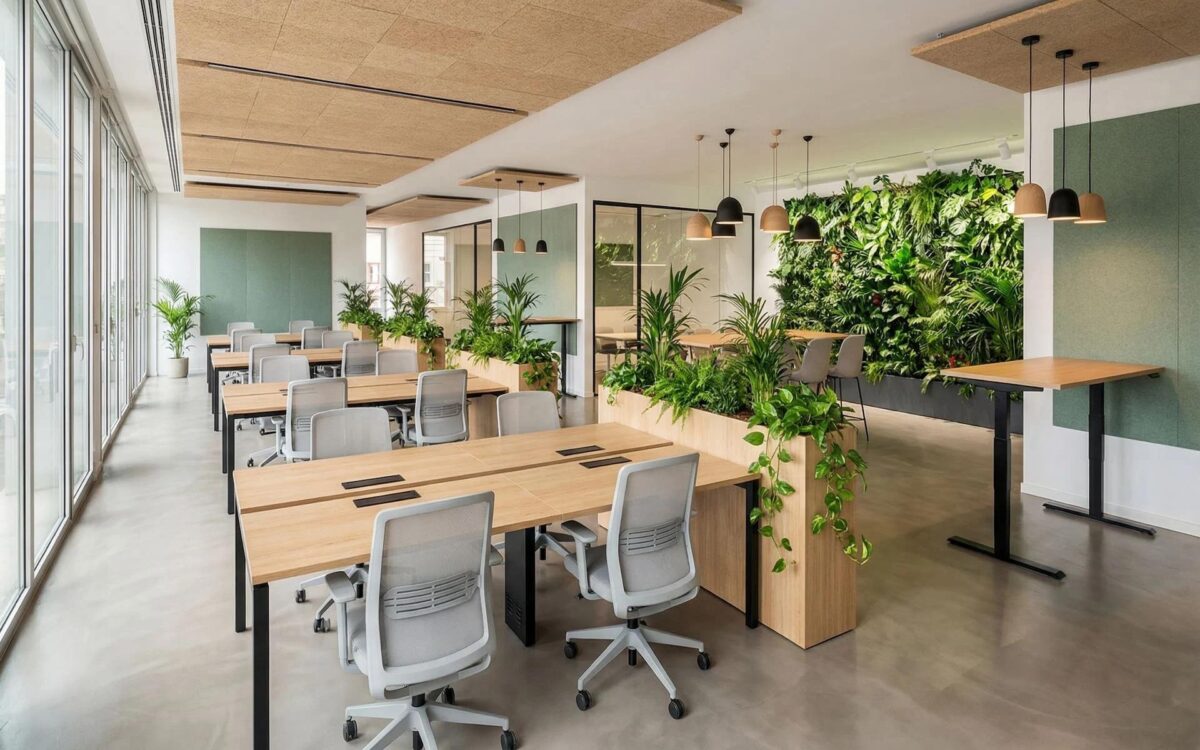
Office environments incorporate additional elements designed to create a connection with nature. These include bamboo flooring, water features, natural colours, biophilic design elements and circadian lighting. The latter is designed to support the body’s natural daily rhythms through appropriately adjusted lighting.
Together, these measures illustrate how manufacturing and office environments can incorporate health-focused design without compromising operational requirements.
Research links workplace health with reduced absenteeism
Evidence cited in the International WELL Building Institute’s (IWBI) report, Investing in Health Pays Back, highlights the relationship between employee well-being, job satisfaction and workplace attendance.
Research published in PLOS ONE found that improvements in health and well-being were associated with significantly higher job satisfaction, used as a proxy for presenteeism, alongside a 2% reduction in the prevalence of sick leave, used as a proxy for absenteeism.
Ventilation also plays an important role in workplace health. A meta-analysis published in Indoor Air found that increasing ventilation rates to as much as 25 litres per second per person reduces absenteeism associated with sickness, Sick Building Syndrome symptoms and respiratory illnesses.
Additionally, research published in Procedia – Social and Behavioral Sciences reported that employees participating in workplace wellness programmes were absent less frequently than those who did not participate.
These findings support the business case for investments in healthier working environments, where improved conditions can contribute to employee satisfaction and attendance.
Built extends workplace well-being to construction workers
While office environments are an important part of healthy building strategies, the health requirements of workers in physically demanding occupations also need attention.
Built, Australia’s largest privately owned construction company, is headquartered in Sydney. It operates five regional offices and has approximately 350 contracted construction workers operating across 65 construction sites at any given time.
The company incorporates several health-focused features into its offices, including gym facilities, 20 hours per week of training sessions, circadian lighting, biophilic design and advanced HVAC systems. Humidity controls and air-purifying planted totems are also part of its office environment.
However, Built’s workplace health strategy extends beyond its offices. The company places considerable emphasis on the physical and mental well-being of construction workers, many of whom spend much of their working time outdoors.
Addressing skin cancer risks among construction workers
Construction workers face increased exposure to ultraviolet (UV) radiation because of the amount of time they spend working outdoors. According to the source material, they can absorb between two and five times more UV radiation than indoor workers, increasing their risk of skin cancer.
Built’s Workplace Well-being lead, Haydn Masters, spends more than half his working week visiting construction sites to conduct health and wellness education sessions.
His responsibilities also involve developing relationships with workers so they feel comfortable discussing personal health concerns. Masters believes that regular interaction is essential to building trust, even when no formal training session is scheduled.
His previous high-profile career in rugby often provides an opportunity to start conversations, which can subsequently lead to discussions about more personal health issues.
The company’s annual skin-check initiatives have produced significant results. Masters reports that more than 300 cases have required medical intervention. Around 40% of the workforce undergoes skin checks annually, with approximately 15 people requiring follow-up.
“Every year when we advertise skin checks, I hear from employees who have had something removed – sometimes a melanoma,” Masters said.
He believes the programme delivers considerable value by identifying potential health problems and encouraging workers to seek medical attention.
Mental health support is part of everyday workplace practice
Physical health is only one aspect of the challenges facing construction workers. Mental health concerns, substance use and suicide are also significant issues within the industry.
Research from the Center for Construction Research and Training (CPWR) and the US Centers for Disease Control and Prevention (CDC), as cited in the source material, indicates that nearly half of construction workers report experiencing depression during their lifetime. Approximately one in three experience anxiety at least monthly, while male construction workers die by suicide at roughly four times the national average.
Built addresses these concerns through ongoing mental health education and support.
The company partners with FOUNDOBLUE, an organisation that provides mental health and suicide prevention awareness and education for the construction industry.
FOUNDOBLUE conducts regular Toolbox Talks at Built’s construction sites, covering mental health topics up to six times annually. Built also supplements these sessions with its own awareness initiatives, including RU OK? Day in September and Mental Health Awareness events in October.
Masters’ role extends beyond organising formal programmes. Workers also approach him privately when they are experiencing personal difficulties, approaching burnout or struggling with medical treatment.
He recalled one worker admitting that he was in a very difficult situation and did not know where to seek help. Others have contacted him to explain that they were struggling with their mental health or that prescribed medication had not been effective.
Some workers have told him that his intervention helped save their lives.
These experiences have reinforced the importance of making mental health support an ongoing part of workplace culture rather than restricting it to designated awareness campaigns.
The economic case for investing in healthy buildings
Health-focused workplace investments can deliver benefits that extend beyond individual organisations.
According to the McKinsey Health Institute report, Thriving Workplaces: How Employers Can Improve Productivity and Change Lives, investment in holistic employee health could generate nearly $12 trillion in global economic value and increase global GDP by as much as 12%.
The projected economic gains are associated with several factors, including improved productivity, reduced absenteeism, lower healthcare costs and stronger employee engagement and retention.
For businesses facing labour shortages and increasing pressure to maintain productivity, these potential benefits make employee health an important consideration in workplace planning and building design.
The examples of ECOS and Built also demonstrate that healthy workplace strategies need not be limited to conventional office environments. Manufacturing facilities can improve indoor conditions through better ventilation and daylighting, while construction companies can address occupational risks through health education, preventive screening and accessible mental health support.
Healthy buildings support healthier lives at work and at home
The adoption of health-focused building strategies is expanding across workplaces and residential environments.
Evidence-based design features, including improved ventilation, appropriate lighting, thermal comfort and connections with nature, can contribute to environments that support physical and mental well-being.
The experiences of ECOS and Built illustrate two complementary approaches. One focuses on integrating health into manufacturing facilities and offices, while the other extends employee well-being programmes to workers facing the distinct challenges of outdoor construction environments.
Ultimately, healthier buildings are about more than architectural features. They represent an investment in the people who use those spaces, with the potential to improve satisfaction, productivity and quality of life.