

AI-Driven Sustainability: How Data and Technology Can Drive Environmental Impact
AI-driven sustainability is increasingly about more than collecting environmental data. The real challenge is turning information into decisions that produce measurable results, from reducing energy consumption in industrial facilities to improving climate research and supporting wildlife conservation.
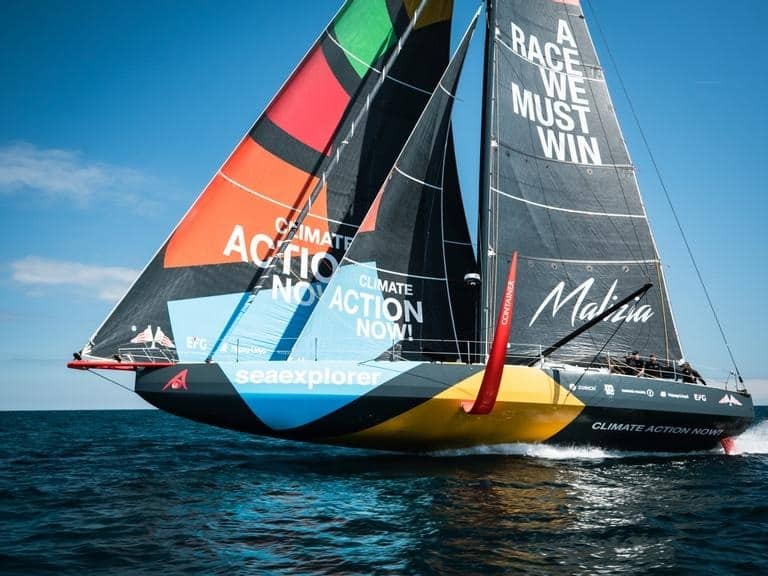
In a recent visit aboard the Malizia Explorer, Cisco colleagues joined scientists, policymakers and sustainability leaders to learn how Team Malizia brings together offshore sailing, climate research and education. Conversations with Boris Herrmann and the crew highlighted the importance of using technology to translate scientific insights into practical action.
Across oceans, temperature, salinity, carbon dioxide concentrations and biodiversity are among the many variables researchers monitor to understand environmental change. Collecting these measurements is essential, but their value grows when reliable data helps people make better-informed decisions.
AI-driven sustainability turns operational data into measurable outcomes
Organisations across industries are exploring how artificial intelligence (AI) and observability tools can improve operations while helping them manage their environmental impact.
Cisco, Splunk and partner Computacenter work with organisations to bring operational and sustainability-related information from buildings, factories and data centres into a consolidated, vendor-agnostic view. By combining real-time telemetry with AI-powered analytics, organisations can identify inefficiencies, examine energy use and strengthen operational resilience.
Observability refers to the ability to understand the internal state and performance of a system by analysing the information it produces, such as logs, metrics and other operational data. When these insights are combined with sustainability information, organisations can better identify where resources are being wasted and where improvements may be possible.
Bosch Rexroth reports lower energy use and emissions
Bosch Rexroth AG provides an industrial example of this approach. According to the source material, AI-driven observability is being used to optimise operations at the company’s model factory in Ulm, Germany, while supporting sustainability objectives.
Bosch reported the following outcomes:
- 20–30% lower energy costs
- 10–15% lower energy consumption
- 25–30% lower greenhouse gas emissions
These figures are reported outcomes attributed to Bosch in the supplied material; they should not be interpreted as independently verified results or as guaranteed savings for other organisations.
The example illustrates how operational improvements and environmental objectives can be pursued together. Better visibility into energy consumption and system performance can help businesses identify opportunities to improve efficiency while maintaining reliable operations.
Using AI and environmental data to protect wildlife
The potential applications of AI-driven sustainability extend beyond factories and commercial buildings.
Cisco and Splunk are exploring work with the World Wide Fund for Nature (WWF) to help combat wildlife poaching in Southeast Asia. The initiative involves analysing environmental and operational data to identify potential hotspots and support more effective ranger patrols.
This application illustrates how data analysis may help conservation teams direct their resources towards areas of concern. It also highlights the importance of applying digital capabilities to environmental challenges that require cooperation between technology providers and conservation organisations.
The source material describes this work as an exploration of how AI could support anti-poaching efforts, rather than reporting a quantified conservation outcome.
From climate data to informed decisions
Whether the objective is understanding ocean conditions, reducing industrial emissions or improving energy efficiency in cities, organisations need dependable systems to collect and interpret information.
This process involves three connected capabilities:
1. Secure connectivity
Reliable connectivity allows environmental sensors, industrial equipment and other systems to transmit data. Secure infrastructure is important for maintaining the integrity and availability of the information used in analysis.
2. Real-time observability
Observability tools help organisations understand what is happening across their digital and operational environments. By examining real-time telemetry, teams can identify unusual patterns, inefficiencies and potential operational problems.
3. Artificial intelligence and analytics
AI-powered analytics can help identify patterns across large volumes of data that may be difficult to detect manually. These findings can support decisions about energy use, operational performance and environmental risks.
However, data and analytics alone do not guarantee better sustainability outcomes. Organisations must translate insights into practical changes and assess whether those changes deliver the intended results.
Why collaboration matters for sustainable technology
Environmental challenges rarely fall within the responsibility or capabilities of a single organisation. Addressing them requires cooperation between scientists, technology companies, implementation partners and governments.
Researchers generate evidence about environmental conditions, while technology providers develop the infrastructure needed to collect, transmit and analyse data. Implementation partners can help deploy solutions, and public institutions can establish frameworks for long-term action.
For Cisco, sustainability is linked to the wider foundations of digital technology. These include secure connectivity, responsible AI, cyber resilience and trusted partnerships.
The collaboration with Team Malizia reflects this approach by bringing scientific research, technology and public engagement together. Such partnerships can help make complex climate information more accessible and useful to people involved in research, policy, education and business.
Team Malizia collaboration could connect ocean research with AI
One potential area for future cooperation is the development of systems that securely transmit scientific ocean data from research vessels to AI-powered dashboards.
Such a system could help researchers, policymakers, educators and businesses examine environmental information in near real time. It could also provide a more accessible way to understand changing ocean conditions and explore their implications.
This remains a vision requiring further collaboration, rather than a confirmed operational system described in the source material. Its potential demonstrates how connected infrastructure and analytics could help bring scientific findings to a wider audience.
The broader objective is to connect people, technology and ideas so that environmental information can contribute to better decisions.
Turning AI-driven sustainability into practical action
The examples described here span industrial energy management, wildlife conservation and ocean research. Although the applications differ, they share a common principle: information becomes more valuable when it leads to decisions and actions that can be assessed.
AI-driven sustainability therefore depends on more than deploying new technology. It requires trustworthy data, secure digital infrastructure, appropriate analytics, effective partnerships and a clear understanding of the outcomes an organisation wants to achieve.
As organisations continue to explore these approaches, an important question is how they can use reliable data to improve environmental performance in ways that are both practical and measurable. Collaboration between science, technology, industry and government will be central to turning that potential into meaningful progress.