
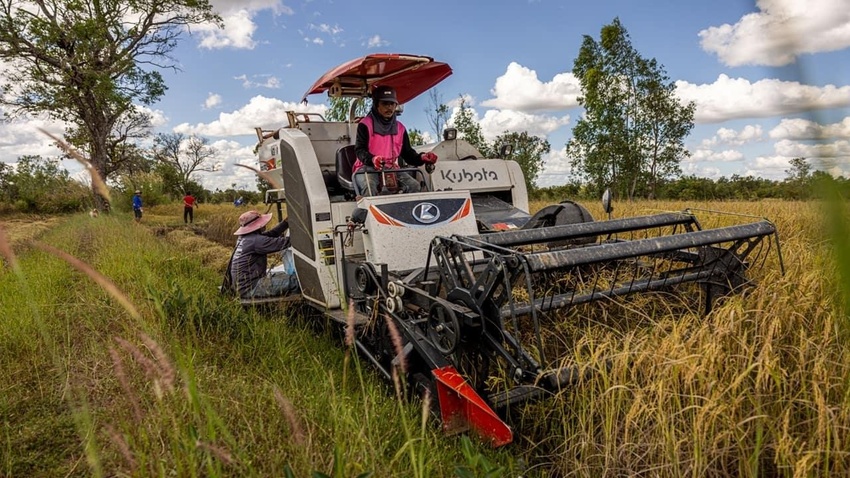
In its latest A Sustainable Year feature, CNH showcases how agricultural machinery from its New Holland brand is helping a rice farmer in Thailand adopt an alternative approach to managing post-harvest crop residue without burning it.
Pichai Tosa, an experienced rice and mung bean grower in Nakhon Sawan province who also leads a local rice production group, tested a New Holland TT3.50 tractor equipped with a mulcher during the 2026 harvest. The equipment enabled him to chop rice straw, allowing the leftover material to remain on the field or be mixed into the soil.
The demonstration highlights the role of suitable farm mechanization in improving crop-residue management, maintaining soil health, and preparing agricultural land for the next growing season. It also reflects CNH’s sustainability strategy, which combines agricultural expertise, machinery innovation, and collaboration with local farming communities to address practical challenges.
For many rice and sugarcane growers, burning leftover crop material has traditionally been a quick and convenient way to clear fields after harvesting. However, this practice releases air pollutants and greenhouse gases. The intense heat generated during burning can also harm beneficial soil microorganisms and contribute to the loss of soil carbon. Across the central plains of Thailand alone, approximately 4.8 million tonnes of rice straw are burned each year.
According to Tosa, greater awareness and access to modern technology are helping farmers reconsider established practices.
“Farmers simply did not have that knowledge that the practice was harmful to the environment. But nowadays, new technologies and innovations have come in, giving us better options,” he said.
Extending CNH’s Experience in Crop-Residue Management Mark Brinn, Managing Director for Southeast Asia and Japan at CNH, emphasized the importance of developing solutions that address the everyday needs of farmers while accounting for both economic and environmental considerations.
“Farmers need solutions that work in their fields and respond to the economic and environmental realities of their businesses,” Brinn said. He explained that the Thailand trial demonstrates how agricultural equipment, hands-on training, and local partnerships can help transform crop residue from a disposal problem into a potentially valuable resource.
Brinn added that this practical, customer-oriented approach to innovation can contribute to greater agricultural productivity and resilience.
CNH has pursued a similar partnership-led strategy in India through its Sustainable Environment Solution program. The initiative combines mechanized crop-residue baling with farmer education and on-field demonstrations to encourage more sustainable residue-management practices.
Through these efforts in Thailand and India, CNH is demonstrating how appropriate agricultural technology and collaboration with farming communities can help reduce reliance on crop burning while supporting more sustainable farming systems.