<?xml version="1.0" encoding="UTF-8"?>
<feed xmlns="http://www.w3.org/2005/Atom"  xmlns:media="http://search.yahoo.com/mrss/" xmlns:dc="http://purl.org/dc/elements/1.1/" xmlns:itunes="http://www.itunes.com/dtds/podcast-1.0.dtd" xmlns:geo="http://www.w3.org/2003/01/geo/wgs84_pos#" xmlns:georss="http://www.georss.org/georss" xmlns:photo="http://www.pheed.com/pheed/">
 <title>Daily CSR</title>
 <subtitle><![CDATA[Daily CSR delivers latest news and in-depth coverage about corporate social responsibility, ethics and sustainability]]></subtitle>
 <link rel="alternate" type="text/html" href="https://www.dailycsr.com" />
 <link rel="self" type="text/xml" href="https://www.dailycsr.com/xml/atom.xml" />
 <id>https://www.dailycsr.com/</id>
 <updated>2026-08-23T06:43:08+02:00</updated>
 <generator uri="http://www.wmaker.net">Webzine Maker</generator>
  <icon>https://www.dailycsr.com/favicon.ico</icon>
  <entry>
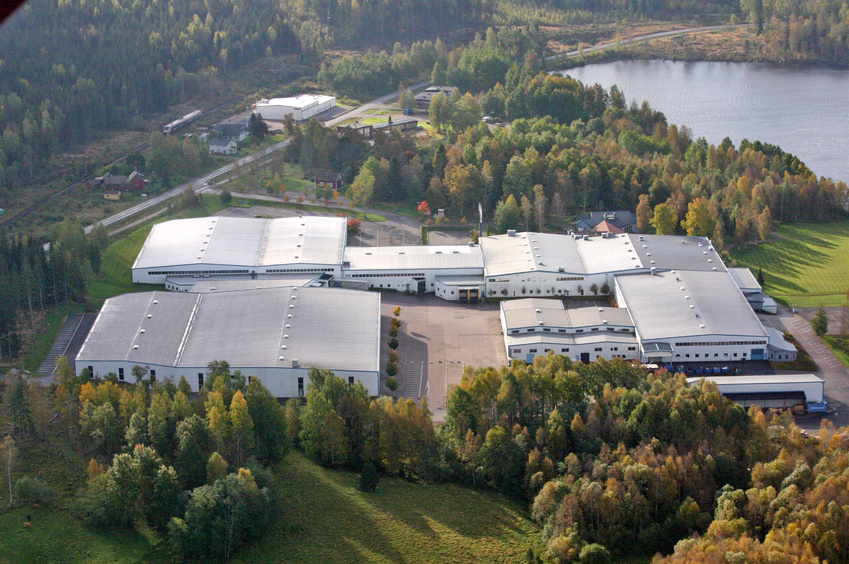
   <title>Systemair Sustainability Progress 2025/26</title>
   <updated>2026-08-11T13:56:00+02:00</updated>
   <id>https://www.dailycsr.com/Systemair-Sustainability-Progress-2025-26_a6038.html</id>
   <category term="Companies" />
   <photo:imgsrc>https://www.dailycsr.com/photo/art/imagette/97654292-67995000.jpg</photo:imgsrc>
   <published>2026-08-11T13:48:00+02:00</published>
   <author><name>Debashish Mukherjee</name></author>
   <content type="html">
    <![CDATA[
     <div style="position:relative; text-align : center; padding-bottom: 1em;">
      <img src="https://www.dailycsr.com/photo/art/default/97654292-67995000.jpg?v=1786449374" alt="Systemair Sustainability Progress 2025/26" title="Systemair Sustainability Progress 2025/26" />
     </div>
     <div>
      <div style="text-align: justify;">Systemair has published its Sustainability Statement for 2025/26, outlining the company’s progress in reducing emissions, creating a supportive and attractive workplace, and strengthening responsible business practices. The statement also emphasizes the critical role of energy efficiency and the contribution of advanced ventilation systems to lowering building energy consumption while ensuring healthy and comfortable indoor environments. <br />   <br />  The International Energy Agency (IEA) has stated that the global pace of energy-efficiency improvements must double by 2030 if the world is to remain aligned with international climate objectives. Since buildings account for a substantial share of global energy consumption, improving the efficiency of ventilation systems can make an important contribution to reducing overall energy demand. <br />   <br />  “Systemair is committed to continuous innovation in ventilation technology, with ongoing investment in the development and improvement of our products. Energy-efficient solutions remain a key priority, enabling us to enhance indoor air quality while helping reduce the energy required to operate buildings,” said Robert Larsson, President and CEO of Systemair.</div>    <h4 style="text-align: justify;">Key Product and Innovation Highlights</h4>    <div style="text-align: justify;">Among the notable achievements during the year were:</div>    <ul>  	<li style="text-align: justify;"><strong>Next-generation axial fans:</strong> Systemair introduced a new range of high-efficiency axial fans capable of delivering energy savings of up to 21 percent under a typical operating scenario.</li>  	<li style="text-align: justify;"><strong>Industry recognition:</strong> The integrated heat pump incorporated into the Menerga CO2mpass air handling unit received a prestigious industry award. The system uses R-744, a natural refrigerant with a global warming potential (GWP) of just 1.</li>  	<li style="text-align: justify;"><strong>Demand-controlled ventilation:</strong> Systemair continued to expand its demand-controlled ventilation offering. When paired with Systemair’s SAVE units, advanced control technologies can reduce energy consumption by as much as 30 percent.</li>  </ul>    <h3 style="text-align: justify;">Advancing Responsible Business Practices</h3>    <div style="text-align: justify;">With operations spanning multiple markets and a workforce located around the world, Systemair recognizes the responsibilities associated with its global presence. During 2025/26, the company continued its efforts to improve business practices, strengthen operational efficiency, reduce environmental impacts, and create an attractive workplace. <br />   <br />  Key developments included:</div>    <ul>  	<li style="text-align: justify;"><strong>Health and safety:</strong> Workplace injuries leading to sickness absence fell by 50 percent over the last three years, reflecting ongoing initiatives to improve health and safety throughout the organisation.</li>  	<li style="text-align: justify;"><strong>Lower emissions:</strong> Absolute Scope 1 and Scope 2 emissions were reduced by 10 percent compared with the 2023/24 baseline year, supporting progress towards Systemair’s science-based climate targets.</li>  	<li style="text-align: justify;"><strong>Growth in renewable energy:</strong> Solar installations at several company-owned manufacturing sites produced 3.2 million kWh of renewable electricity during 2025/26, helping to reduce Scope 2 emissions.</li>  	<li style="text-align: justify;"><strong>EU Taxonomy alignment:</strong> The proportion of turnover considered aligned with the EU Taxonomy increased to 28 percent, compared with 27 percent the previous year.</li>  	<li style="text-align: justify;"><strong>Environmental certification:</strong> ISO 14001 certification now covers 67 percent of Systemair’s manufacturing facilities. This represents continued progress towards the company’s objective of achieving certification across all manufacturing facilities by 2030/31.</li>  	<li style="text-align: justify;"><strong>Developing future leaders:</strong> Systemair launched a mentorship initiative designed to support and develop future female leaders, contributing to its goal of increasing female representation in leadership roles. The first programme received strong participation and encouraging feedback from both mentors and mentees.</li>  	<li style="text-align: justify;"><strong>Circular and retrofit solutions:</strong> Revenue generated from upgrades and retrofit activities grew by 33 percent year-on-year. By expanding its service portfolio, Systemair is helping customers prolong the useful life of existing equipment while improving the energy performance of installed systems.</li>  </ul>    <h3 style="text-align: justify;">First Sustainability Statement Under CSRD</h3>    <div style="text-align: justify;">The 2025/26 Sustainability Statement is Systemair’s first report prepared in accordance with the requirements of the Corporate Sustainability Reporting Directive (CSRD). The statement has also undergone limited assurance by independent external auditors. <br />   <br />  Additional information is available in Systemair’s Annual and Sustainability Report 2025/26, which can be accessed through the company’s website under Reports and Presentations.</div>    <h3 style="text-align: justify;">Media and Sustainability Contacts</h3>    <div style="text-align: justify;"><strong>Lee Morgan</strong> <br />  Group Sustainability Director <br />  <a class="link" href="javascript:protected_mail('lee.morgan@systemair.com')" >lee.morgan@systemair.com</a>  <br />  +46 703 23 60 19 <br />  <strong>Cathrine Stjärnekull</strong> <br />  Group Communication Director <br />  <a class="link" href="javascript:protected_mail('cathrine.stjarnekull@systemair.com')" >cathrine.stjarnekull@systemair.com</a>  <br />  +46 72 240 63 88</div>  
     </div>
     <br style="clear:both;"/>
    ]]>
   </content>
   <link rel="alternate" href="https://www.dailycsr.com/Systemair-Sustainability-Progress-2025-26_a6038.html" />
  </entry>
  <entry>
   <title>Healthy Buildings and Indoor Air Quality: Insights from Dr. Joseph Allen</title>
   <updated>2026-02-16T15:57:00+01:00</updated>
   <id>https://www.dailycsr.com/Healthy-Buildings-and-Indoor-Air-Quality-Insights-from-Dr-Joseph-Allen_a5534.html</id>
   <category term="Companies" />
   <photo:imgsrc>https://www.dailycsr.com/photo/art/imagette/94511540-65927989.jpg</photo:imgsrc>
   <published>2026-02-16T15:55:00+01:00</published>
   <author><name>Debashish Mukherjee</name></author>
   <content type="html">
    <![CDATA[
     <div style="position:relative; text-align : center; padding-bottom: 1em;">
      <img src="https://www.dailycsr.com/photo/art/default/94511540-65927989.jpg?v=1771253834" alt="Healthy Buildings and Indoor Air Quality: Insights from Dr. Joseph Allen" title="Healthy Buildings and Indoor Air Quality: Insights from Dr. Joseph Allen" />
     </div>
     <div>
      <div style="text-align: justify;">If you enrolled in Dr. Joseph Allen’s healthy buildings course at Harvard this term, your first stop would be the campus statue of Alice Hamilton. Allen considers Hamilton a role model—a trailblazer in industrial toxicology who uncovered that early 20th-century workers were falling ill due to inhaling lead, not poor hygiene. Her research directly improved worker safety and helped shape regulations requiring employers to implement protective measures. <br />   <br />  Dr. Allen, a professor at Harvard T.H. Chan School of Public Health, head of Harvard’s Healthy Buildings Program, and author of the best-selling <em>Healthy Buildings</em>, is a scientist who blends research with advocacy. Throughout his career, he has worked to improve indoor environments for people everywhere. Beyond publishing in scientific journals, he focuses on translating research into practical approaches that make buildings healthier in real-world settings. <br />   <br />  At IWBI’s WELL Summit in New York City, Allen joined IWBI President and CEO Rachel Hodgdon for a lively discussion on the future of healthy buildings. Below are key takeaways from their conversation. <br />   <br />  When asked about the current state of the healthy building movement, Allen noted growing institutional momentum and leadership from non-governmental organizations. He highlighted milestones such as the first indoor air quality event at the United Nations during Climate Week, the launch of the Global Commission on Healthy Indoor Air, and new leadership at ASHRAE emphasizing health-focused building standards. He also emphasized that private-sector organizations are increasingly taking action. <br />   <br />  Allen’s recent research on the Los Angeles wildfires examined how long harmful pollutants persist in the air, including indoors—an area previously under-studied. His findings revealed that toxic nanoparticles, including lead and hexavalent chromium, remained present for months, often at higher concentrations indoors. These particles can penetrate the body, cross the blood-brain barrier, and impact multiple organs and systems. <br />   <br />  Although much of Allen’s work appears in academic publications, he also conducts research funded by corporations. He explained that industry partnerships can accelerate scientific discovery and broaden the impact of research outcomes. <br />   <br />  Hodgdon referenced Allen’s COGfx study, published in 2016, which demonstrated that improved indoor air quality—lower CO₂ and VOC levels—nearly doubled cognitive performance compared to conventional office environments. Allen recalled releasing the study at Greenbuild and promoting it globally to make the findings more relatable and impactful. <br />   <br />  Allen also advised on indoor air quality systems at JPMorgan’s new headquarters in New York City, featuring enhanced ventilation, filtration, and real-time monitoring in line with WELL recommendations. JPMorgan adopted many of these measures more than a decade ago, despite skepticism at the time. Today, the improvements deliver significant financial and organizational benefits, including better hiring, retention, and employee productivity. <br />   <br />  Recently, Allen’s team has been using artificial intelligence to move from identifying problems to testing solutions. They created a privacy-safe digital model of the U.S. population to identify groups most at risk from poor indoor air. Their findings show that young children in older homes built before the 1970s face the greatest exposure risk due to lead-based paint. The team is also modeling wildfire scenarios to evaluate how better building design could have reduced exposure during the Los Angeles fires. <br />   <br />  When asked what will become standard practice in the next decade, Allen predicted widespread adoption of real-time indoor air quality sensors in homes and buildings. He emphasized that monitoring is essential to prevention: “You can’t manage what you don’t measure.” <br />   <br />  Allen also shared practical advice for improving indoor air at home, including enhancing ventilation and filtration, reducing exposure to persistent chemicals, and focusing on bedroom air quality, given the time people spend sleeping. He described ventilation and filtration as fundamental pillars of public health. <br />   <br />  Ultimately, healthier indoor environments can improve well-being for people everywhere, making better buildings a universal benefit.</div>  
     </div>
     <br style="clear:both;"/>
    ]]>
   </content>
   <link rel="alternate" href="https://www.dailycsr.com/Healthy-Buildings-and-Indoor-Air-Quality-Insights-from-Dr-Joseph-Allen_a5534.html" />
  </entry>
</feed>