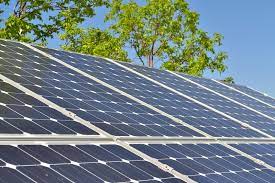
JinkoSolar, a leading global provider of photovoltaic (PV) and energy storage solutions (ESS), has introduced its latest AIDC modules tailored for data centers worldwide. Developed on the advanced Tiger Neo 3.0 TOPCon technology platform, these modules are engineered to support a wide range of high-performance environments, including AI data centers, GPU clusters, supercomputing facilities, semiconductor plants, edge computing hubs, and carbon-neutral intelligent development zones.
Designed to meet the demanding operational needs of modern data centers, the AIDC modules deliver exceptional load capacity, enhanced asset protection, uninterrupted performance, resilience in extreme climates, long-term reliability, minimal maintenance, and scalability for large deployments. They offer an optimized clean energy solution that aligns with the growing need for efficient integration between computing power and sustainable energy.
Key Advantages of the AIDC Modules
1. Enhanced Efficiency and Power Output: Lowering Lifecycle Costs
Leveraging JinkoSolar’s proprietary Tiger Neo 3.0 platform, these modules combine current large-scale manufacturing capabilities with future-ready scalability. They achieve front-side efficiencies of 24.8% or higher and power outputs of 670W or more. This enables greater electricity generation within the same footprint, maximizing land and rooftop usage while reducing the overall levelized cost of energy (LCOE) over the system’s lifetime.
2. Superior Bifacial Performance: Increased Energy Yield
With TOPCon cell architecture featuring a fully symmetrical front-and-back design, along with JinkoSolar’s MAX technology, the modules deliver bifaciality of approximately 85% (±5%). Compared to traditional back-contact (BC) modules, which typically achieve 65–75%, these modules generate significantly more energy from the rear side. For instance, a 670W module under standard reflective conditions can produce up to 844W total output, effectively offering additional energy generation without extra cost—an advantage particularly valuable in reflective environments like snowy regions or deserts.
3. Strong Low-Light Performance: Reliable All-Day Generation
Optimized for low-irradiance conditions, the modules maintain strong energy output during early mornings, evenings, and cloudy or rainy weather. In light conditions between 100–200 W/m², they can deliver up to 8.93% more power compared to BC modules. Even in extreme low-light scenarios such as fog or shading, performance remains stable at 95–98%. This ensures a smoother power generation curve that closely matches the continuous energy demands of data centers, increasing self-consumption of renewable energy and improving grid efficiency.
4. Advanced Fire Safety Standards: Maximum Protection
To meet stringent safety requirements, the modules comply with IEC 61730-2:2023 and UL 790 Class A certifications. These standards ensure minimal flame spread and high resistance to ignition sources. Key insulation components meet UL 94 V-0 ratings, meaning they self-extinguish quickly without producing burning droplets. Additional safety features include arc-resistant junction boxes and advanced connection technologies that significantly reduce the risk of electrical faults and fire hazards.
5. Exceptional Hail Resistance: Built for Harsh Conditions
The modules are engineered to withstand severe weather, successfully passing impact tests with hailstones up to 55 mm in diameter—well above the typical 25 mm standard. Reinforced tempered glass and shock-absorbing encapsulation structures help prevent damage and eliminate risks associated with mechanical failure leading to electrical or fire issues.
6. High Mechanical Strength: Reliable Structural Integrity
With the ability to endure front-side loads of up to 6,000 Pa and rear-side loads of 4,000 Pa, the modules can handle extreme snow accumulation and strong winds. Even under heavy snow loads exceeding 600 kg/m² or in typhoon-prone regions, they maintain structural and electrical integrity, preventing issues such as cracking or component loosening.
Designed to meet the demanding operational needs of modern data centers, the AIDC modules deliver exceptional load capacity, enhanced asset protection, uninterrupted performance, resilience in extreme climates, long-term reliability, minimal maintenance, and scalability for large deployments. They offer an optimized clean energy solution that aligns with the growing need for efficient integration between computing power and sustainable energy.
Key Advantages of the AIDC Modules
1. Enhanced Efficiency and Power Output: Lowering Lifecycle Costs
Leveraging JinkoSolar’s proprietary Tiger Neo 3.0 platform, these modules combine current large-scale manufacturing capabilities with future-ready scalability. They achieve front-side efficiencies of 24.8% or higher and power outputs of 670W or more. This enables greater electricity generation within the same footprint, maximizing land and rooftop usage while reducing the overall levelized cost of energy (LCOE) over the system’s lifetime.
2. Superior Bifacial Performance: Increased Energy Yield
With TOPCon cell architecture featuring a fully symmetrical front-and-back design, along with JinkoSolar’s MAX technology, the modules deliver bifaciality of approximately 85% (±5%). Compared to traditional back-contact (BC) modules, which typically achieve 65–75%, these modules generate significantly more energy from the rear side. For instance, a 670W module under standard reflective conditions can produce up to 844W total output, effectively offering additional energy generation without extra cost—an advantage particularly valuable in reflective environments like snowy regions or deserts.
3. Strong Low-Light Performance: Reliable All-Day Generation
Optimized for low-irradiance conditions, the modules maintain strong energy output during early mornings, evenings, and cloudy or rainy weather. In light conditions between 100–200 W/m², they can deliver up to 8.93% more power compared to BC modules. Even in extreme low-light scenarios such as fog or shading, performance remains stable at 95–98%. This ensures a smoother power generation curve that closely matches the continuous energy demands of data centers, increasing self-consumption of renewable energy and improving grid efficiency.
4. Advanced Fire Safety Standards: Maximum Protection
To meet stringent safety requirements, the modules comply with IEC 61730-2:2023 and UL 790 Class A certifications. These standards ensure minimal flame spread and high resistance to ignition sources. Key insulation components meet UL 94 V-0 ratings, meaning they self-extinguish quickly without producing burning droplets. Additional safety features include arc-resistant junction boxes and advanced connection technologies that significantly reduce the risk of electrical faults and fire hazards.
5. Exceptional Hail Resistance: Built for Harsh Conditions
The modules are engineered to withstand severe weather, successfully passing impact tests with hailstones up to 55 mm in diameter—well above the typical 25 mm standard. Reinforced tempered glass and shock-absorbing encapsulation structures help prevent damage and eliminate risks associated with mechanical failure leading to electrical or fire issues.
6. High Mechanical Strength: Reliable Structural Integrity
With the ability to endure front-side loads of up to 6,000 Pa and rear-side loads of 4,000 Pa, the modules can handle extreme snow accumulation and strong winds. Even under heavy snow loads exceeding 600 kg/m² or in typhoon-prone regions, they maintain structural and electrical integrity, preventing issues such as cracking or component loosening.
]]>