<?xml version="1.0" encoding="UTF-8"?>
<feed xmlns="http://www.w3.org/2005/Atom"  xmlns:media="http://search.yahoo.com/mrss/" xmlns:dc="http://purl.org/dc/elements/1.1/" xmlns:itunes="http://www.itunes.com/dtds/podcast-1.0.dtd" xmlns:geo="http://www.w3.org/2003/01/geo/wgs84_pos#" xmlns:georss="http://www.georss.org/georss" xmlns:photo="http://www.pheed.com/pheed/">
 <title>Daily CSR</title>
 <subtitle><![CDATA[Daily CSR delivers latest news and in-depth coverage about corporate social responsibility, ethics and sustainability]]></subtitle>
 <link rel="alternate" type="text/html" href="https://www.dailycsr.com" />
 <link rel="self" type="text/xml" href="https://www.dailycsr.com/xml/atom.xml" />
 <id>https://www.dailycsr.com/</id>
 <updated>2026-10-07T14:43:20+02:00</updated>
 <generator uri="http://www.wmaker.net">Webzine Maker</generator>
  <icon>https://www.dailycsr.com/favicon.ico</icon>
  <entry>
   <title>Nokia Advances Resilient Connectivity for Extreme Weather</title>
   <updated>2026-09-28T12:08:00+02:00</updated>
   <id>https://www.dailycsr.com/Nokia-Advances-Resilient-Connectivity-for-Extreme-Weather_a6168.html</id>
   <category term="Companies" />
   <photo:imgsrc>https://www.dailycsr.com/photo/art/imagette/98180870-68378407.jpg</photo:imgsrc>
   <published>2026-09-28T12:06:00+02:00</published>
   <author><name>Debashish Mukherjee</name></author>
   <content type="html">
    <![CDATA[
     <div style="position:relative; text-align : center; padding-bottom: 1em;">
      <img src="https://www.dailycsr.com/photo/art/default/98180870-68378407.jpg?v=1790590103" alt="Nokia Advances Resilient Connectivity for Extreme Weather" title="Nokia Advances Resilient Connectivity for Extreme Weather" />
     </div>
     <div>
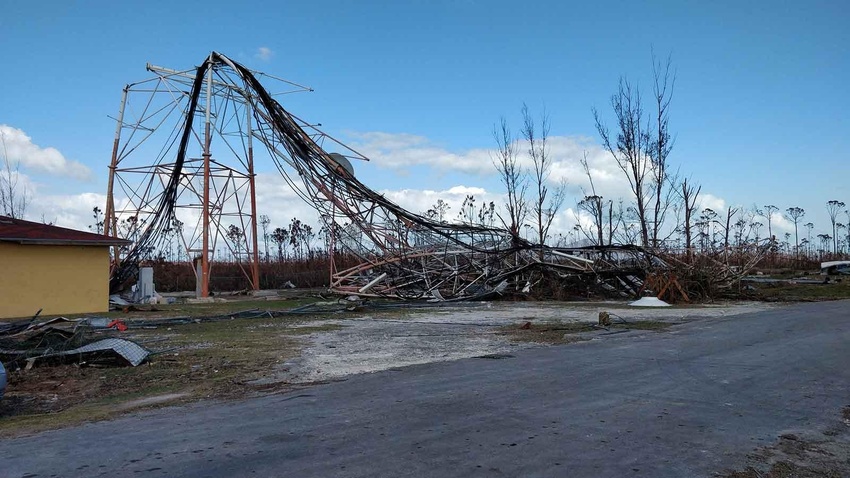
      <div style="text-align: justify;">As climate change continues to influence weather patterns, communities are facing extreme events such as hurricanes, droughts, floods, and severe storms with increasing frequency and intensity. When disasters occur, disruptions to electricity, communications, transportation, healthcare, and emergency services can magnify the damage and make recovery more difficult. Ensuring that these critical systems remain operational during emergencies is therefore becoming an increasingly important priority. <br />   <br />  Climate projections indicate that many extreme weather events are likely to become more intense in the coming decades. This makes advance planning essential for governments, emergency organizations, infrastructure operators, and other decision-makers seeking to reduce the impact of weather-related disruptions on services that communities depend on. <br />   <br />  As a provider of connectivity infrastructure, Nokia operates across many of these essential sectors, including energy, transportation, healthcare, telecommunications, and emergency response. Reliable communications provide the foundation that enables these different systems to exchange information and coordinate their activities when a crisis occurs.</div>    <h2 style="text-align: justify;">Connectivity as the foundation of resilient communities</h2>    <div style="text-align: justify;">A resilient community depends on several interconnected elements working effectively together:</div>    <ol>  	<li style="text-align: justify;"><strong>Weather intelligence</strong> to identify developing threats and provide timely warnings.</li>  	<li style="text-align: justify;"><strong>Critical infrastructure</strong>, including telecommunications and utilities, to keep essential services operating.</li>  	<li style="text-align: justify;"><strong>Coordinated emergency response</strong> involving public safety organizations, healthcare institutions, and local authorities.</li>  	<li style="text-align: justify;"><strong>Community recovery networks</strong>, supported by governments, NGOs, schools, shelters, and other organizations.</li>  </ol>    <div style="text-align: justify;">These components are closely linked, meaning that the failure of one can trigger problems elsewhere. For instance, an extended electricity outage can interrupt wastewater treatment and drainage systems, potentially increasing flood-related risks. Similarly, a communications failure can prevent residents from receiving warnings and make it harder for first responders to coordinate their activities. <br />   <br />  Past disasters in the United States illustrate the consequences of such interconnected failures. Hurricane Sandy in 2012 resulted in widespread power outages across 18 states and disrupted wastewater infrastructure, contributing to additional flooding and public-health concerns. During Hurricane Helene in 2024, responders in Tennessee used an alternative statewide radio system to coordinate a helicopter rescue after conventional radio communications became unavailable. <br />   <br />  The growing dependence on communications infrastructure is placing greater expectations on telecommunications companies to maintain connectivity during emergencies. Five major factors are contributing to this shift:</div>    <ol>  	<li style="text-align: justify;"><strong>Financial exposure and risk</strong></li>  	<li style="text-align: justify;"><strong>Increasing regulatory and government expectations</strong></li>  	<li style="text-align: justify;"><strong>Community responsibility and social-impact commitments</strong></li>  	<li style="text-align: justify;"><strong>Opportunities to strengthen the wider infrastructure ecosystem</strong></li>  	<li style="text-align: justify;"><strong>Brand reputation and competitive considerations</strong></li>  </ol>    <div style="text-align: justify;">Recent incidents have demonstrated the consequences of inadequate network resilience. The 2025 electricity blackout across the Iberian Peninsula, for example, affected more than 50 million people in Spain and Portugal, with some areas experiencing outages lasting as long as 16 hours. The failure disrupted numerous critical services at a time when communications were particularly important. Telecommunications networks were also heavily affected, with internet traffic reportedly falling by approximately 90% in Portugal and 80% in Spain. In some areas, mobile connectivity was lost after backup power systems were exhausted. <br />   <br />  The blackout also generated criticism of telecommunications operators over preparedness and dependence on conventional electricity supplies. Subsequent severe weather events further highlighted the vulnerability of infrastructure across the region. <br />   <br />  Storm Claudia caused flooding and electricity disruptions in parts of Portugal and Spain, while Storm Kristin subsequently caused widespread damage in Portugal, leaving more than one million people without electricity and bringing down thousands of telecommunications and electricity poles. In response to these vulnerabilities, Spain announced plans requiring telecommunications providers to maintain a minimum of four hours of mobile service during power outages. Portugal's telecommunications regulator has also recommended additional requirements aimed at increasing network autonomy. <br />   <br />  The challenge extends well beyond Europe. Telecommunications infrastructure in remote parts of North America has also been exposed to extreme weather risks. Canada's 2024 wildfires, for example, highlighted connectivity limitations affecting rural and remote communities. <br />   <br />  Research conducted by Nokia in collaboration with CGI, examining disasters recorded between 2015 and 2025, found that among U.S. states with a Nokia presence, Texas recorded 87 disasters during that period, followed by Missouri with 61 and Oklahoma with 58. The frequency and combination of these events reinforce the need for telecommunications providers to prepare for disruption before disasters occur rather than relying solely on recovery measures afterward.</div>    <h2 style="text-align: justify;">Building resilience into connectivity systems</h2>    <div style="text-align: justify;">Future connectivity infrastructure will need resilience to be considered from the earliest stages of planning. This means incorporating resilience into network design, deployment, day-to-day operations, maintenance, and restoration strategies. <br />   <br />  For telecommunications companies, stronger network resilience can reduce exposure to future disruptions while helping ensure that electricity, healthcare, emergency response, transportation, and other essential services remain connected. Ultimately, strengthening communications infrastructure also contributes to the resilience of the communities that rely on it.</div>    <h2 style="text-align: justify;">Nokia's approach to AI-enabled resilient connectivity</h2>    <div style="text-align: justify;">Nokia is working with telecommunications companies and other organizations responsible for mission-critical services to strengthen resilience across entire infrastructure ecosystems. Its approach extends beyond basic connectivity, incorporating network infrastructure, sensing and detection technologies, power continuity, edge computing, and other capabilities that can help essential organizations remain operational during emergencies.</div>    <ul>  	<li style="text-align: justify;"><strong>Foundational connectivity:</strong> High-capacity fiber networks can provide dependable communications for critical services, while satellite-enabled Non-Terrestrial Network architectures can offer alternative connectivity when terrestrial infrastructure is damaged or unavailable.</li>  	<li style="text-align: justify;"><strong>Sensing and detection:</strong> Existing fiber-optic and 5G infrastructure can potentially be used as large-scale sensing platforms, providing real-time information that supports disaster monitoring and weather forecasting. Nokia's work with organizations including Skyfora, A1, and Telia Finland combines telecommunications infrastructure and GNSS capabilities to develop higher-resolution weather-sensing networks.</li>  	<li style="text-align: justify;"><strong>Power continuity:</strong> Telecommunications technology also plays an important role in the modernization of electricity networks. Nokia supports utilities and power-generation organizations in improving their communications infrastructure and operational capabilities. In New Zealand, for example, Nokia is supporting Transpower's upgrade of its central control network, with the objective of strengthening the resilience of the country's electricity infrastructure.</li>  	<li style="text-align: justify;"><strong>Edge resilience:</strong> Edge technologies can help maintain mission-critical communications during outages and cyber incidents. Nokia's Cognitive Operations platform and Cognitive Edge Node can enable emergency vehicles to operate as mobile communications hubs, supporting 5G, Wi-Fi, and satellite connectivity while allowing personnel to exchange real-time information from the field.</li>  </ul>    <h2 style="text-align: justify;">The role of artificial intelligence</h2>    <div style="text-align: justify;">Artificial intelligence is becoming an important component of resilient infrastructure strategies. Within telecommunications networks and across interconnected infrastructure ecosystems, AI can support applications ranging from climate-risk analysis to automated network recovery and the prioritization of resources during emergencies. <br />   <br />  Technologies such as Nokia's AI-RAN platform and MantaRay SON can help identify potential network problems and enable corrective action before service is significantly affected. AI-powered digital twins can also help communities and infrastructure operators model potential scenarios, locate vulnerabilities, evaluate risks, and implement improvements before an actual disaster occurs.</div>    <h2 style="text-align: justify;">Collaboration across infrastructure ecosystems</h2>    <div style="text-align: justify;">Resilience cannot be achieved by telecommunications companies alone. Governments, utilities, emergency services, healthcare providers, technology companies, community organizations, and other infrastructure stakeholders all have roles to play in preparing for increasingly complex climate-related disruptions. <br />   <br />  Nokia's participation in New York City Climate Week from September 20–24 is focused on discussions around resilience and collaboration across these interconnected ecosystems. The company is also participating in a CGI Climate Working Session on Digital Resilience, with further initiatives and actions expected to emerge from these discussions.</div>  
     </div>
     <br style="clear:both;"/>
    ]]>
   </content>
   <link rel="alternate" href="https://www.dailycsr.com/Nokia-Advances-Resilient-Connectivity-for-Extreme-Weather_a6168.html" />
  </entry>
  <entry>
   <title>AI-Powered Fiber Sensing for Smarter Network Resilience</title>
   <updated>2026-09-17T09:38:00+02:00</updated>
   <id>https://www.dailycsr.com/AI-Powered-Fiber-Sensing-for-Smarter-Network-Resilience_a6134.html</id>
   <category term="Companies" />
   <photo:imgsrc>https://www.dailycsr.com/photo/art/imagette/98060319-68278101.jpg</photo:imgsrc>
   <published>2026-09-17T09:34:00+02:00</published>
   <author><name>Debashish Mukherjee</name></author>
   <content type="html">
    <![CDATA[
     <div style="position:relative; text-align : center; padding-bottom: 1em;">
      <img src="https://www.dailycsr.com/photo/art/default/98060319-68278101.jpg?v=1789630707" alt="AI-Powered Fiber Sensing for Smarter Network Resilience" title="AI-Powered Fiber Sensing for Smarter Network Resilience" />
     </div>
     <div>
      <div style="text-align: justify;">For decades, fiber-optic networks have primarily been viewed as high-performance infrastructure whose main purpose was to reliably transport data. As mission-critical organizations place greater emphasis on resilience, cybersecurity, and operational visibility, that role is changing. Fiber is increasingly becoming a source of real-time information about conditions around the network itself. <br />   <br />  The move from conventional fiber monitoring to fiber sensing represents a significant shift in how optical networks can deliver value. Traditional monitoring generally informs operators after performance has deteriorated or a connection has failed. Fiber sensing goes further by continuously identifying activity and changes occurring along and near the fiber route, potentially providing warnings before communications are disrupted. When combined with artificial intelligence, these physical signals can be interpreted and transformed into timely, actionable information. <br />   <br />  <strong>Why Fiber Sensing Matters for Utilities</strong> <br />  The importance of this capability is particularly evident in mission-critical sectors such as electric utilities. In these environments, communications infrastructure is an integral part of the power grid rather than simply a system for supporting conventional business applications. <br />   <br />  Reliability requirements are extremely high. Consumers expect electricity to remain available whenever they need it, which means utilities require communication networks capable of delivering both high availability and resilience. They also increasingly need technologies that can identify emerging problems rather than simply report outages after they occur. <br />   <br />  Fiber sensing can contribute to this objective by turning existing optical infrastructure into an early-warning mechanism. Abnormal activity along a fiber route can potentially be identified before it develops into a communications failure or security incident. This makes optical-network modernization about more than capacity; it can also improve visibility, automation, and resilience. <br />   <br />  <strong>What Fiber Sensing Can Detect</strong> <br />  Traditional monitoring largely asks whether a network connection is operating correctly. Fiber sensing changes the question to: what is happening along the network corridor? <br />   <br />  That distinction can have important operational consequences. For example, instead of discovering that a fiber cable was severed at 2:14 p.m., a sensing-enabled system could potentially identify unusual activity several minutes earlier that resembles construction or excavation approaching a protected right-of-way. <br />   <br />  Such advance warning could give an operator time to contact workers at the location, halt potentially damaging activity, send security or law-enforcement personnel, or deploy a fiber maintenance team. Avoiding an outage is only part of the benefit. Earlier intervention can also reduce repair expenses, minimize operational disruption, and help critical infrastructure providers maintain the continuity their customers depend on. <br />   <br />  <strong>Modernizing Utility Networks: Key Priorities</strong> <br />  Utility network upgrades typically focus on several fundamental requirements: availability, predictable performance, automation, security, and compliance. <br />   <br />  High availability is essential because communications failures can introduce risks to grid operations. Predictable network performance is equally important, although its significance may be less obvious. Equipment installed at substations and on utility poles can depend on precise timing and very low levels of jitter. A network may appear to be functioning normally while still operating outside the tolerances required by protection and control equipment. <br />   <br />  Fiber sensing provides another layer of visibility by helping operators recognize developing problems before they reach a point where network performance or grid operations are affected. <br />   <br />  <strong>Improving Operations Through Faster Root-Cause Analysis</strong> <br />  Fiber sensing can also improve operational efficiency. Conventional fault investigations can require considerable time and resources. An alarm may result in technicians being sent to the field, where they must search for the underlying problem, sometimes only after service has already been interrupted. <br />   <br />  Sensing adds valuable context by helping determine what happened, where it happened, and how the event is developing. More accurate location information can allow field teams to reach the problem faster and spend less time searching along extensive fiber routes. <br />   <br />  For utilities operating with limited budgets and field resources, reducing unnecessary site visits and shortening troubleshooting time can provide meaningful operational benefits. <br />   <br />  <strong>Fiber as a Distributed Security Sensor</strong> <br />  The potential security applications of fiber sensing extend beyond accidental damage and environmental events. Critical infrastructure operators must also consider deliberate tampering, unauthorized access, and physical intrusion. <br />   <br />  Fiber routes frequently pass through remote locations or connect directly to sensitive facilities. Sensing technology can potentially identify physical activity near the fiber, including events associated with doors opening, footsteps, excavation, or other acoustic and vibration signatures. <br />   <br />  This changes the role of the communications network. Instead of functioning solely as a means of transmitting information, the fiber can also serve as a distributed sensing layer, providing continuous awareness along physical corridors that may otherwise be difficult or expensive to monitor with conventional security equipment. <br />   <br />  <strong>From OTDR to Advanced Optical Signal Analysis</strong> <br />  The technology behind fiber sensing has developed considerably. Earlier approaches typically monitored optical power at the endpoints of a transmission path and responded when significant changes occurred. <br />   <br />  Optical time-domain reflectometers, or OTDRs, introduced a more detailed diagnostic capability. These instruments send pulses of light through the fiber and analyze the resulting backscatter, using a principle broadly comparable to radar. This allows operators to locate cable breaks and other forms of degradation with increasing accuracy, in some cases down to a few meters. <br />   <br />  Modern fiber sensing builds on these capabilities by analyzing much smaller changes in optical backscatter and other characteristics of the transmitted signal. Information such as changes in optical phase and polarization can provide insight into physical events occurring along the fiber, including events that have not yet caused an interruption in service. <br />   <br />  <strong>Coherent Optics and Digital Signal Processing</strong> <br />  Two technological developments have helped make advanced sensing practical on a larger scale. <br />   <br />  The first is the widespread adoption of coherent optical technology. Coherent receivers, which were once expensive and specialized, are now common components of modern optical networking systems. They can extract substantially more information from an optical signal than earlier technologies. <br />   <br />  The second is the rapid advancement of digital signal processing (DSP). Modern DSP capabilities can analyze extremely small variations in the behavior of light traveling through optical fiber and relate those changes to physical activity in the surrounding environment. <br />   <br />  Together, coherent optics and DSP improve the ability of fiber systems to detect phenomena such as vibration, seismic activity, and temperature changes. <br />   <br />  <strong>AI Turns Sensing Data Into Actionable Intelligence</strong> <br />  Detecting physical activity is only the beginning. The greater challenge is interpreting the enormous volume of information generated by sensitive sensing systems. <br />   <br />  Fiber routes naturally experience continuous background activity. Vehicles, pedestrians, industrial equipment, scheduled maintenance, and other routine events can all generate vibrations or other signals. Treating every detected change as an alarm would quickly make the system impractical. <br />   <br />  This is where AI becomes an important enabling technology. Artificial intelligence can help distinguish meaningful events from normal background activity, turning sophisticated sensing capabilities into information that operators can use to make operational decisions. <br />   <br />  <strong>Establishing What “Normal” Looks Like</strong> <br />  AI-based fiber sensing can learn the normal patterns associated with individual locations and environments. There is no single definition of normal activity across an entire network. <br />   <br />  For example, a fiber running beside a busy road will naturally experience different vibration patterns from one passing through a remote rural area. Similarly, a location with planned maintenance during particular hours should be treated differently from a restricted facility where activity is unexpected outside authorized periods. <br />   <br />  Machine-learning models can identify recurring patterns, reduce false alarms, and incorporate contextual information such as maintenance schedules, approved work orders, and regular environmental noise. <br />   <br />  As these systems learn over time, they can become better at separating routine activity from potentially significant anomalies. Greater confidence in alerts is particularly important when detections may trigger automated processes or the deployment of security personnel. <br />   <br />  <strong>Detecting Problems Before They Become Failures</strong> <br />  AI can also support a more proactive approach to network management. Rather than waiting for a predefined threshold to be exceeded, analytical systems can identify patterns that may indicate an approaching failure or security event. <br />   <br />  The practical benefit is additional response time. For mission-critical infrastructure, that extra time can affect more than operating costs—it can contribute to safety, service continuity, and overall resilience. <br />   <br />  <strong>Adding Intelligence Without Sacrificing Network Capacity</strong> <br />  Introducing sensing capabilities does not necessarily require a significant reduction in communications bandwidth. In many implementations, fiber sensing can make use of information already available from optical transceivers and receivers during normal network operation. <br />   <br />  The additional requirements are generally associated with measurement, data processing, analytics, and software integration rather than consuming large amounts of transmission capacity. <br />   <br />  This means sensing can potentially operate alongside regular communications traffic, allowing organizations to extract additional value from fiber infrastructure that is already carrying operational and business data. <br />   <br />  <strong>Modern Optical Infrastructure Enables Advanced Sensing</strong> <br />  Many of these capabilities are closely connected to the adoption of coherent optical detection, which is now common across modern optical networking platforms. Fully utilizing advanced sensing capabilities, however, may require up-to-date optical infrastructure. <br />   <br />  Organizations operating equipment that is several decades old may not be able to access the full potential of modern sensing until their optical platforms are upgraded. <br />   <br />  Nevertheless, optical modernization is already being driven by other requirements. Growing bandwidth consumption, expanding data centers, and increasing demand from AI computing are pushing organizations toward higher-capacity optical transport. When equipment is upgraded to improve throughput, latency, and flexibility, fiber sensing can potentially be incorporated as an additional capability at a comparatively modest incremental cost. <br />   <br />  <strong>Getting More Value From Existing Fiber</strong> <br />  The broader strategic opportunity is to increase the value delivered by existing fiber assets. <br />  A single optical network can transport grid telemetry, protection traffic, and enterprise communications while also providing information that helps protect the physical fiber corridor, identify emerging threats, and improve field operations. <br />   <br />  For utilities modernizing their networks to support renewable-energy integration and broader decarbonization objectives, protecting critical infrastructure and improving operational efficiency can support that wider transformation. <br />   <br />  AI plays an important role by converting complex, location-specific optical signals into information that operators can understand and act upon. <br />  Fiber Sensing as a Future Network Capability <br />   <br />  The role of fiber sensing is likely to become increasingly important when organizations design and modernize mission-critical optical networks. Infrastructure intended to remain operational for a decade or longer may need to be evaluated on more than capacity, latency, and manageability. Resilience, physical security, and sensing capabilities can also become important considerations. <br />   <br />  As sensing technology improves its sensitivity and ability to pinpoint events, and AI systems become more effective at filtering background noise and recognizing significant patterns, fiber sensing has the potential to move from a specialized capability toward a standard feature of modern optical networks. <br />   <br />  The result is a fundamentally more capable communications infrastructure: a network that not only transports data but can also observe activity around the fiber route and provide operators with information that may help address emerging problems before they develop into major failures.</div>  
     </div>
     <br style="clear:both;"/>
    ]]>
   </content>
   <link rel="alternate" href="https://www.dailycsr.com/AI-Powered-Fiber-Sensing-for-Smarter-Network-Resilience_a6134.html" />
  </entry>
  <entry>
   <title>Xiong’an: China’s Vision for a Green Smart City</title>
   <updated>2026-08-11T11:04:00+02:00</updated>
   <id>https://www.dailycsr.com/Xiong-an-China-s-Vision-for-a-Green-Smart-City_a6035.html</id>
   <category term="Companies" />
   <photo:imgsrc>https://www.dailycsr.com/photo/art/imagette/97652820-67993812.jpg</photo:imgsrc>
   <published>2026-08-11T11:02:00+02:00</published>
   <author><name>Debashish Mukherjee</name></author>
   <content type="html">
    <![CDATA[
     <div style="position:relative; text-align : center; padding-bottom: 1em;">
      <img src="https://www.dailycsr.com/photo/art/default/97652820-67993812.jpg?v=1786439069" alt="Xiong’an: China’s Vision for a Green Smart City" title="Xiong’an: China’s Vision for a Green Smart City" />
     </div>
     <div>
      <div style="text-align: justify;">Across many languages, the term “civilization” can be traced back to the Latin word <em>civitas</em>, which means “city.” This connection is fitting, as cities have long represented the highest expression of organized human society, bringing together diversity, energy and innovation. In the modern era, however, the concept of a city is evolving, with greater emphasis being placed on creating healthier and more fulfilling ways of life. <br />   <br />  In northern China, the rapidly developing city of Xiong’an is emerging as an important part of the country’s long-term development strategy and its vision for the future. <br />   <br />  From the beginning, Xiong’an has followed an unusual approach to urban construction by prioritizing ecological development before large-scale building began. One of its most prominent initiatives is the Millennium Forest project. The name reflects the goal of establishing a self-sustaining and resilient forest ecosystem capable of renewing itself and remaining healthy for generations. During the past nine years, approximately 483,000 mu, equivalent to about 32,200 hectares, of trees have been planted throughout Xiong’an. As a result, forest coverage has increased from 11 percent to 35.1 percent, steadily transforming the city into a greener urban environment. <br />   <br />  At the same time, Xiong’an is developing a sophisticated digital infrastructure alongside its physical expansion. Around 40 billion pieces of operational data serve as the foundation of the city’s cloud-based management system, allowing its physical and digital environments to develop together. Essential urban functions can be monitored through this digital network. Autonomous buses are capable of interpreting road conditions, while intelligent streetlights and roadside lidar systems monitor traffic in real time. <br />   <br />  The information is transmitted to the city’s computing center, where it can be used to optimize traffic signals. Even waste management has been automated: when cameras identify an overflowing garbage container, cleaning personnel can respond within roughly 10 minutes. Advanced technology is therefore being applied not merely as a showcase of innovation, but as a practical means of improving everyday life. <br />   <br />  Ultimately, Xiong’an’s environmental and digital transformation is centered on the needs of its residents. Urban planning has incorporated the concept of “15-minute living circles,” designed to ensure that essential services such as schools, medical facilities, elderly care, retail, restaurants and recreational spaces are conveniently accessible. The city currently has 105 primary and secondary schools and kindergartens, 80 elderly-care facilities and 43 community centers, creating a growing network of public services intended to support comfortable and fulfilling lives. <br />   <br />  The extraordinary development of Shenzhen and Shanghai’s Pudong district once captured global attention. Today, Xiong’an is beginning to attract that same interest. What was once a quiet and relatively unknown area has evolved into an ambitious urban plan and is now taking shape as a modern, dynamic city. More than simply another example of China’s rapid urbanization, Xiong’an represents a long-term vision of city-building and a potential legacy of the country’s new era for generations to come.</div>  
     </div>
     <br style="clear:both;"/>
    ]]>
   </content>
   <link rel="alternate" href="https://www.dailycsr.com/Xiong-an-China-s-Vision-for-a-Green-Smart-City_a6035.html" />
  </entry>
</feed>