<?xml version="1.0" encoding="UTF-8"?>
<feed xmlns="http://www.w3.org/2005/Atom"  xmlns:media="http://search.yahoo.com/mrss/" xmlns:dc="http://purl.org/dc/elements/1.1/" xmlns:itunes="http://www.itunes.com/dtds/podcast-1.0.dtd" xmlns:geo="http://www.w3.org/2003/01/geo/wgs84_pos#" xmlns:georss="http://www.georss.org/georss" xmlns:photo="http://www.pheed.com/pheed/">
 <title>Daily CSR</title>
 <subtitle><![CDATA[Daily CSR delivers latest news and in-depth coverage about corporate social responsibility, ethics and sustainability]]></subtitle>
 <link rel="alternate" type="text/html" href="https://www.dailycsr.com" />
 <link rel="self" type="text/xml" href="https://www.dailycsr.com/xml/atom.xml" />
 <id>https://www.dailycsr.com/</id>
 <updated>2026-09-29T05:45:32+02:00</updated>
 <generator uri="http://www.wmaker.net">Webzine Maker</generator>
  <icon>https://www.dailycsr.com/favicon.ico</icon>
  <entry>
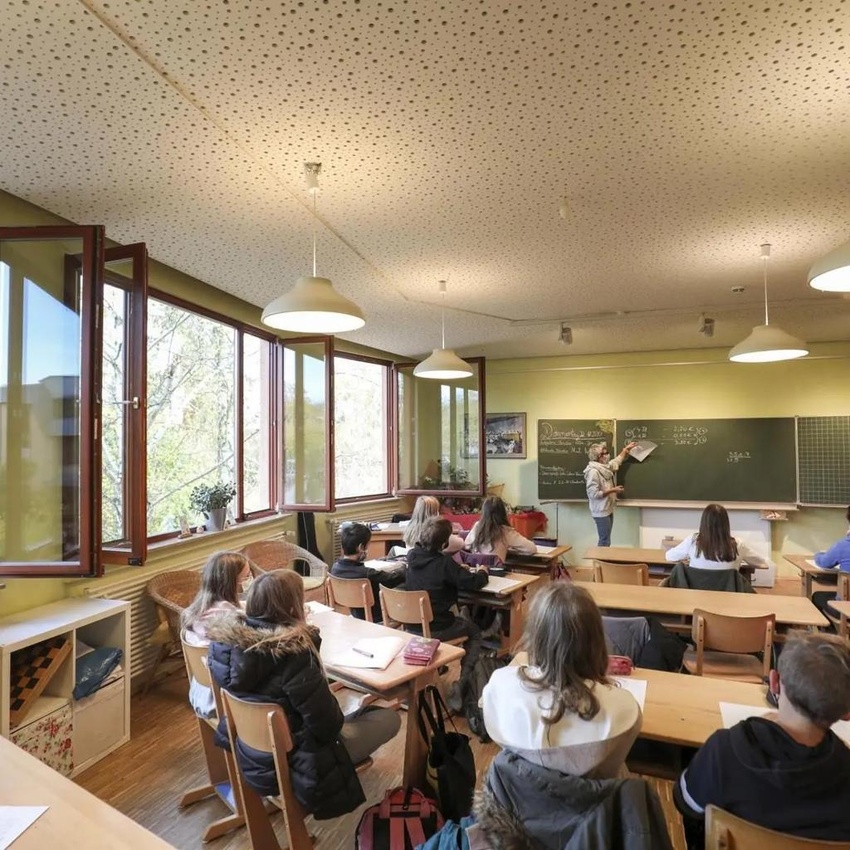
   <title>IWBI Calls for Healthier Indoor Air in Schools</title>
   <updated>2026-09-28T12:01:00+02:00</updated>
   <id>https://www.dailycsr.com/IWBI-Calls-for-Healthier-Indoor-Air-in-Schools_a6166.html</id>
   <category term="Companies" />
   <photo:imgsrc>https://www.dailycsr.com/photo/art/imagette/98180833-68378242.jpg</photo:imgsrc>
   <published>2026-09-28T11:59:00+02:00</published>
   <author><name>Debashish Mukherjee</name></author>
   <content type="html">
    <![CDATA[
     <div style="position:relative; text-align : center; padding-bottom: 1em;">
      <img src="https://www.dailycsr.com/photo/art/default/98180833-68378242.jpg?v=1790589679" alt="IWBI Calls for Healthier Indoor Air in Schools" title="IWBI Calls for Healthier Indoor Air in Schools" />
     </div>
     <div>
      <p style="text-align: justify;">Following the Global Commission on Healthy Indoor Air’s launch of its <strong>Global Framework for Action</strong>, Rachel Hodgdon, President and CEO of the International WELL Building Institute (IWBI) and Co-Chair of the Global Commission, has called on governments and education leaders to adopt a forward-looking “health-first agenda” for schools and other educational institutions around the world.<o:p></o:p> <br />    <p style="text-align: justify;">Hodgdon delivered the message during the UN High-Level Side Event “Healthy Indoor Air in Schools: Every Breath Shapes Learning,” held on September 24, 2026. Her remarks drew on the Global Framework’s roadmap and emphasized the need for systemic improvements to indoor environments in schools and other learning spaces. The UN event brought together government representatives and experts to examine indoor air quality in relation to public health, education, biosecurity and climate resilience.<o:p></o:p> <br />    <h3 style="text-align: justify;">Expanding the Health-First School Agenda<o:p></o:p></h3>    <p style="text-align: justify;">IWBI was among the organizations involved in convening the inaugural Healthy Schools for Healthy Kids Summit in Washington, D.C., earlier this summer. The gathering focused attention on the role of healthy school environments and helped establish the foundation for a broader health-first agenda.<o:p></o:p> <br />    <p style="text-align: justify;">At the UN event, Hodgdon called on policymakers, researchers, advocates and other stakeholders to continue developing this agenda. The proposed priorities extend beyond indoor air quality alone and include school modernization, healthier building materials, ventilation, emergency preparedness, resilience, lighting, acoustics, pollution prevention and remediation of longstanding environmental hazards.<o:p></o:p> <br />    <p style="text-align: justify;">The agenda also highlights the need for greater technical assistance for schools and communities, together with additional research into the factors that influence health and learning in educational environments.<o:p></o:p> <br />    <p style="text-align: justify;">According to IWBI, the objective is to place health and well-being more firmly within decisions about school infrastructure and modernization rather than treating these considerations as secondary issues. Hodgdon's remarks emphasized the role of healthy indoor environments as a foundation for students' ability to learn and thrive.<o:p></o:p> <br />    <h3 style="text-align: justify;">Global Attention on Indoor Air in Schools<o:p></o:p></h3>    <p style="text-align: justify;">The UN side event brought together ministers, members of parliament and senior government officials from France, the United Kingdom, Montenegro and Eswatini, alongside researchers, advocates and other international experts.<o:p></o:p> <br />    <p style="text-align: justify;">Other participants included fellow Global Commission member Dr. Ian Longley of the Air Quality Collective and Air Club Co-Founders Dr. Georgia Lagoudas and Dr. Bronwyn King.<o:p></o:p> <br />    <p style="text-align: justify;">Their participation highlighted the increasingly broad scope of the indoor-air discussion. Indoor environmental quality is being considered not only as a building-management issue, but also in relation to public health, education, pandemic and biosecurity preparedness, and climate resilience.<o:p></o:p> <br />    <p style="text-align: justify;">The event's organizers also highlighted Montenegro's national initiative on healthy indoor air in schools and the potential for open-source air-cleaning and monitoring solutions to be adapted in other school systems.<o:p></o:p> <br />    <h3 style="text-align: justify;">From Framework to Action<o:p></o:p></h3>    <p style="text-align: justify;">The latest call follows the Global Commission's development of the Global Framework for Action, which is intended to provide a roadmap for coordinated action on healthy indoor air. The September UN event placed particular emphasis on translating that broader framework into practical measures for educational settings.<o:p></o:p> <br />    <p style="text-align: justify;">For IWBI, the focus on schools reflects the organization's wider health-first approach to buildings and communities. The initiative seeks to encourage decision-makers to consider indoor environmental conditions alongside modernization, sustainability and resilience when planning and upgrading educational facilities.<o:p></o:p> <br />    <p style="text-align: justify;">With governments, school systems, researchers, nonprofits and industry representatives participating in the discussion, the UN event provided a platform for expanding international cooperation around healthier learning environments.<o:p></o:p> <br />  
     </div>
     <br style="clear:both;"/>
    ]]>
   </content>
   <link rel="alternate" href="https://www.dailycsr.com/IWBI-Calls-for-Healthier-Indoor-Air-in-Schools_a6166.html" />
  </entry>
  <entry>
   <title>Global Indoor Air Quality Policy Database Maps 253 Policies</title>
   <updated>2026-09-28T11:57:00+02:00</updated>
   <id>https://www.dailycsr.com/Global-Indoor-Air-Quality-Policy-Database-Maps-253-Policies_a6165.html</id>
   <category term="Companies" />
   <photo:imgsrc>https://www.dailycsr.com/photo/art/imagette/98180774-68378186.jpg</photo:imgsrc>
   <published>2026-09-28T11:54:00+02:00</published>
   <author><name>Debashish Mukherjee</name></author>
   <content type="html">
    <![CDATA[
     <div style="position:relative; text-align : center; padding-bottom: 1em;">
      <img src="https://www.dailycsr.com/photo/art/default/98180774-68378186.jpg?v=1790589431" alt="Global Indoor Air Quality Policy Database Maps 253 Policies" title="Global Indoor Air Quality Policy Database Maps 253 Policies" />
     </div>
     <div>
      <div style="text-align: justify;">As governments and international organizations convene for the 81st United Nations General Assembly to address challenges including infectious diseases, wildfire smoke and extreme heat, the Brown University Pandemic Center, Montenegrin Institute for Advanced Innovation (MIAI), Air Club and International WELL Building Institute (IWBI) have launched the Global Indoor Air Quality Policy Database. <br />   <br />  The new resource is designed to help governments identify and strengthen policies that improve indoor air quality (IAQ) while building resilience against multiple health and environmental threats. According to its developers, it is the first comprehensive repository focused specifically on national indoor air quality policies, bringing together 253 policies from 53 countries. <br />   <br />  Improving indoor air can provide a practical way for governments to strengthen public health without relying primarily on individuals to change their behavior. Better buildings can help reduce exposure to infectious pathogens and wildfire smoke while also supporting everyday health and potentially improving learning outcomes. <br />   <br />  Schools are a particularly important setting because children spend a significant portion of their waking hours there. In Montenegro, MIAI is developing a model that could be replicated elsewhere by introducing open-source air-cleaning technologies across the country's schools. <br />  The database will be featured at the UN General Assembly side event “Healthy Indoor Air in Schools: Every Breath Shapes Learning,” which is co-sponsored by the governments of Montenegro, France and Eswatini. <br />   <br />  <strong>Providing Policymakers With Comparable Data</strong> <br />  The database's developers say policymakers previously lacked a single resource that could provide a comprehensive view of how different countries are addressing indoor air quality. <br />  Skandan Ananthasekar, Visiting Fellow at the Brown University Pandemic Center and the database's development lead, said the resource makes it possible to identify both areas of progress and remaining policy gaps. He noted that governments considering new IAQ measures can examine policies already implemented elsewhere and draw lessons from those experiences. <br />   <br />  The initiative follows the Global Pledge for Healthy Indoor Air, introduced at United Nations Headquarters in September 2025. During Climate Week NYC 2026, the four organizations behind the database are placing particular emphasis on indoor air quality in schools as an issue spanning public health, education and biosecurity. <br />   <br />  Dr. Georgia Lagoudas, Senior Fellow at the Brown University Pandemic Center and Co-Founder of Air Club, said the database is intended to highlight countries whose approaches could provide useful models for others. She described the resource as an initial foundation for tracking indoor air quality policies and measuring progress, drawing a parallel with international efforts to improve access to clean water and outdoor air. <br />   <br />  Lagoudas also pointed to the amount of time people spend indoors, emphasizing the importance of understanding and improving the air in homes, schools, workplaces and other indoor environments. <br />   <br />  Rachel Hodgdon, President and CEO of IWBI, said the organizations' work builds on the Global Commission on Healthy Indoor Air and the Global Pledge for Healthy Indoor Air. She said the new database gives policymakers access to a consolidated collection of IAQ policies that can support further action and the development of healthier indoor environments. <br />   <br />  <strong>Indoor Air Policy Is Expanding</strong> <br />  The database indicates that government activity around indoor air quality has increased substantially in recent years. Of the 253 policies included, 42% were introduced in 2020 or later, suggesting that policy development accelerated following the COVID-19 pandemic. <br />   <br />  At the same time, significant gaps remain in how governments regulate and oversee indoor air. <br />  Government responsibility remains fragmented<strong>.</strong> Only <strong>8 of the 53 countries</strong>, or 15%, have designated a clear government authority responsible for indoor air quality. In other countries, responsibilities are distributed among agencies dealing with health, energy, environment, education, housing and labor. <br />   <br />  The legal status of policies varies<strong>.</strong> Approximately 64% of the policies are legally binding, but many are incorporated into workplace safety rules, building regulations or energy legislation, where indoor air quality may not be the primary objective. Dedicated health-based standards intended specifically to protect building occupants remain less widespread. <br />   <br />  Schools remain underrepresented. Only 25 of the 253 policies specifically address educational settings, and fewer than half of those policies are legally binding. The finding highlights a gap between the importance of indoor air in schools and the extent to which governments have established enforceable requirements. <br />   <br />  <strong>An Open Resource for Policymakers</strong> <br />  The Global Indoor Air Quality Policy Database is designed as an open resource that allows users to examine policies across countries and policy areas. <br />   <br />  Version 1.0 includes:</div>    <ul>  	<li style="text-align: justify;"><strong>253 documented policies</strong>, searchable and filterable by country, policy domain and instrument type.</li>  	<li style="text-align: justify;"><strong>Detailed profiles of 17 countries</strong> identified as having more developed approaches to indoor air governance, providing examples that other governments can examine.</li>  	<li style="text-align: justify;"><strong>An IAQ Policy Maturity Framework</strong> that allows policymakers to assess their national approach across five areas: coordination, monitoring, health-based standards, enforcement and implementation support.</li>  	<li style="text-align: justify;"><strong>Policy recommendations covering all five assessment areas</strong>, including examples from countries with relevant approaches.</li>  </ul>    <div style="text-align: justify;">The database is intended to evolve through contributions from researchers, policymakers and other collaborators. The organizations have invited additional input as the resource develops. <br />  The first version was produced with financial support from the Montenegrin Institute for Advanced Innovation and Balvi and is available through Air Club's online database. <br />   <br />  <strong>About the Organizations</strong> <br />  The Brown University Pandemic Center, part of Brown University’s School of Public Health, focuses on preventing pandemics, reducing vulnerabilities and strengthening resilience to pandemics and other biological emergencies, including their effects on health, peace, security and prosperity. <br />   <br />  The Montenegrin Institute for Advanced Innovation (MIAI) is an independent nonprofit philanthropic organization headquartered in Podgorica, Montenegro, with activities extending internationally. Its work includes developing systems in partnership with communities and institutions, training people to operate those systems and producing evidence-based standards intended to provide lasting value. <br />   <br />  The launch of the Global Indoor Air Quality Policy Database provides governments and other stakeholders with a common reference point for examining existing indoor-air policies, identifying gaps and considering approaches that could strengthen indoor environmental health.</div>  
     </div>
     <br style="clear:both;"/>
    ]]>
   </content>
   <link rel="alternate" href="https://www.dailycsr.com/Global-Indoor-Air-Quality-Policy-Database-Maps-253-Policies_a6165.html" />
  </entry>
</feed>