<?xml version="1.0" encoding="UTF-8"?>
<feed xmlns="http://www.w3.org/2005/Atom"  xmlns:media="http://search.yahoo.com/mrss/" xmlns:dc="http://purl.org/dc/elements/1.1/" xmlns:itunes="http://www.itunes.com/dtds/podcast-1.0.dtd" xmlns:geo="http://www.w3.org/2003/01/geo/wgs84_pos#" xmlns:georss="http://www.georss.org/georss" xmlns:photo="http://www.pheed.com/pheed/">
 <title>Daily CSR</title>
 <subtitle><![CDATA[Daily CSR delivers latest news and in-depth coverage about corporate social responsibility, ethics and sustainability]]></subtitle>
 <link rel="alternate" type="text/html" href="https://www.dailycsr.com" />
 <link rel="self" type="text/xml" href="https://www.dailycsr.com/xml/atom.xml" />
 <id>https://www.dailycsr.com/</id>
 <updated>2026-09-11T06:16:18+02:00</updated>
 <generator uri="http://www.wmaker.net">Webzine Maker</generator>
  <icon>https://www.dailycsr.com/favicon.ico</icon>
  <entry>
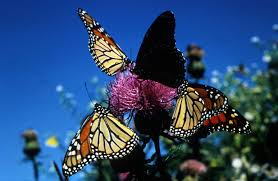
   <title>Georgia DOT Expands Monarch Butterfly Habitat</title>
   <updated>2026-09-10T02:59:00+02:00</updated>
   <id>https://www.dailycsr.com/Georgia-DOT-Expands-Monarch-Butterfly-Habitat_a6121.html</id>
   <category term="Companies" />
   <photo:imgsrc>https://www.dailycsr.com/photo/art/imagette/97978538-68214087.jpg</photo:imgsrc>
   <published>2026-09-10T02:57:00+02:00</published>
   <author><name>Debashish Mukherjee</name></author>
   <content type="html">
    <![CDATA[
     <div style="position:relative; text-align : center; padding-bottom: 1em;">
      <img src="https://www.dailycsr.com/photo/art/default/97978538-68214087.jpg?v=1789001972" alt="Georgia DOT Expands Monarch Butterfly Habitat" title="Georgia DOT Expands Monarch Butterfly Habitat" />
     </div>
     <div>
      <p style="text-align:justify;text-justify:inter-ideograph">The Georgia Department of Transportation (Georgia DOT) and The Ray have joined forces to create monarch butterfly pollinator meadows at nine highway right-of-way locations across Georgia. The project marks Georgia DOT’s first installed acreage under the Nationwide Candidate Conservation Agreement with Assurances (CCAA) for the Monarch Butterfly on Energy and Transportation Lands. The voluntary program encourages transportation agencies to establish, maintain and manage monarch habitat on transportation properties.<o:p></o:p> <br />    <p style="text-align:justify;text-justify:inter-ideograph">The initiative reflects a growing effort to combine transportation infrastructure with environmental conservation. Georgia DOT Commissioner Russell R. McMurry, P.E., said the new pollinator areas demonstrate how highway land can contribute to conservation while addressing the decline in monarch butterfly populations. He also highlighted The Ray’s longstanding partnership with the department in advancing habitat protection.<o:p></o:p> <br />    <h3 style="text-align:justify;text-justify:inter-ideograph">Roadside Management Supports Pollinators<o:p></o:p></h3>    <p style="text-align:justify;text-justify:inter-ideograph">As part of the project, Georgia DOT prepared the selected roadside areas and introduced conservation-focused mowing practices. Mowing schedules were modified to give native plants and flowering species more time to develop, creating sources of nectar and habitat for monarchs and other pollinators.<o:p></o:p> <br />    <p style="text-align:justify;text-justify:inter-ideograph">The Ray took responsibility for coordinating the meadow plantings and assessing their development. Its monitoring efforts include tracking plant growth, vegetation coverage, pollinator activity and the performance of native species under varying roadside conditions.&nbsp;<o:p></o:p> <br />    <h3 style="text-align:justify;text-justify:inter-ideograph">Applying Lessons From The Ray Highway<o:p></o:p></h3>    <p style="text-align:justify;text-justify:inter-ideograph">The project builds on years of roadside research conducted along The Ray Highway. According to Josh Weaver, Ph.D., Natural Capital Manager at The Ray, expanding the work to nine locations allows researchers to test their previous findings under a much broader range of conditions.<o:p></o:p> <br />    <p style="text-align:justify;text-justify:inter-ideograph">The sites differ in factors such as soil composition, terrain and growing conditions. As a result, the project is intended to demonstrate that roadside native vegetation can serve purposes beyond supporting wildflowers and pollinators. The partners are also examining its potential for slope stabilization, erosion reduction and long-term roadside management.<o:p></o:p> <br />    <h3 style="text-align:justify;text-justify:inter-ideograph">Monitoring Will Guide Future Conservation Work<o:p></o:p></h3>    <p style="text-align:justify;text-justify:inter-ideograph">Georgia DOT and The Ray plan to continue observing the nine meadow sites as the vegetation becomes established. Data collected during the project will help determine how effectively native plants can provide wildlife habitat while also supporting roadside stability and erosion control.<o:p></o:p> <br />    <p style="text-align:justify;text-justify:inter-ideograph">The findings could ultimately help identify additional opportunities to incorporate native vegetation and pollinator habitat into highway right-of-way management across Georgia.<o:p></o:p> <br />  
     </div>
     <br style="clear:both;"/>
    ]]>
   </content>
   <link rel="alternate" href="https://www.dailycsr.com/Georgia-DOT-Expands-Monarch-Butterfly-Habitat_a6121.html" />
  </entry>
  <entry>
   <title>Ray C. Anderson Foundation: Sustainability &amp; Climate Initiatives</title>
   <updated>2026-08-27T15:45:00+02:00</updated>
   <id>https://www.dailycsr.com/Ray-C-Anderson-Foundation-Sustainability-Climate-Initiatives_a6084.html</id>
   <category term="Companies" />
   <photo:imgsrc>https://www.dailycsr.com/photo/art/imagette/97820318-68091497.jpg</photo:imgsrc>
   <published>2026-08-26T16:36:00+02:00</published>
   <author><name>Debashish Mukherjee</name></author>
   <content type="html">
    <![CDATA[
     <div style="position:relative; text-align : center; padding-bottom: 1em;">
      <img src="https://www.dailycsr.com/photo/art/default/97820318-68091497.jpg?v=1787838340" alt="Ray C. Anderson Foundation: Sustainability &amp; Climate Initiatives" title="Ray C. Anderson Foundation: Sustainability &amp; Climate Initiatives" />
     </div>
     <div>
      <div style="text-align: justify;">The latest newsletter from the Ray C. Anderson Foundation features updates and stories from the Ray C. Anderson Center for Sustainable Business, The Ray, the Biomimicry Institute’s Ray of Hope Accelerator, and Drawdown Georgia. <br />   <br />  <strong>Biomimicry Institute</strong> <br />  The Biomimicry Institute has revealed the ten startups chosen for the 2026 Ray of Hope Accelerator, a leading global program supporting entrepreneurs who apply nature-inspired approaches to climate challenges and innovation. <br />   <br />  The new cohort was selected from a highly competitive pool of applicants from around the world. Together, the startups demonstrate the wide range of solutions that can emerge when entrepreneurs turn to nature for inspiration, treating it as a source of ideas and guidance rather than simply as the environment in which they operate. <br />   <br />  As part of the accelerator, each participating startup will receive $15,000 in non-dilutive funding, along with access to more than $50,000 worth of resources and expert assistance. Participants will also take part in a nature-based retreat and receive guidance from experts spanning science, deep technology, entrepreneurship, and impact investment. <br />   <br />  <a class="link" href="https://biomimicry.org/the-biomimicry-institute-announces-the-2026-ray-of-hope-accelerator-cohort/" target="_blank">Click here</a>  &nbsp;to know about the teams. <br />   <br />  The Biomimicry Institute has published the completed case studies from its <strong>Nature of Fashion</strong> initiative, a multi-year project exploring a fundamental challenge: how could the fashion industry manage and break down its waste in a way that mirrors nature’s own decomposition processes? <br />   <br />  While natural ecosystems recycle an estimated 100 billion tonnes of material every year, the fashion industry struggles to manage around 110 million tonnes of waste. The newly released case studies, spanning three countries, examine practical approaches for creating a more nature-aligned fashion system. Among the findings are insights from Ghana, where researchers studied how microbial communities in a severely polluted lagoon are reacting to the presence of synthetic textile waste. <br />   <br />  Click <a class="link" href="https://biomimicry.org/new-case-studies-from-the-biomimicry-institute-show-what-fashions-circularity-conversation-is-missing/">here</a>  to read the case studies.</div>    <h3 style="text-align: justify;">&nbsp;Ray C. Anderson Center for Sustainable Business</h3>    <div style="text-align: justify;">This summer, the Carbon Reduction Challenge celebrated its 10th year of engaging students in practical emissions-reduction projects. Participants investigate ways to lower carbon emissions within the organizations where they are completing internships, then develop and present a compelling business case for projects that can deliver both environmental and financial benefits. The students take on the Challenge in addition to their normal internship duties, working alongside mentors and corporate sponsors to create proposals that are both meaningful from a sustainability perspective and financially viable. Each August, the program produces a new collection of actionable ideas that participating companies can consider implementing. <br />   <br />  The Rwanda Study Abroad program at Georgia Tech gives students an opportunity to explore sustainable development by connecting academic learning with real-world challenges. While the program traditionally focused on undergraduates, this year it expanded to include a graduate-level option: the MBA International Practicum at Scheller College, co-taught by Professor of the Practice Michael Oxman and Lecturer Bob Lax. Using a structured, hypothesis-based problem-solving methodology, students worked to develop solutions that directly supported their clients’ goals. <br />   <br />  As an undergraduate at Georgia Tech, Justin Le consistently demonstrated a strong commitment to bringing communities together, supporting others, and advancing sustainability. In recognition of his contributions, the Center named him the 2026 recipient of the Vivian Nora Lukens Memorial Scholarship. In an interview, Justin reflects on his experiences and describes how they helped him become more adaptable, deepen his interest in sustainability, and develop as a servant leader. He graduated from Georgia Tech this spring with a B.S. in Chemical and Biomolecular Engineering.</div>    <h3 style="text-align: justify;">Drawdown Georgia</h3>    <div style="text-align: justify;">Drawdown Georgia is launching a new quarterly digital newsletter aimed at Georgians interested in understanding the state’s electricity mix and how it influences energy costs and emissions. <br />   <br />  Electricity sources vary considerably across Georgia. Some communities receive more of their power from nuclear and solar generation, while others depend more heavily on natural gas and coal. These differences influence the carbon intensity of electricity in each area and, consequently, the emissions associated with residential, commercial, and industrial energy use. <br />   <br />  <strong>Where does your electricity come from?</strong> Drawdown Georgia is making this county-level information easier for residents and organizations to access. <br />   <br />  Created in collaboration with Georgia Tech researchers, the data can help governments, businesses, and community groups assess progress, inform planning, and identify opportunities to prioritize emissions reductions. <br />   <br />  In a recent Georgia Climate Digest interview, host Eriqah Vincent speaks with Jackie Jackson, Resilience Program Administrator for Chatham County. A native of Chatham County and a trained biologist, Jackson spent three decades working in environmental and community planning before helping establish the county’s first resilience program in 2022.</div>    <h3 style="text-align: justify;">Drawdown Georgia Business Compact</h3>    <div style="text-align: justify;">The Georgia Carbon Exchange team recently hosted a webinar to update stakeholders and encourage participation in its forest pilot program. The initiative could give Georgia-based corporations access to high-integrity carbon credits that support both the state’s economy and its natural ecosystems while benefiting the communities where projects are located. Researchers, landowners, and corporate purchasers took part in the session to explore how collaboration could help create a carbon market suited to the needs and conditions of the Southeast.</div>    <h3 style="text-align: justify;">The Ray</h3>    <div style="text-align: justify;">The Ray has entered into a formal partnership with the Montana Department of Transportation to explore technology-enabled approaches to improving safety, mobility, and resource efficiency across Montana’s extensive transportation system. <br />   <br />  The partnership provides a framework for developing innovative transportation infrastructure while supporting economic growth and strengthening resilience across the state. A newly signed Memorandum of Understanding outlines an initial multi-year program focused on research and the creation of geospatial analysis tools. Collaborative research and pilot projects are expected to continue through 2028.</div>    <h3 style="text-align: justify;">The Ray’s Natural Capital Project with Washington State Department of Transportation</h3>    <div style="text-align: justify;">As part of its continuing partnership with the Washington State Department of Transportation (WSDOT), The Ray has implemented advanced natural capital strategies at the Scatter Creek Rest Area. The project illustrates how transportation infrastructure can also contribute to ecosystem health and provide benefits to surrounding habitats. <br />   <br />  <strong>Supporting Vulnerable Wildlife:</strong> The initiative demonstrates how active transportation corridors can be designed to accommodate federally protected wildlife, including the regionally threatened Mazama pocket gopher. <br />   <br />  <strong>Native Planting for Ecosystem Health:</strong> Specially formulated native seed mixes were selected to match the site’s distinctive soil conditions. Deep-rooted vegetation helps stabilize roadside areas, improve the management of natural stormwater flows, and provide sustained food sources for pollinators. <br />   <br />  <strong>Technology-Based Environmental Monitoring:</strong> The Ray and WSDOT have installed PheNode automated monitoring systems from Agrela Ecosystems. These sensors continuously collect and transmit microclimate information, enabling the project team to monitor soil and weather conditions in real time as the habitat develops.</div>  
     </div>
     <br style="clear:both;"/>
    ]]>
   </content>
   <link rel="alternate" href="https://www.dailycsr.com/Ray-C-Anderson-Foundation-Sustainability-Climate-Initiatives_a6084.html" />
  </entry>
  <entry>
   <title>Covia and MJV Partner to Restore Pollinator Habitats in 2025</title>
   <updated>2025-08-12T13:00:00+02:00</updated>
   <id>https://www.dailycsr.com/Covia-and-MJV-Partner-to-Restore-Pollinator-Habitats-in-2025_a5018.html</id>
   <category term="Companies" />
   <photo:imgsrc>https://www.dailycsr.com/photo/art/imagette/90452297-63782110.jpg</photo:imgsrc>
   <published>2025-08-12T12:55:00+02:00</published>
   <author><name>Debashish Mukherjee</name></author>
   <content type="html">
    <![CDATA[
     <div style="position:relative; text-align : center; padding-bottom: 1em;">
      <img src="https://www.dailycsr.com/photo/art/default/90452297-63782110.jpg?v=1754996376" alt="Covia and MJV Partner to Restore Pollinator Habitats in 2025" title="Covia and MJV Partner to Restore Pollinator Habitats in 2025" />
     </div>
     <div>
      <div style="text-align: justify;">Covia is excited to continue its collaboration with the Monarch Joint Venture (MJV) in 2025, following the achievements of their 2024 initiatives. Last year, the partnership provided 5,000 milkweed plugs to Covia employees, encouraging hands-on participation in biodiversity and conservation efforts. It also marked the start of transforming 12 acres at Covia’s Cleburne, Texas, location into a vibrant pollinator garden, designed to restore crucial habitat for monarch butterflies. <br />   <br />  Together, Covia and MJV are dedicated to protecting the migratory monarch and other pollinator species through habitat creation, public education, and scientific outreach across the monarch’s range. This year’s joint projects include completing the Cleburne restoration work, launching another employee engagement program, and beginning a new pollinator habitat at Covia’s Roff, Oklahoma, plant. These efforts demonstrate Covia’s lasting commitment to biodiversity, sustainability, and community engagement—ensuring pollinators thrive for generations. <br />   <br />  <strong>Inspiring Employee Action for Habitat Conservation</strong> <br />  With MJV’s support, Covia will once again empower employees to take an active role in protecting pollinators. The 2025 initiative will distribute region-specific pollinator seed packets to team members across the company. Each custom blend is tailored to local environments to attract and support bees, butterflies, and other vital species, helping to strengthen ecosystems in the communities where Covia operates. This hands-on approach allows employees to make a direct impact by creating pollinator-friendly spaces at home. <br />   <br />  <strong>Progress on the Cleburne Pollinator Habitat</strong> <br />  For the Cleburne project, MJV has provided expert guidance from the earliest stages—covering habitat design, site preparation, plant selection, and dormant-season seeding plans. The 11.35-acre site is on track for planting this fall, with seeds stored onsite until the operations team begins the installation. This initiative underscores Covia’s dedication to environmental stewardship and enhancing local biodiversity. <br />   <br />  <strong>Roff, Oklahoma, Takes the Lead in the Next Restoration Phase</strong> <br />  The Roff facility will serve as the centerpiece for Covia’s next major pollinator restoration project, preparing approximately 20 acres for seeding before winter. Team members are conducting soil tests and site evaluations so MJV can create a custom native seed mix optimized for pollinators. The project may also compare two seeding techniques—broadcasting and no-till drilling—to assess long-term habitat success. Covia will oversee preparation and planting, while MJV provides seeds and technical expertise. <br />   <br />  Additionally, the Roff team will join the Monarch Watch Tagging Program, a citizen science effort tracking monarch migration since 1992. During the fall migration, the team will capture, tag, and release monarchs while recording data such as tag number, date, sex, and location. The collected information will be submitted to Monarch Watch, contributing to ongoing research on the species’ extraordinary journey south. <br />   <br />  <strong>Looking Forward</strong> <br />  Through careful planning, strong partnerships, and expert-led restoration strategies, Covia and MJV are building sustainable habitats that will support pollinators and strengthen local ecosystems well into the future.</div>  
     </div>
     <br style="clear:both;"/>
    ]]>
   </content>
   <link rel="alternate" href="https://www.dailycsr.com/Covia-and-MJV-Partner-to-Restore-Pollinator-Habitats-in-2025_a5018.html" />
  </entry>
</feed>