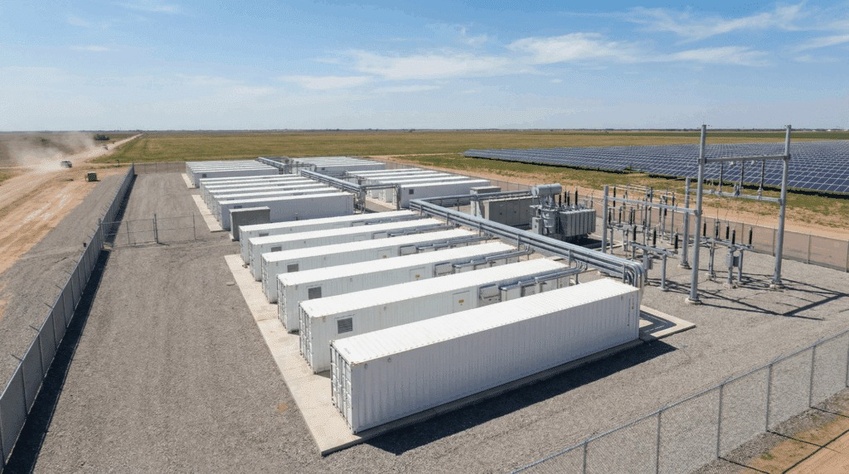
Jinko ESS, the energy storage arm of JinkoSolar Co., Ltd., has successfully supplied 722MWh of energy storage equipment for a major renewable energy development in India. The project incorporates 144 units of the company's SunTera G2 liquid-cooled energy storage systems, which are designed to support large-scale renewable energy integration, enhance grid reliability, facilitate clean energy distribution, and assist with peak demand management. Beyond supplying equipment, Jinko ESS offers comprehensive services including system integration, project execution, and long-term operational support tailored to various energy storage applications.
As renewable energy projects expand and a greater share of power generation is connected to national grids, energy storage has emerged as a crucial component for maintaining grid stability and optimizing asset performance. Utility-scale renewable energy facilities require storage solutions capable of meeting stringent standards for safety, environmental resilience, project delivery, and ongoing service support.
The Indian project presents several operational challenges, including extreme heat, elevated humidity levels, dusty conditions, intense solar exposure, and logistical complexities associated with long-distance transportation. These demanding conditions necessitate robust engineering, advanced thermal management, high protection standards, and dependable on-site service capabilities. The successful deployment of the 722MWh system highlights Jinko ESS's expertise in delivering large-scale energy storage solutions in challenging environments.
To address these requirements, the SunTera G2 system utilizes advanced liquid-cooling technology that maintains battery cell temperature variations within 2.5°C, improving system efficiency, consistency, and long-term operational reliability. The solution is engineered to perform in temperatures of up to 55°C and humidity levels reaching 99%. Additional features such as an IP55-rated enclosure, corrosion-resistant design, multilayer safety mechanisms, and intelligent thermal controls ensure dependable and secure operation for large renewable energy installations.
While equipment supply marks an important milestone, sustained performance throughout the system's lifecycle remains essential for maximizing customer value. Drawing on its expertise in battery cells, PACK manufacturing, system integration, and global project execution, Jinko ESS provides end-to-end support that includes system design, product deployment, field services, and long-term operations and maintenance partnerships. The company also offers an AI-enabled Energy Management System (EMS) that delivers real-time monitoring, operational analysis, load forecasting, and charge-discharge optimization, helping customers improve renewable energy utilization, strengthen grid responsiveness, and enhance asset returns.
According to Anita Li, Vice President of Jinko ESS, the growing scale of renewable energy projects is driving increased expectations for energy storage solutions. She noted that energy storage systems play a vital role not only in capacity management but also in ensuring project safety, grid dispatch efficiency, and long-term economic performance. Li described the successful delivery of the 722MWh project as another significant milestone for the company in handling complex utility-scale applications and reaffirmed Jinko ESS's commitment to supporting customers through reliable technology, effective project delivery, and ongoing service support.
Looking ahead, Jinko ESS intends to continue supporting large-scale energy storage developments worldwide through its integrated approach encompassing advanced products, system integration expertise, project management capabilities, and long-term service offerings. The company aims to contribute to a more resilient, adaptable, and sustainable global energy infrastructure as the transition to clean energy accelerates.
As renewable energy projects expand and a greater share of power generation is connected to national grids, energy storage has emerged as a crucial component for maintaining grid stability and optimizing asset performance. Utility-scale renewable energy facilities require storage solutions capable of meeting stringent standards for safety, environmental resilience, project delivery, and ongoing service support.
The Indian project presents several operational challenges, including extreme heat, elevated humidity levels, dusty conditions, intense solar exposure, and logistical complexities associated with long-distance transportation. These demanding conditions necessitate robust engineering, advanced thermal management, high protection standards, and dependable on-site service capabilities. The successful deployment of the 722MWh system highlights Jinko ESS's expertise in delivering large-scale energy storage solutions in challenging environments.
To address these requirements, the SunTera G2 system utilizes advanced liquid-cooling technology that maintains battery cell temperature variations within 2.5°C, improving system efficiency, consistency, and long-term operational reliability. The solution is engineered to perform in temperatures of up to 55°C and humidity levels reaching 99%. Additional features such as an IP55-rated enclosure, corrosion-resistant design, multilayer safety mechanisms, and intelligent thermal controls ensure dependable and secure operation for large renewable energy installations.
While equipment supply marks an important milestone, sustained performance throughout the system's lifecycle remains essential for maximizing customer value. Drawing on its expertise in battery cells, PACK manufacturing, system integration, and global project execution, Jinko ESS provides end-to-end support that includes system design, product deployment, field services, and long-term operations and maintenance partnerships. The company also offers an AI-enabled Energy Management System (EMS) that delivers real-time monitoring, operational analysis, load forecasting, and charge-discharge optimization, helping customers improve renewable energy utilization, strengthen grid responsiveness, and enhance asset returns.
According to Anita Li, Vice President of Jinko ESS, the growing scale of renewable energy projects is driving increased expectations for energy storage solutions. She noted that energy storage systems play a vital role not only in capacity management but also in ensuring project safety, grid dispatch efficiency, and long-term economic performance. Li described the successful delivery of the 722MWh project as another significant milestone for the company in handling complex utility-scale applications and reaffirmed Jinko ESS's commitment to supporting customers through reliable technology, effective project delivery, and ongoing service support.
Looking ahead, Jinko ESS intends to continue supporting large-scale energy storage developments worldwide through its integrated approach encompassing advanced products, system integration expertise, project management capabilities, and long-term service offerings. The company aims to contribute to a more resilient, adaptable, and sustainable global energy infrastructure as the transition to clean energy accelerates.
]]>