<?xml version="1.0" encoding="UTF-8"?>
<feed xmlns="http://www.w3.org/2005/Atom"  xmlns:media="http://search.yahoo.com/mrss/" xmlns:dc="http://purl.org/dc/elements/1.1/" xmlns:itunes="http://www.itunes.com/dtds/podcast-1.0.dtd" xmlns:geo="http://www.w3.org/2003/01/geo/wgs84_pos#" xmlns:georss="http://www.georss.org/georss" xmlns:photo="http://www.pheed.com/pheed/">
 <title>Daily CSR</title>
 <subtitle><![CDATA[Daily CSR delivers latest news and in-depth coverage about corporate social responsibility, ethics and sustainability]]></subtitle>
 <link rel="alternate" type="text/html" href="https://www.dailycsr.com" />
 <link rel="self" type="text/xml" href="https://www.dailycsr.com/xml/atom.xml" />
 <id>https://www.dailycsr.com/</id>
 <updated>2026-10-04T17:26:08+02:00</updated>
 <generator uri="http://www.wmaker.net">Webzine Maker</generator>
  <icon>https://www.dailycsr.com/favicon.ico</icon>
  <entry>
   <title>Nokia and Transpower Strengthen New Zealand’s Power Grid</title>
   <updated>2026-09-27T09:27:00+02:00</updated>
   <id>https://www.dailycsr.com/Nokia-and-Transpower-Strengthen-New-Zealand-s-Power-Grid_a6162.html</id>
   <category term="Companies" />
   <photo:imgsrc>https://www.dailycsr.com/photo/art/imagette/98169454-68369653.jpg</photo:imgsrc>
   <published>2026-09-27T09:24:00+02:00</published>
   <author><name>Debashish Mukherjee</name></author>
   <content type="html">
    <![CDATA[
     <div style="position:relative; text-align : center; padding-bottom: 1em;">
      <img src="https://www.dailycsr.com/photo/art/default/98169454-68369653.jpg?v=1790494025" alt="Nokia and Transpower Strengthen New Zealand’s Power Grid" title="Nokia and Transpower Strengthen New Zealand’s Power Grid" />
     </div>
     <div>
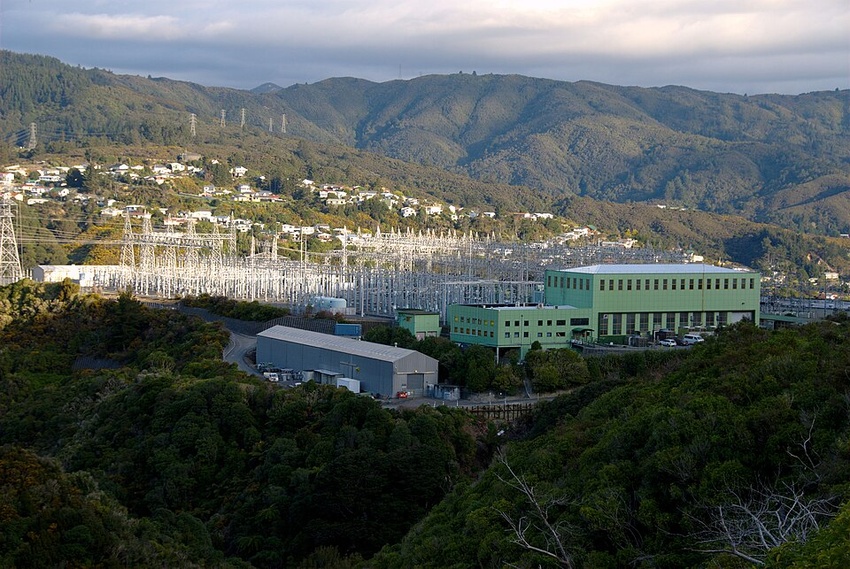
      <p style="text-align:justify;text-justify:inter-ideograph">Terms such as “five-nines availability” and “low latency” are common when discussing networks that support critical infrastructure. Seeing the operations at the Haywards electrical substation, located at the northern end of New Zealand’s 350 kV High-Voltage Direct Current (HVDC) links, provided a much more concrete understanding of what those requirements mean in practice.<o:p></o:p> <br />    <p style="text-align:justify;text-justify:inter-ideograph">As an IP engineer based in Europe, I have spent my career working to improve the reliability of networks that cannot afford significant downtime. However, remotely supporting the local team at <strong>Transpower New Zealand</strong> offered a different perspective on the responsibility involved in protecting essential infrastructure.<o:p></o:p> <br />    <p style="text-align:justify;text-justify:inter-ideograph">A disruption to a retail broadband connection might be an inconvenience. A large-scale failure of a national electricity grid can have consequences across entire communities and the economy. As John Crisp, Communications Network Head at Transpower, describes it, when the grid goes down, “it’s all over, Red Rover.”<o:p></o:p> <br />    <h3 style="text-align:justify;text-justify:inter-ideograph">Why communications infrastructure is essential to the power grid<o:p></o:p></h3>    <p style="text-align:justify;text-justify:inter-ideograph">Transpower operates the transmission network that moves electricity across New Zealand, including hydroelectric power generated in the South Island and delivered to major population centers in the North Island. The effectiveness of that electricity network depends heavily on the communications infrastructure supporting its operation.<o:p></o:p> <br />    <p style="text-align:justify;text-justify:inter-ideograph">That communications system, known as TransGO, provides the connectivity and information flow required to operate the national grid. It effectively functions as the grid's communications nervous system.<o:p></o:p> <br />    <p style="text-align:justify;text-justify:inter-ideograph">Without TransGO, grid operators would have far less visibility into the condition of equipment, electricity generation and demand. This real-time awareness is becoming increasingly important as renewable generation, including wind and solar power, expands.<o:p></o:p> <br />    <p style="text-align:justify;text-justify:inter-ideograph">Unlike conventional generation, renewable sources can fluctuate depending on weather and other conditions. Operators therefore require timely and accurate information to maintain the balance between electricity supply and demand. The possibility of earthquakes, storms and other natural hazards further reinforces the need for resilient communications infrastructure.<o:p></o:p> <br />    <p style="text-align:justify;text-justify:inter-ideograph">Technologies such as IP/MPLS can help provide the network resilience, service separation and cybersecurity capabilities required to support these mission-critical operations.<o:p></o:p> <br />    <h3 style="text-align:justify;text-justify:inter-ideograph">Transpower as guardian of the national grid<o:p></o:p></h3>    <p style="text-align:justify;text-justify:inter-ideograph">During my work with Transpower, the team introduced me to the Māori concept of Kaitiaki, a term associated with guardianship and protection.<o:p></o:p> <br />    <p style="text-align:justify;text-justify:inter-ideograph">Transpower describes itself as the “Kaitiaki of the national grid,” reflecting the responsibility it carries for maintaining the country's electricity transmission infrastructure.<o:p></o:p> <br />    <p style="text-align:justify;text-justify:inter-ideograph">That responsibility extends well beyond physical assets such as transmission lines, substations and towers. It involves helping provide a dependable, affordable and sustainable electricity system for New Zealand's population of more than five million people.<o:p></o:p> <br />    <p style="text-align:justify;text-justify:inter-ideograph">This concept of guardianship also closely aligns with the approach taken by Nokia's mission-critical networking teams. For organizations such as Transpower, network performance is not simply a technical objective. Reliability is fundamental because disruptions to communications can affect the operation of critical infrastructure.<o:p></o:p> <br />    <h3 style="text-align:justify;text-justify:inter-ideograph">Working together to strengthen the grid<o:p></o:p></h3>    <p style="text-align:justify;text-justify:inter-ideograph">Nokia has been a long-standing technology partner of Transpower. Working alongside Spark New Zealand, Nokia is supporting the modernization of <strong>TransGO</strong>, helping prepare the communications network for the evolving requirements of New Zealand's electricity grid.<o:p></o:p> <br />    <p style="text-align:justify;text-justify:inter-ideograph">The partnership extends beyond supplying IP networking equipment. It involves understanding the operational requirements and complexities of Transpower's environment and developing solutions that support reliable grid management.<o:p></o:p> <br />    <p style="text-align:justify;text-justify:inter-ideograph">The objective is straightforward but critical: help keep electricity flowing while supporting the wider economy and New Zealand's increasingly digital infrastructure.<o:p></o:p> <br />    <p style="text-align:justify;text-justify:inter-ideograph"><a class="link" href="https://www.youtube.com/watch?v=j_x-hHCHR3E">Watch the video</a>.<o:p></o:p> <br />    <h3 style="text-align:justify;text-justify:inter-ideograph">Learn more about Transpower’s work<o:p></o:p></h3>    <p style="text-align:justify;text-justify:inter-ideograph">For a closer look at Transpower's operations and the role of its communications infrastructure, viewers can explore the <a class="link" href="https://www.nokia.com/customer-success/transpower-new-zealand-refreshing-the-grid-control-network-for-modern-applications-and-demands/">customer success story</a>  and <a class="link" href="https://youtu.be/cLvqBBmh_Ng">watch the video</a>.<o:p></o:p> <br />    <p style="text-align:justify;text-justify:inter-ideograph">Together, these resources highlight the technology, expertise and people working behind the scenes to maintain a resilient and secure electricity transmission network. The story also illustrates how mission-critical communications can support the reliability of essential infrastructure and help keep New Zealand's grid operating.<o:p></o:p> <br />  
     </div>
     <br style="clear:both;"/>
    ]]>
   </content>
   <link rel="alternate" href="https://www.dailycsr.com/Nokia-and-Transpower-Strengthen-New-Zealand-s-Power-Grid_a6162.html" />
  </entry>
  <entry>
   <title>Future-Ready Data Centers: Powering AI, Sustainability, and Data Sovereignty in EMEA</title>
   <updated>2025-12-25T05:34:00+01:00</updated>
   <id>https://www.dailycsr.com/Future-Ready-Data-Centers-Powering-AI-Sustainability-and-Data-Sovereignty-in-EMEA_a5393.html</id>
   <category term="Companies" />
   <photo:imgsrc>https://www.dailycsr.com/photo/art/imagette/93364727-65278839.jpg</photo:imgsrc>
   <published>2025-12-25T05:32:00+01:00</published>
   <author><name>Debashish Mukherjee</name></author>
   <content type="html">
    <![CDATA[
     <div style="position:relative; text-align : center; padding-bottom: 1em;">
      <img src="https://www.dailycsr.com/photo/art/default/93364727-65278839.jpg?v=1766637255" alt="Future-Ready Data Centers: Powering AI, Sustainability, and Data Sovereignty in EMEA" title="Future-Ready Data Centers: Powering AI, Sustainability, and Data Sovereignty in EMEA" />
     </div>
     <div>
      <div style="text-align: justify;">New research commissioned by Lenovo highlights the urgent need for data center design across EMEA to adapt in order to support long-term business resilience. As organizations seek to run AI workloads more efficiently while responding to tightening sustainability regulations and compliance requirements, legacy data center models are increasingly proving inadequate. Nearly half of IT leaders (45%) acknowledge that their existing infrastructure does not align with their energy efficiency or carbon reduction targets. <br />   <br />  Concerns around data governance are equally pressing. Almost all IT and executive decision-makers in the region (99%) say data sovereignty will play a critical role in how data is gathered, stored, and processed in the coming years. Meanwhile, the rapid acceleration of AI-driven data consumption is exposing a disconnect: many organizations remain ill-equipped to deploy AI effectively or in an environmentally responsible way, underscoring a widening gap between digital aspirations and infrastructure readiness. <br />   <br />  To explore these challenges, Lenovo partnered with Opinium on the <em>Data Center of the Future</em> study, which outlines the major forces shaping where and how data centers will be designed and operated. This research comes at a time when the data center market continues to expand, while energy consumption, sustainability, and cost pressures grow ever more central to IT decision-making across EMEA. <br />   <br />  <strong>Sustainability readiness demands a rethink</strong> <br />  Although 92% of IT decision-makers say they favor technology partners that actively reduce energy use and carbon emissions, fewer than half (46%) believe their current data center architecture supports sustainability objectives. This shortfall reflects the mounting environmental strain caused by AI, automation, and surging data volumes. Traditional air-cooling systems, in particular, are struggling to deliver the right balance of efficiency, affordability, and emissions reduction. <br />   <br />  <strong>Data sovereignty remains a top priority</strong> <br />  With 88% of IT leaders already treating data sovereignty as a key concern—and nearly all expecting it to remain critical over the next five years—control over data location and compliance is set to strongly influence future data center strategies. In parallel, 94% cite low latency as an essential requirement now and in the future, driven by the rise of real-time workloads and edge computing. <br />   <br />  <strong>Scaling AI will shape tomorrow’s data centers</strong> <br />  Looking ahead, 90% of IT decision-makers anticipate that AI will dramatically increase organizational data volumes over the next decade, while 62% see AI and automation as the most influential factors in shaping IT strategy. Despite this, readiness remains uneven: 41% admit their organizations are not yet prepared to integrate AI in an efficient manner. <br />   <br />  “The next generation of data centers will be defined by their ability to scale AI workloads, meet sustainability commitments, and maximize energy efficiency,” said Simone Larsson, Head of Enterprise AI, EMEA at Lenovo. “As compute demand accelerates, customers will increasingly seek infrastructure partners that can deliver high performance while also taking accountability for environmental impact. <br />   <br />  “In EMEA, data sovereignty is especially urgent due to complex regulatory landscapes and growing scrutiny from CIOs and executive teams. Organizations must make proactive infrastructure choices now, because the decisions made today will determine future readiness.” <br />   <br />  <strong>Envisioning the Data Center of 2055</strong> <br />  To explore what data centers could look like three decades from now, Lenovo collaborated with engineering firm AKT II and architects Mamou-Mani. Their concepts reimagine the traditional rack-based data center by integrating liquid cooling, natural resources, and unconventional locations to improve sustainability and reduce environmental impact. Proposed designs include:</div>    <ul>  	<li style="text-align: justify;"><strong>The Floating Cloud</strong>: A high-altitude data center concept, suspended 20–30 kilometers above ground—well clear of commercial air traffic. Powered continuously by solar energy, it uses sealed, pressurized liquid cooling systems to eliminate air pollution. Modular construction makes airborne deployment feasible.</li>  	<li style="text-align: justify;"><strong>The Data Village</strong>: Positioned near rivers or canals, this modular, stackable system connects data center operations directly to urban environments. Enhanced liquid cooling enables waste heat to be reused for nearby schools, homes, or public facilities, while proximity helps reduce latency. This idea extends into a “Data Spa,” powered by geothermal energy and designed to blend seamlessly into natural landscapes such as valleys or lagoons.</li>  	<li style="text-align: justify;"><strong>The Data Center Bunker</strong>: By repurposing unused tunnels, bunkers, or transport infrastructure, this underground model minimizes land use and avoids new construction. Its subterranean setting enhances security and naturally supports efficient thermal management.</li>  </ul>    <div style="text-align: justify;">All concepts rely on liquid cooling to address rising heat densities and the inefficiencies of air-based cooling. Compared to traditional methods, liquid cooling consumes less energy and significantly improves overall sustainability. <br />   <br />  “As architects and engineers, our goal is to make data centers smarter and more responsible—not simply larger,” said James Cheung, Partner at Mamou-Mani. “This project brings together business needs and realistic solutions, from repurposed underground spaces to urban data villages and high-altitude cloud modules that return energy to local communities. While no one can predict the future with certainty, these concepts demonstrate ideas that could move from theory to real-world pilots with reduced risk.” <br />   <br />  <strong>Building future-ready infrastructure today</strong> <br />  To address rising compute demands alongside stricter sustainability expectations, organizations must begin modernizing their infrastructure now. Liquid cooling represents a practical and effective pathway forward. Lenovo Neptune liquid cooling technology, for example, can remove up to 98% of system heat directly at the source, significantly lowering energy consumption and reducing dependence on air cooling. <br />   <br />  As AI adoption and advanced analytics continue to scale, Neptune solutions provide a foundation that supports both performance growth and environmental responsibility. <br />   <br />  “Lenovo is focused on delivering intelligent, sustainable infrastructure at scale,” Larsson concluded. “With Neptune liquid cooling, we are already enabling customers to manage the energy intensity of AI through highly efficient, deployable solutions. Designing future-ready data centers requires a fundamental shift—one where sustainability is embedded from the outset, not added later.”</div>  
     </div>
     <br style="clear:both;"/>
    ]]>
   </content>
   <link rel="alternate" href="https://www.dailycsr.com/Future-Ready-Data-Centers-Powering-AI-Sustainability-and-Data-Sovereignty-in-EMEA_a5393.html" />
  </entry>
</feed>
