<?xml version="1.0" encoding="UTF-8"?>
<feed xmlns="http://www.w3.org/2005/Atom"  xmlns:media="http://search.yahoo.com/mrss/" xmlns:dc="http://purl.org/dc/elements/1.1/" xmlns:itunes="http://www.itunes.com/dtds/podcast-1.0.dtd" xmlns:geo="http://www.w3.org/2003/01/geo/wgs84_pos#" xmlns:georss="http://www.georss.org/georss" xmlns:photo="http://www.pheed.com/pheed/">
 <title>Daily CSR</title>
 <subtitle><![CDATA[Daily CSR delivers latest news and in-depth coverage about corporate social responsibility, ethics and sustainability]]></subtitle>
 <link rel="alternate" type="text/html" href="https://www.dailycsr.com" />
 <link rel="self" type="text/xml" href="https://www.dailycsr.com/xml/atom.xml" />
 <id>https://www.dailycsr.com/</id>
 <updated>2026-10-07T16:29:04+02:00</updated>
 <generator uri="http://www.wmaker.net">Webzine Maker</generator>
  <icon>https://www.dailycsr.com/favicon.ico</icon>
  <entry>
   <title>Motorola Employee Honored for Police Volunteer Service</title>
   <updated>2026-09-30T16:43:00+02:00</updated>
   <id>https://www.dailycsr.com/Motorola-Employee-Honored-for-Police-Volunteer-Service_a6181.html</id>
   <category term="Companies" />
   <photo:imgsrc>https://www.dailycsr.com/photo/art/imagette/98219215-68440260.jpg</photo:imgsrc>
   <published>2026-09-30T16:41:00+02:00</published>
   <author><name>Debashish Mukherjee</name></author>
   <content type="html">
    <![CDATA[
     <div style="position:relative; text-align : center; padding-bottom: 1em;">
      <img src="https://www.dailycsr.com/photo/art/default/98219215-68440260.jpg?v=1790779389" alt="Motorola Employee Honored for Police Volunteer Service" title="Motorola Employee Honored for Police Volunteer Service" />
     </div>
     <div>
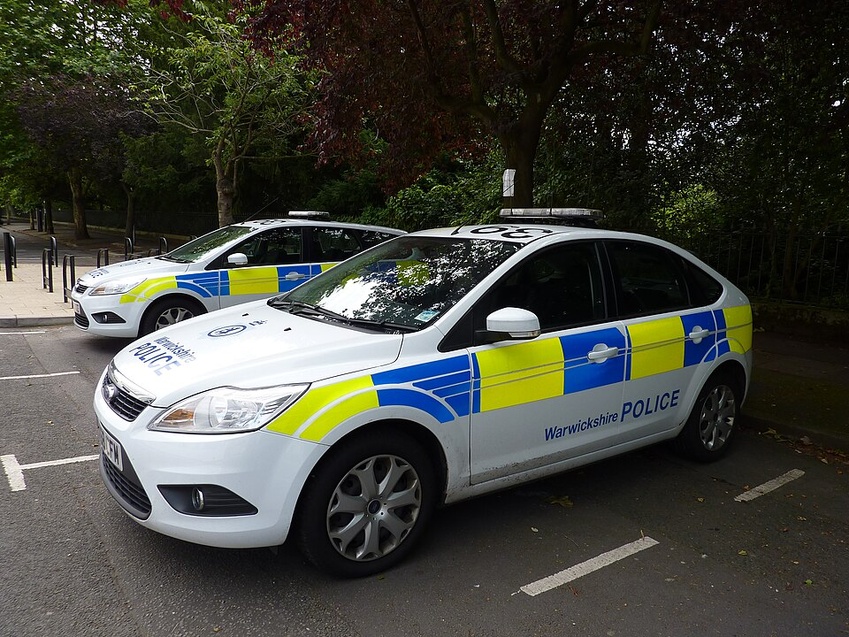
      <div style="text-align: justify;">For many people, vacation is an opportunity to step away from work and unwind. For Mike Beddoes, a Motorola Solutions employee in the U.K., time away from his regular job often means taking on another responsibility — helping protect the community as a volunteer police officer. <br />   <br />  For the past nine years, Mike has maintained two demanding roles. During his working hours, he contributes to innovation at Motorola Solutions. Outside of work, he serves as a fully warranted volunteer officer with the Warwickshire Police Special Constabulary. Most recently, he dedicated four weeks of his personal leave to completing an intensive emergency driving course, further strengthening his ability to respond in critical situations.</div>    <h3 style="text-align: justify;">The Responsibility Behind the Uniform</h3>    <div style="text-align: justify;">As a Special Constable, Mike has the same uniform and police powers as a regular full-time officer. Over the years, he has accumulated more than 3,000 hours of service — equivalent to roughly two years of full-time police work. <br />   <br />  His motivation to serve began during his university years. While commuting, Mike regularly saw police officers responding to difficult and unpredictable situations. Their ability to remain composed while helping people during some of their most challenging moments left a lasting impression on him. Eventually, he decided he wanted to move beyond simply observing their work and play an active role in supporting his community.</div>    <h3 style="text-align: justify;">Responding When It Matters Most</h3>    <div style="text-align: justify;">Mike's responsibilities have included everything from regular patrol duties to responding to emergencies where lives are at risk. His commitment was particularly evident when he responded to a major house fire while off duty. <br />   <br />  Without hesitation, he entered the dangerous situation, provided first aid to people trapped inside and assisted in efforts to bring the fire under control. The incident earned him his fourth Chief Constable's Commendation. <br />   <br />  His 3,000-plus hours of volunteer service, combined with his response to the fire, also led to him receiving the 2025 CEO Award for Volunteerism, the highest recognition Motorola Solutions gives for volunteer service. <br />   <br />  “Receiving this type of recognition is an incredible honor,” said Mike. “But the real reward is the impact we get to make on the ground. When you’re responding to an emergency or stepping into a critical situation, you aren’t thinking about the hours or the personal time off you gave up — you’re just focusing on the person who needs your help. I’m grateful to be in a position to protect and serve the community I live in.”</div>    <h3 style="text-align: justify;">Bringing Front-Line Experience to Motorola Solutions</h3>    <div style="text-align: justify;">Mike's two roles also give him a valuable connection between the technology developed by Motorola Solutions and the first responders who depend on it in the field. <br />   <br />  His experience as a police officer provides firsthand insight into what emergency personnel need when circumstances become critical. When he uses a radio during an emergency, he understands that dependable communications are not simply a matter of convenience. A clear connection and reliable equipment can be essential to the safety of officers and members of the public. <br />   <br />  Mike carries this front-line perspective into his work at Motorola Solutions, helping reinforce the importance of designing technology around the real-world needs of the people who use it.</div>    <h3 style="text-align: justify;">A Mission That Extends Beyond Technology</h3>    <div style="text-align: justify;">Mike's story illustrates how the company's purpose can reach far beyond the products and technologies it develops. The broader impact can also be seen in the people who dedicate their time and skills to supporting their communities. <br />   <br />  His commitment reflects the spirit shared by Motorola Solutions employees around the world who combine their professional expertise with a desire to serve others and help create safer communities. <br />  &nbsp; <br />  &nbsp;</div>  
     </div>
     <br style="clear:both;"/>
    ]]>
   </content>
   <link rel="alternate" href="https://www.dailycsr.com/Motorola-Employee-Honored-for-Police-Volunteer-Service_a6181.html" />
  </entry>
  <entry>
   <title>Flock Safety Cameras Raise Privacy and Surveillance Concerns</title>
   <updated>2026-08-25T13:42:00+02:00</updated>
   <id>https://www.dailycsr.com/Flock-Safety-Cameras-Raise-Privacy-and-Surveillance-Concerns_a6078.html</id>
   <category term="Companies" />
   <photo:imgsrc>https://www.dailycsr.com/photo/art/imagette/97806543-68082120.jpg</photo:imgsrc>
   <published>2026-08-25T13:41:00+02:00</published>
   <author><name>Debashish Mukherjee</name></author>
   <content type="html">
    <![CDATA[
     <div style="position:relative; text-align : center; padding-bottom: 1em;">
      <img src="https://www.dailycsr.com/photo/art/default/97806543-68082120.jpg?v=1787658160" alt="Flock Safety Cameras Raise Privacy and Surveillance Concerns" title="Flock Safety Cameras Raise Privacy and Surveillance Concerns" />
     </div>
     <div>
      <p style="text-align:justify;text-justify:inter-ideograph">A growing bipartisan backlash against security technology company Flock Safety is emerging across the United States. Critics argue that the Georgia-based company’s extensive network of automated license plate readers (ALPRs) gathers sensitive information in ways that may conflict with Fourth Amendment protections. Flock maintains that its technology is legal and helps law enforcement improve public safety. However, a series of errors and alleged abuses has raised serious questions about how the system is being used.<o:p></o:p> <br />    <p style="text-align:justify;text-justify:inter-ideograph">Although Flock has recently attracted widespread attention, the controversy reflects a much broader problem: the widening gap between Americans’ expectations of constitutional privacy rights and the realities of living in an increasingly surveilled, technology-driven society.<o:p></o:p> <br />    <h2 style="text-align:justify;text-justify:inter-ideograph">Flock cameras are already operating across thousands of communities<o:p></o:p></h2>    <p style="text-align:justify;text-justify:inter-ideograph">Surveillance cameras in public spaces have existed for decades. What has changed is the emergence of artificial intelligence, which gives companies such as Flock the ability to collect, analyze and search enormous amounts of information on a scale that has alarmed privacy and civil liberties advocates.<o:p></o:p> <br />    <p style="text-align:justify;text-justify:inter-ideograph">Flock says roughly 120,000 ALPR cameras are currently operating in about 7,000 communities throughout the United States. The cameras photograph passing vehicles and record license plates along with identifying characteristics such as vehicle color, bumper stickers and visible damage. This information can then be used to identify and track vehicles. Newer Flock systems have also reportedly demonstrated the ability to focus on and follow pedestrians.<o:p></o:p> <br />    <p style="text-align:justify;text-justify:inter-ideograph">The company’s cameras effectively record the movements of millions of people, yet Flock argues that this activity does not violate the Fourth Amendment. The constitutional provision generally restricts the government from conducting unreasonable searches and has been interpreted by the courts to provide protection for certain forms of digital location information, including cellphone location records, when obtained without appropriate legal authorization.<o:p></o:p> <br />    <p style="text-align:justify;text-justify:inter-ideograph">Flock itself is a private company and therefore is not bound by constitutional restrictions in precisely the same way as government agencies. However, its primary business involves providing surveillance technology to law enforcement agencies. That relationship has intensified concerns among civil rights advocates, particularly when inaccurate information generated by the technology contributes to police encounters.<o:p></o:p> <br />    <h2 style="text-align:justify;text-justify:inter-ideograph">ALPR mistakes can lead to dangerous police encounters<o:p></o:p></h2>    <p style="text-align:justify;text-justify:inter-ideograph">The expanding use of automated license plate readers has coincided with reports of innocent motorists being stopped, detained and, in some cases, confronted by armed police because of incorrect information generated by surveillance systems.<o:p></o:p> <br />    <p style="text-align:justify;text-justify:inter-ideograph">One recent incident involved a Wisconsin woman who was pulled over on a busy interstate after Flock technology incorrectly associated her vehicle with a homicide investigation. Police surrounded her with weapons drawn. She reportedly told local media that the incident was the second time in less than two weeks that she had been stopped at gunpoint because of an apparent identification error.<o:p></o:p> <br />    <p style="text-align:justify;text-justify:inter-ideograph">The experience left her deeply shaken. She described being unable to sleep and said that whenever she closed her eyes, she remembered seeing guns pointed at her.<o:p></o:p> <br />    <p style="text-align:justify;text-justify:inter-ideograph">A similar episode occurred several weeks earlier involving automotive journalist Joel Feder and his wife. While test-driving a Range Rover in Minnesota, they were reportedly surrounded by armed officers after the vehicle was incorrectly identified by Flock’s system as being connected to stolen license plates. Feder later wrote that the technology controversy had become a deeply personal experience for him.<o:p></o:p> <br />    <p style="text-align:justify;text-justify:inter-ideograph">A July analysis by the Institute of Justice examined 24 traffic stops associated with errors involving license plate reader technology. According to the organization, police officers drew their firearms during roughly two-thirds of those encounters. Michael Soyfer, an attorney with the Institute of Justice, warned that such situations can quickly become life-threatening when officers act on incorrect information.<o:p></o:p> <br />    <p style="text-align:justify;text-justify:inter-ideograph">Traffic stops are inherently risky, regardless of whether surveillance technology is involved. According to the American Civil Liberties Union, more than 800 people died during traffic stops between 2017 and 2025. The organization also points to racial disparities, noting that Black Americans account for more than one-quarter of those deaths despite representing about 12 percent of the U.S. population.<o:p></o:p> <br />    <p style="text-align:justify;text-justify:inter-ideograph">Another alarming case occurred in Ohio earlier this year. A Black motorist was stopped after an erroneous Flock alert reportedly linked his vehicle to a wanted vehicle. He exited his car while officers had their weapons drawn and was subsequently attacked by a police dog. The encounter left him with serious, life-altering injuries. He was also detained in jail for several hours before authorities released him.<o:p></o:p> <br />    <p style="text-align:justify;text-justify:inter-ideograph">Flock has promoted an accuracy rate of approximately 93 percent for its technology. However, even a small error rate can translate into a substantial number of mistakes when a system processes an enormous volume of data. The company's network reportedly scans more than 20 billion license plates each month. At that scale, a 7 percent error rate could potentially amount to more than a billion inaccurate readings every month.<o:p></o:p> <br />    <p style="text-align:justify;text-justify:inter-ideograph">Statistics calculated across the entire Flock network may also conceal significant problems in individual communities. In Roseville, California, for example, a customized Flock deployment generated 1,427 alerts involving vehicles believed to be stolen or associated with felony investigations between 2023 and 2024. More than 70 percent of those alerts were subsequently determined to be incorrect. Flock reportedly attributed the unusually high error rate to older equipment being used in a configuration requested by local officials.<o:p></o:p> <br />    <h2 style="text-align:justify;text-justify:inter-ideograph">AI surveillance is moving into a legal gray area<o:p></o:p></h2>    <p style="text-align:justify;text-justify:inter-ideograph">Flock is not the only company operating in this increasingly controversial space. Technology companies such as Flock Safety and Skydio are developing increasingly sophisticated surveillance tools while lawmakers and courts struggle to establish rules that adequately address their capabilities.<o:p></o:p> <br />    <p style="text-align:justify;text-justify:inter-ideograph">The legal situation is particularly complicated because existing privacy law was largely developed before modern AI systems could continuously collect and analyze information about people's movements.<o:p></o:p> <br />    <p style="text-align:justify;text-justify:inter-ideograph">The Supreme Court has generally recognized that people have a reduced expectation of privacy when they are in public. However, legal scholars and privacy advocates argue that AI-powered surveillance networks may go well beyond traditional security cameras. Instead of simply recording isolated events, interconnected systems can potentially create searchable records showing where a person has traveled and how they have moved through a community over an extended period—even before there is evidence that the individual has committed a crime.<o:p></o:p> <br />    <p style="text-align:justify;text-justify:inter-ideograph">The concern extends beyond license plate readers. Penn State University researcher Anne Toomey McKenna has argued that modern society is increasingly surrounded by commercial and consumer technologies capable of gathering personal information. These include home security cameras, smartphones, connected vehicles and automotive sensors.<o:p></o:p> <br />    <p style="text-align:justify;text-justify:inter-ideograph">That creates a difficult distinction between private companies and government agencies. A company may use collected information for commercial purposes, but government agencies have the authority to arrest, detain and prosecute people. When law enforcement gains access to enormous quantities of commercially collected data, questions about constitutional safeguards become considerably more complicated.<o:p></o:p> <br />    <p style="text-align:justify;text-justify:inter-ideograph">For ordinary citizens, avoiding these systems entirely is becoming nearly impossible. People can take steps to limit the amount of information they generate, but opting out of modern technology altogether is rarely practical.<o:p></o:p> <br />    <p style="text-align:justify;text-justify:inter-ideograph">The debate surrounding Flock therefore represents more than a dispute over license plate readers. It is part of a larger struggle over how much surveillance a modern society should permit, who should control the resulting information and what safeguards should exist when technology makes mistakes.<o:p></o:p> <br />    <p style="text-align:justify;text-justify:inter-ideograph">As AI-powered surveillance continues to expand, stronger public scrutiny, clearer legislation and meaningful judicial oversight may be necessary to prevent surveillance data from being misused and to ensure that technological advances do not come at the expense of fundamental civil liberties.<o:p></o:p> <br />  
     </div>
     <br style="clear:both;"/>
    ]]>
   </content>
   <link rel="alternate" href="https://www.dailycsr.com/Flock-Safety-Cameras-Raise-Privacy-and-Surveillance-Concerns_a6078.html" />
  </entry>
  <entry>
   <title>Flock Safety: AI Surveillance and Privacy Concerns</title>
   <updated>2026-08-21T15:19:00+02:00</updated>
   <id>https://www.dailycsr.com/Flock-Safety-AI-Surveillance-and-Privacy-Concerns_a6070.html</id>
   <category term="Companies" />
   <photo:imgsrc>https://www.dailycsr.com/photo/art/imagette/97766052-68057025.jpg</photo:imgsrc>
   <published>2026-08-21T15:17:00+02:00</published>
   <author><name>Debashish Mukherjee</name></author>
   <content type="html">
    <![CDATA[
     <div style="position:relative; text-align : center; padding-bottom: 1em;">
      <img src="https://www.dailycsr.com/photo/art/default/97766052-68057025.jpg?v=1787318364" alt="Flock Safety: AI Surveillance and Privacy Concerns" title="Flock Safety: AI Surveillance and Privacy Concerns" />
     </div>
     <div>
      <p style="text-align: justify;">A growing, bipartisan backlash against security-technology company Flock Safety is emerging in communities across the United States. Critics argue that the Georgia-based company’s extensive network of automated license plate readers (ALPRs) gathers sensitive information in ways that may conflict with Fourth Amendment protections. Flock maintains that its technology enhances public safety and operates within the law. However, a series of errors and incidents has raised concerns about how the system can be misused.<o:p></o:p> <br />    <p style="text-align: justify;">Although Flock has recently become a prominent name in the national debate over surveillance, the controversy represents a much broader problem: the widening gap between constitutional privacy protections and the realities of increasingly sophisticated digital surveillance.<o:p></o:p> <br />    <h2 style="text-align: justify;">Flock cameras are operating across thousands of American communities<o:p></o:p></h2>    <p style="text-align: justify;">The use of surveillance cameras in public spaces is hardly new. What has changed is the rapid development of artificial intelligence, which has given Flock and similar companies the ability to collect, analyze and track information on a scale that has alarmed civil-rights organizations.<o:p></o:p> <br />    <p style="text-align: justify;">Flock reportedly has about 120,000 automated license plate readers deployed in roughly 7,000 communities throughout the United States. These cameras record license plates as well as identifying characteristics of vehicles, including their color, bumper stickers and visible damage. The information can then be used by law enforcement to locate and track vehicles. Newer versions of the technology have also been shown to identify and follow pedestrians.<o:p></o:p> <br />    <p style="text-align: justify;">Because the cameras operate continuously, they inevitably record the movements of large numbers of people who are not suspected of any wrongdoing. Flock argues that this does not amount to a Fourth Amendment violation. The Fourth Amendment, part of the U.S. Bill of Rights, generally restricts government searches and has been interpreted by courts to provide protection for certain forms of digital location information, including cellphone-location records, when obtained without appropriate legal authorization.<o:p></o:p> <br />    <p style="text-align: justify;">Flock, as a private company, is not itself governed by exactly the same constitutional restrictions as government agencies. Nevertheless, its business model is closely tied to law-enforcement agencies that use its technology. That relationship has intensified concerns among civil-rights advocates about privacy, accountability and the potential consequences when automated surveillance systems make mistakes.<o:p></o:p> <br />    <h2 style="text-align: justify;">Errors by license plate readers can lead to dangerous encounters<o:p></o:p></h2>    <p style="text-align: justify;">The expanding use of automated license plate recognition has coincided with a number of troubling incidents in which innocent motorists have been stopped, detained or confronted by armed police after technology incorrectly identified their vehicles.<o:p></o:p> <br />    <p style="text-align: justify;">In Wisconsin, for example, a woman was recently pulled over on a busy interstate after a Flock alert incorrectly associated her vehicle with a homicide. Police surrounded her with weapons drawn. According to her account to local media, it was the second time in less than two weeks that she had been stopped at gunpoint because of an apparent identification error.<o:p></o:p> <br />    <p style="text-align: justify;">The incident was not isolated. Automotive journalist Joel Feder and his wife reportedly encountered a similar situation in Minnesota while test-driving a Range Rover. Flock's system had incorrectly identified the vehicle as stolen, resulting in armed officers surrounding them.<o:p></o:p> <br />    <p style="text-align: justify;">The Institute for Justice examined 24 traffic stops associated with license plate-reader errors in a July analysis. According to the organization, police officers drew their firearms during roughly two-thirds of those encounters. The concern is not simply that the technology can produce inaccurate alerts; an incorrect alert can transform an ordinary traffic stop into a potentially life-threatening confrontation.<o:p></o:p> <br />    <p style="text-align: justify;">Traffic stops themselves carry significant risks, regardless of the reason for the stop. The American Civil Liberties Union reports that more than 800 people died during traffic-stop encounters between 2017 and 2025. It also points to racial disparities, noting that Black Americans, despite representing approximately 12 percent of the U.S. population, accounted for more than one-quarter of those deaths.<o:p></o:p> <br />    <p style="text-align: justify;">One particularly serious case occurred in Ohio earlier this year. A Black motorist was stopped after a Flock alert incorrectly associated his vehicle with a wanted vehicle. Police approached him with guns drawn, and he was subsequently attacked by a police dog, sustaining severe injuries. He was also detained in jail for several hours before authorities released him.<o:p></o:p> <br />    <p style="text-align: justify;">The scale of the system makes even a relatively small error rate significant. Flock has promoted an accuracy rate of about 93 percent, but its network reportedly processes more than 20 billion license plates each month. Even a seven-percent error rate applied to that enormous volume would translate into a very large number of inaccurate readings.<o:p></o:p> <br />    <p style="text-align: justify;">Overall accuracy figures can also obscure serious problems in particular locations. In Roseville, California, for instance, a Flock system generated 1,427 alerts involving vehicles believed to be stolen or connected to felony investigations between 2023 and 2024. More than 70 percent of those alerts were subsequently determined to be incorrect. Flock reportedly attributed the unusually high error rate to older equipment being used in a configuration requested by local authorities.<o:p></o:p> <br />  
     </div>
     <br style="clear:both;"/>
    ]]>
   </content>
   <link rel="alternate" href="https://www.dailycsr.com/Flock-Safety-AI-Surveillance-and-Privacy-Concerns_a6070.html" />
  </entry>
</feed>
