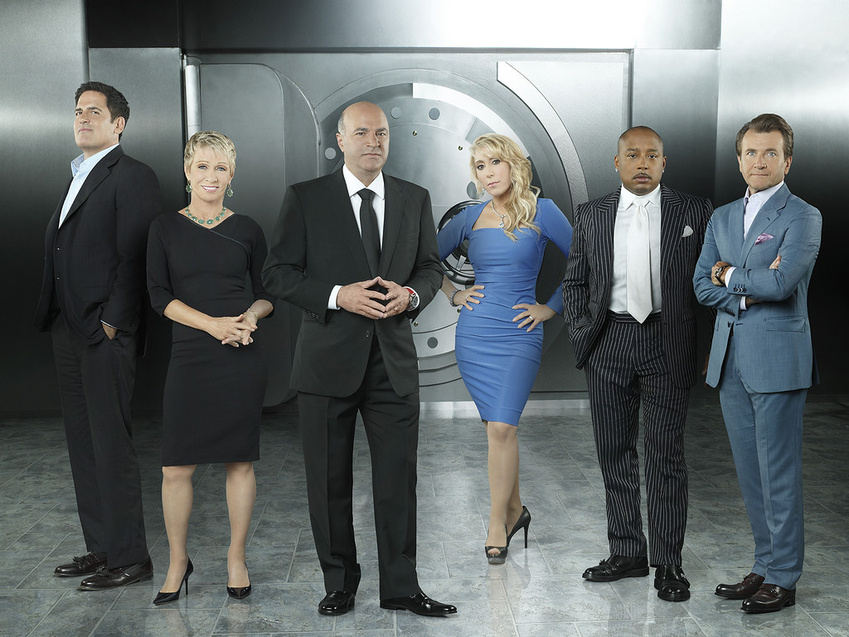
Many investors assume that Shark Tank personality Kevin O'Leary, widely known as "Mr. Wonderful," is placing his biggest bets on artificial intelligence itself. In reality, his focus is on the more than $5 trillion worth of infrastructure required to power the AI revolution, where much of today's institutional capital is being deployed. One of his key bets is on Bitzero Holdings (AIBZ), a company aiming to address one of AI's most significant constraints: access to electricity.
Companies referenced in this analysis include Bitzero Holdings Inc. (AIBZ), Microsoft Corporation, NVIDIA Corporation, International Business Machines Corporation, Digital Realty Trust, Inc., and Quanta Services, Inc..
While much of the market remained concentrated on AI software and semiconductor companies, Bitzero took a longer-term view. On May 5, the company signed a binding agreement for a 15-year AI power lease, marking its transition from low-carbon Bitcoin mining into supplying electricity and infrastructure to the rapidly expanding AI data center industry.
Major technology companies continue to pour unprecedented sums into AI infrastructure. Amazon is expected to spend approximately $200 billion in capital expenditures during 2026, much of it directed toward data centers. Microsoft's projected spending is close to $190 billion, while Alphabet is expected to invest a similar amount. Meta has outlined plans to commit roughly $600 billion to U.S. infrastructure through 2028. Combined capital expenditures from Amazon, Microsoft, Alphabet, and Meta could reach as much as $725 billion in 2026 alone, largely driven by AI-related investments in data centers, semiconductors, power systems, and supporting infrastructure. Meanwhile, McKinsey estimates that AI infrastructure spending could total $5.2 trillion over the course of this decade.
Growing Pressure on AI Infrastructure Development
A significant number of planned AI data center projects may never become operational because the necessary electrical capacity is unavailable when required. This dynamic creates opportunities for companies such as Bitzero that already possess access to large-scale power resources.
Demand for artificial intelligence computing capacity continues to accelerate, yet securing sufficient electricity is becoming increasingly difficult, time-consuming, and costly. More than 70% of grid interconnection applications are eventually withdrawn, with only a small percentage reaching completion. At the same time, global data center electricity consumption is forecast to approach 945 terawatt-hours by 2030—roughly equivalent to Japan's current annual electricity usage.
Although semiconductor availability was once viewed as the primary bottleneck for AI growth, power availability has increasingly emerged as the industry's most critical constraint. This shift positions energy-intensive businesses such as Bitzero favorably.
According to Mohammed Bakhashwain, founder and CEO of Bitzero Holdings, companies involved in Bitcoin mining secured power resources well before the recent surge in demand from AI and data centers, giving them a competitive advantage as electricity prices rise.
Positioning for the Next Era of Computing
Earlier this month, Bitzero completed engineering due diligence work for a project supporting up to 520 megawatts at its Kokemäki campus in Finland, with long-term expansion potential reaching one gigawatt. The initial 80-megawatt phase is scheduled to launch during the first half of 2027, with subsequent phases expected to add between 400 and 800 megawatts.
The company's operations in Norway are already functioning as a fully operational industrial platform. There, Bitzero mines Bitcoin using electricity that costs less than four cents per kilowatt-hour, allowing the company to generate revenue while simultaneously developing additional infrastructure.
At its Namsskogan site in Norway, a further 70 megawatts of capacity is expected to come online during the fourth quarter of 2026 as part of a broader 325-megawatt expansion strategy. This location also represents Bitzero's official entry into the AI infrastructure market.
On May 5, Bitzero signed a binding letter of intent with OneQode Networks for the full 110-megawatt capacity of its Namsskogan data center campus under a 15-year agreement supporting GPU-based AI workloads. The contract carries an estimated value of approximately $2.6 billion over its duration.
Under its traditional Bitcoin mining model, Bitzero generates revenue through cryptocurrency production using its own power assets. Under the new AI infrastructure arrangement, the company earns revenue by leasing both power capacity and infrastructure to OneQode, while the tenant assumes responsibility for the electricity costs associated with AI operations. This structure enables Bitzero to capture recurring infrastructure revenue without bearing the substantial operating expenses of AI computing workloads.
Company projections indicate that the Namsskogan facility could generate annual revenue between $176 million and $178 million at full utilization. Independent shareholder analysis has estimated annual net operating income of approximately $151 million based on an estimated operating margin of 85%.
The appeal of Bitzero's Nordic assets lies largely in their access to abundant, low-cost, low-carbon energy. Norway's electricity grid is predominantly hydroelectric, while Finland benefits from a diversified mix of hydroelectric, nuclear, solar, and wind power.
Additionally, Bitzero's North Dakota operations provide exposure to the U.S. market, offering access to a different regulatory and pricing environment than its Scandinavian assets.
AI Growth Is Outpacing Power Development
Constructing large-scale electrical infrastructure to support data centers can take as long as seven years. Yet many AI infrastructure forecasts have implicitly assumed that sufficient power capacity will become available when needed. This assumption increasingly clashes with the realities of electricity generation and transmission development.
Securing power involves complex processes, including grid impact studies, transmission access negotiations, permitting, utility agreements, and long-term pricing arrangements. Meanwhile, demand continues to accelerate.
The International Energy Agency projects that electricity consumption from data centers will grow approximately four times faster than electricity demand from all other sectors combined, potentially reaching around 945 terawatt-hours annually by 2030. Similarly, Goldman Sachs forecasts a 175% increase in data center electricity demand by 2030 compared with 2023 levels.
Despite this demand surge, investment in electrical infrastructure remains insufficient. Estimates suggest that approximately $6.7 trillion in capital will be required by 2030, including $5.2 trillion dedicated specifically to AI infrastructure. Current projections indicate that only about $720 billion in grid investments are presently planned.
Why Investors Are Watching Bitzero
Bitzero is developing large-scale campuses supported by secured, low-cost electricity and positioning those assets to serve AI and high-performance computing markets. Rather than choosing between cryptocurrency mining and AI infrastructure, the company intends to participate in both sectors simultaneously.
Bitcoin mining operations provide immediate revenue generation, while the same facilities are being adapted to support higher-value AI and high-performance computing workloads over time.
CEO Mohammed Bakhashwain has highlighted the company's opportunities in high-performance computing, noting that its engineering teams have previously worked on deployments involving Microsoft and Nscale in Norway. By controlling land, power resources, and infrastructure assets, Bitzero aims to attract AI tenants seeking large-scale computing capacity.
This strategy enables the company to generate revenue from existing Bitcoin operations while positioning its infrastructure for potentially more lucrative long-term AI and colocation contracts. By maintaining flexibility, Bitzero seeks to allocate capacity to whichever market offers the strongest economics at a given time.
Other Companies Worth Monitoring
Microsoft Corporation is undertaking the largest infrastructure expansion in its history, committing approximately $80 billion to AI-enabled data centers during fiscal year 2025. More than half of that investment is targeted toward facilities in the United States, including a new AI campus in Wisconsin expected to cost more than $7 billion and support hundreds of thousands of NVIDIA GPUs.
The company's financial performance reflects this investment strategy. In the first quarter of fiscal year 2026, Microsoft generated $77.7 billion in revenue, an 18% year-over-year increase, while Azure and related cloud services grew by 40%. Its commercial backlog expanded to $392 billion, up 51%.
NVIDIA Corporation remains central to the AI infrastructure ecosystem. The company reported record first-quarter fiscal year 2027 revenue of $81.6 billion, representing 85% annual growth, while data center revenue increased 92% to $75.2 billion.
Growth is increasingly being driven by agentic AI applications, which require substantially more computing power than traditional conversational AI systems. Although hyperscale cloud providers account for slightly more than half of NVIDIA's data center revenue, enterprise demand continues to expand rapidly.
International Business Machines Corporation represents a less obvious but increasingly relevant participant in the AI infrastructure market. During the first quarter of 2026, IBM reported revenue of $15.9 billion, up 9% year over year, while software revenue increased 11% to $7.1 billion. Free cash flow reached $2.2 billion, marking the company's strongest first quarter in a decade.
IBM's AI strategy centers around Red Hat OpenShift and its watsonx platform, which enterprises use to deploy and manage AI systems across hybrid environments. CEO Arvind Krishna has emphasized that AI demand is also benefiting IBM's mainframe business.
Digital Realty Trust, Inc. continues to play a major role in the hyperscale data center market. During the first quarter of 2026, the company signed the largest hyperscale lease in its history—a 200-megawatt agreement in Charlotte—and recorded annualized base-rent bookings of $707 million.
The nature of AI-related leases has evolved significantly, with tenants increasingly committing to larger projects, longer contract durations, and earlier pre-leasing arrangements.
Quanta Services, Inc. occupies a critical position in the AI infrastructure ecosystem by constructing and maintaining the electrical networks that connect data centers to the grid. CEO Duke Austin has estimated the company's addressable market opportunity at approximately $2.4 trillion through 2030, driven by data center expansion, grid modernization, and renewable energy integration.
The industry's challenges remain fundamentally physical: high-voltage transformers often require lead times exceeding two years, and skilled electrical labor remains in short supply across many markets.
Companies referenced in this analysis include Bitzero Holdings Inc. (AIBZ), Microsoft Corporation, NVIDIA Corporation, International Business Machines Corporation, Digital Realty Trust, Inc., and Quanta Services, Inc..
While much of the market remained concentrated on AI software and semiconductor companies, Bitzero took a longer-term view. On May 5, the company signed a binding agreement for a 15-year AI power lease, marking its transition from low-carbon Bitcoin mining into supplying electricity and infrastructure to the rapidly expanding AI data center industry.
Major technology companies continue to pour unprecedented sums into AI infrastructure. Amazon is expected to spend approximately $200 billion in capital expenditures during 2026, much of it directed toward data centers. Microsoft's projected spending is close to $190 billion, while Alphabet is expected to invest a similar amount. Meta has outlined plans to commit roughly $600 billion to U.S. infrastructure through 2028. Combined capital expenditures from Amazon, Microsoft, Alphabet, and Meta could reach as much as $725 billion in 2026 alone, largely driven by AI-related investments in data centers, semiconductors, power systems, and supporting infrastructure. Meanwhile, McKinsey estimates that AI infrastructure spending could total $5.2 trillion over the course of this decade.
Growing Pressure on AI Infrastructure Development
A significant number of planned AI data center projects may never become operational because the necessary electrical capacity is unavailable when required. This dynamic creates opportunities for companies such as Bitzero that already possess access to large-scale power resources.
Demand for artificial intelligence computing capacity continues to accelerate, yet securing sufficient electricity is becoming increasingly difficult, time-consuming, and costly. More than 70% of grid interconnection applications are eventually withdrawn, with only a small percentage reaching completion. At the same time, global data center electricity consumption is forecast to approach 945 terawatt-hours by 2030—roughly equivalent to Japan's current annual electricity usage.
Although semiconductor availability was once viewed as the primary bottleneck for AI growth, power availability has increasingly emerged as the industry's most critical constraint. This shift positions energy-intensive businesses such as Bitzero favorably.
According to Mohammed Bakhashwain, founder and CEO of Bitzero Holdings, companies involved in Bitcoin mining secured power resources well before the recent surge in demand from AI and data centers, giving them a competitive advantage as electricity prices rise.
Positioning for the Next Era of Computing
Earlier this month, Bitzero completed engineering due diligence work for a project supporting up to 520 megawatts at its Kokemäki campus in Finland, with long-term expansion potential reaching one gigawatt. The initial 80-megawatt phase is scheduled to launch during the first half of 2027, with subsequent phases expected to add between 400 and 800 megawatts.
The company's operations in Norway are already functioning as a fully operational industrial platform. There, Bitzero mines Bitcoin using electricity that costs less than four cents per kilowatt-hour, allowing the company to generate revenue while simultaneously developing additional infrastructure.
At its Namsskogan site in Norway, a further 70 megawatts of capacity is expected to come online during the fourth quarter of 2026 as part of a broader 325-megawatt expansion strategy. This location also represents Bitzero's official entry into the AI infrastructure market.
On May 5, Bitzero signed a binding letter of intent with OneQode Networks for the full 110-megawatt capacity of its Namsskogan data center campus under a 15-year agreement supporting GPU-based AI workloads. The contract carries an estimated value of approximately $2.6 billion over its duration.
Under its traditional Bitcoin mining model, Bitzero generates revenue through cryptocurrency production using its own power assets. Under the new AI infrastructure arrangement, the company earns revenue by leasing both power capacity and infrastructure to OneQode, while the tenant assumes responsibility for the electricity costs associated with AI operations. This structure enables Bitzero to capture recurring infrastructure revenue without bearing the substantial operating expenses of AI computing workloads.
Company projections indicate that the Namsskogan facility could generate annual revenue between $176 million and $178 million at full utilization. Independent shareholder analysis has estimated annual net operating income of approximately $151 million based on an estimated operating margin of 85%.
The appeal of Bitzero's Nordic assets lies largely in their access to abundant, low-cost, low-carbon energy. Norway's electricity grid is predominantly hydroelectric, while Finland benefits from a diversified mix of hydroelectric, nuclear, solar, and wind power.
Additionally, Bitzero's North Dakota operations provide exposure to the U.S. market, offering access to a different regulatory and pricing environment than its Scandinavian assets.
AI Growth Is Outpacing Power Development
Constructing large-scale electrical infrastructure to support data centers can take as long as seven years. Yet many AI infrastructure forecasts have implicitly assumed that sufficient power capacity will become available when needed. This assumption increasingly clashes with the realities of electricity generation and transmission development.
Securing power involves complex processes, including grid impact studies, transmission access negotiations, permitting, utility agreements, and long-term pricing arrangements. Meanwhile, demand continues to accelerate.
The International Energy Agency projects that electricity consumption from data centers will grow approximately four times faster than electricity demand from all other sectors combined, potentially reaching around 945 terawatt-hours annually by 2030. Similarly, Goldman Sachs forecasts a 175% increase in data center electricity demand by 2030 compared with 2023 levels.
Despite this demand surge, investment in electrical infrastructure remains insufficient. Estimates suggest that approximately $6.7 trillion in capital will be required by 2030, including $5.2 trillion dedicated specifically to AI infrastructure. Current projections indicate that only about $720 billion in grid investments are presently planned.
Why Investors Are Watching Bitzero
Bitzero is developing large-scale campuses supported by secured, low-cost electricity and positioning those assets to serve AI and high-performance computing markets. Rather than choosing between cryptocurrency mining and AI infrastructure, the company intends to participate in both sectors simultaneously.
Bitcoin mining operations provide immediate revenue generation, while the same facilities are being adapted to support higher-value AI and high-performance computing workloads over time.
CEO Mohammed Bakhashwain has highlighted the company's opportunities in high-performance computing, noting that its engineering teams have previously worked on deployments involving Microsoft and Nscale in Norway. By controlling land, power resources, and infrastructure assets, Bitzero aims to attract AI tenants seeking large-scale computing capacity.
This strategy enables the company to generate revenue from existing Bitcoin operations while positioning its infrastructure for potentially more lucrative long-term AI and colocation contracts. By maintaining flexibility, Bitzero seeks to allocate capacity to whichever market offers the strongest economics at a given time.
Other Companies Worth Monitoring
Microsoft Corporation is undertaking the largest infrastructure expansion in its history, committing approximately $80 billion to AI-enabled data centers during fiscal year 2025. More than half of that investment is targeted toward facilities in the United States, including a new AI campus in Wisconsin expected to cost more than $7 billion and support hundreds of thousands of NVIDIA GPUs.
The company's financial performance reflects this investment strategy. In the first quarter of fiscal year 2026, Microsoft generated $77.7 billion in revenue, an 18% year-over-year increase, while Azure and related cloud services grew by 40%. Its commercial backlog expanded to $392 billion, up 51%.
NVIDIA Corporation remains central to the AI infrastructure ecosystem. The company reported record first-quarter fiscal year 2027 revenue of $81.6 billion, representing 85% annual growth, while data center revenue increased 92% to $75.2 billion.
Growth is increasingly being driven by agentic AI applications, which require substantially more computing power than traditional conversational AI systems. Although hyperscale cloud providers account for slightly more than half of NVIDIA's data center revenue, enterprise demand continues to expand rapidly.
International Business Machines Corporation represents a less obvious but increasingly relevant participant in the AI infrastructure market. During the first quarter of 2026, IBM reported revenue of $15.9 billion, up 9% year over year, while software revenue increased 11% to $7.1 billion. Free cash flow reached $2.2 billion, marking the company's strongest first quarter in a decade.
IBM's AI strategy centers around Red Hat OpenShift and its watsonx platform, which enterprises use to deploy and manage AI systems across hybrid environments. CEO Arvind Krishna has emphasized that AI demand is also benefiting IBM's mainframe business.
Digital Realty Trust, Inc. continues to play a major role in the hyperscale data center market. During the first quarter of 2026, the company signed the largest hyperscale lease in its history—a 200-megawatt agreement in Charlotte—and recorded annualized base-rent bookings of $707 million.
The nature of AI-related leases has evolved significantly, with tenants increasingly committing to larger projects, longer contract durations, and earlier pre-leasing arrangements.
Quanta Services, Inc. occupies a critical position in the AI infrastructure ecosystem by constructing and maintaining the electrical networks that connect data centers to the grid. CEO Duke Austin has estimated the company's addressable market opportunity at approximately $2.4 trillion through 2030, driven by data center expansion, grid modernization, and renewable energy integration.
The industry's challenges remain fundamentally physical: high-voltage transformers often require lead times exceeding two years, and skilled electrical labor remains in short supply across many markets.
]]>