<?xml version="1.0" encoding="UTF-8"?>
<feed xmlns="http://www.w3.org/2005/Atom"  xmlns:media="http://search.yahoo.com/mrss/" xmlns:dc="http://purl.org/dc/elements/1.1/" xmlns:itunes="http://www.itunes.com/dtds/podcast-1.0.dtd" xmlns:geo="http://www.w3.org/2003/01/geo/wgs84_pos#" xmlns:georss="http://www.georss.org/georss" xmlns:photo="http://www.pheed.com/pheed/">
 <title>Daily CSR</title>
 <subtitle><![CDATA[Daily CSR delivers latest news and in-depth coverage about corporate social responsibility, ethics and sustainability]]></subtitle>
 <link rel="alternate" type="text/html" href="https://www.dailycsr.com" />
 <link rel="self" type="text/xml" href="https://www.dailycsr.com/xml/atom.xml" />
 <id>https://www.dailycsr.com/</id>
 <updated>2026-09-09T21:18:30+02:00</updated>
 <generator uri="http://www.wmaker.net">Webzine Maker</generator>
  <icon>https://www.dailycsr.com/favicon.ico</icon>
  <entry>
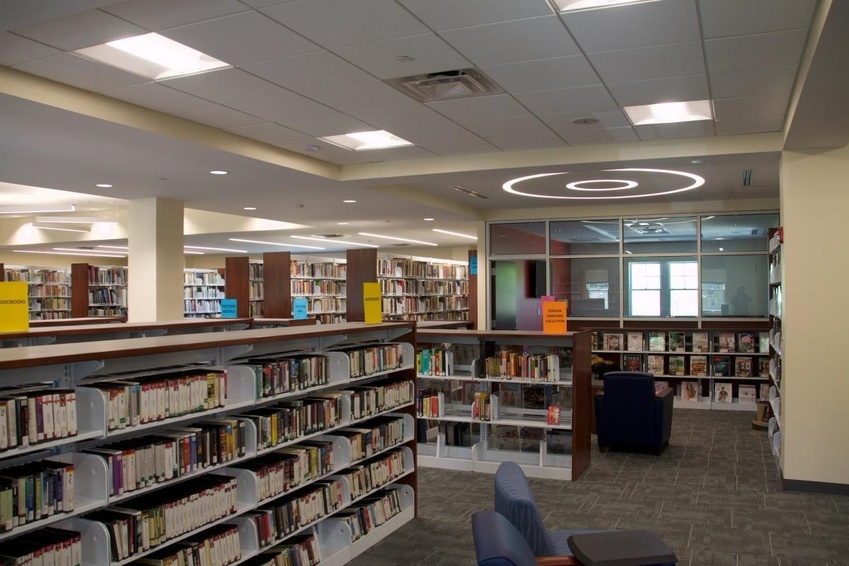
   <title>U.S. Libraries Battle Misinformation and Funding Cuts</title>
   <updated>2026-09-07T07:49:00+02:00</updated>
   <id>https://www.dailycsr.com/U-S-Libraries-Battle-Misinformation-and-Funding-Cuts_a6108.html</id>
   <category term="Companies" />
   <photo:imgsrc>https://www.dailycsr.com/photo/art/imagette/97944967-68187827.jpg</photo:imgsrc>
   <published>2026-09-07T07:47:00+02:00</published>
   <author><name>Debashish Mukherjee</name></author>
   <content type="html">
    <![CDATA[
     <div style="position:relative; text-align : center; padding-bottom: 1em;">
      <img src="https://www.dailycsr.com/photo/art/default/97944967-68187827.jpg?v=1788760154" alt="U.S. Libraries Battle Misinformation and Funding Cuts" title="U.S. Libraries Battle Misinformation and Funding Cuts" />
     </div>
     <div>
      <p style="text-align:justify;text-justify:inter-ideograph">Over the last 20 years, the United States has lost more than 270,000 journalism jobs, while nearly 3,500 newspapers have ceased publication. As independent news organizations struggle to survive, another trend is developing less visibly: well-funded networks of politically aligned websites are expanding, with critics comparing some of them to propaganda operations.<o:p></o:p> <br />    <p style="text-align:justify;text-justify:inter-ideograph">Fox News has long been a focus of media criticism, particularly because of its approach to presenting news through a ratings-driven formula that frequently reinforces and magnifies conservative viewpoints. This has been evident in its coverage of subjects ranging from climate change to transgender rights. For regular Fox News viewers, the network's political orientation may be fairly obvious. However, identifying partisan influence can be much harder when it comes from outlets designed to look like ordinary local news organizations.<o:p></o:p> <br />    <p style="text-align:justify;text-justify:inter-ideograph">One recent example was uncovered by investigative journalist Judd Legum, who reported on a growing collection of Republican-linked news websites apparently created to shape voter opinion in important battleground states while presenting themselves as trustworthy local journalism outlets.<o:p></o:p> <br />    <p style="text-align:justify;text-justify:inter-ideograph">According to Legum's reporting in the Popular Information newsletter, One Nation, a major dark-money organization associated with Senate Republicans, is behind a network that presents political messaging in the appearance of conventional journalism. His investigation identified at least six such operations targeting voters in Alaska, Georgia, Iowa, Maine, New Hampshire and Ohio ahead of the November midterm elections.<o:p></o:p> <br />    <p style="text-align:justify;text-justify:inter-ideograph">The websites are deliberately given names and slogans that make them appear independent and locally focused. Maine Policy Updates, for example, describes itself as “Maine's News Source,” while Iowa Voice uses the slogan “Stay Informed. Stay Iowa.” Such branding can make it difficult for ordinary readers to recognize that the publications are owned and operated by One Nation. Legum also reported instances in which inaccurate claims appearing on these sites closely resembled messages used in One Nation's political advertising.<o:p></o:p> <br />    <p style="text-align:justify;text-justify:inter-ideograph">The weakening of traditional journalism and the spread of misleading information represent only part of a much broader problem. Americans are increasingly encountering unreliable information through social media, where a significant proportion of the population is exposed to misinformation on a regular basis. At the same time, the Trump administration has pursued changes that have reduced or eliminated a number of federal programs and resources built around publicly available, evidence-based information.<o:p></o:p> <br />    <p style="text-align:justify;text-justify:inter-ideograph">Amid this increasingly difficult information environment, one group continues to provide professionally trained assistance with reliable information, education and community services: public librarians. Often overlooked in national debates, librarians may be more important to their communities today than they have been in years.<o:p></o:p> <br />    <h2 style="text-align:justify;text-justify:inter-ideograph">Libraries remain trusted institutions, but financial pressures are growing<o:p></o:p></h2>    <p style="text-align:justify;text-justify:inter-ideograph">Donald Trump entered office with a history of criticism directed at public libraries and other independent cultural and social institutions. Nevertheless, recent data from the Institute of Museum and Library Services (IMLS), the federal agency that the administration previously sought to eliminate, highlights the continuing importance of libraries across the country.<o:p></o:p> <br />    <p style="text-align:justify;text-justify:inter-ideograph">The latest IMLS figures, covering more than 9,000 public library systems, show that libraries continue to attract hundreds of millions of visits and provide millions of programs each year. According to the agency, more than 800 million visits were recorded, while 93 million people participated in approximately 4.6 million library programs. These services covered areas including early childhood learning, digital and financial literacy, employment support and public health.<o:p></o:p> <br />    <p style="text-align:justify;text-justify:inter-ideograph">Libraries are also becoming increasingly important as providers of digital content. Digital borrowing has continued to expand, with the e-lending company OverDrive reporting that library users around the world reached record levels of digital borrowing in the previous year. U.S. library systems accounted for nine of the world's top 10 systems for lending e-books, audiobooks and digital magazines through the service.<o:p></o:p> <br />    <p style="text-align:justify;text-justify:inter-ideograph">The problem is that library demand is increasing faster than the resources available to meet it. Between 2021 and 2024, use of library facilities, room bookings and electronic resources increased, but staffing and funding failed to keep pace, according to library advocacy organization Every Library. By 2024, staffing levels were still 8.2 percent below their pre-pandemic levels, while a 5 percent increase in budgets was insufficient to keep up with inflation.<o:p></o:p> <br />    <p style="text-align:justify;text-justify:inter-ideograph">Smaller library systems have experienced an even greater strain. Every Library reports that staffing in smaller libraries fell by 11.5 percent, substantially more than the national average. These libraries also experienced declining use of electronic resources, in contrast with the continued growth seen in larger library systems.<o:p></o:p> <br />    <h2 style="text-align:justify;text-justify:inter-ideograph">Changes to federal broadband support could put digital access at risk<o:p></o:p></h2>    <p style="text-align:justify;text-justify:inter-ideograph">Public libraries have another increasingly important role: helping people develop digital skills and access the internet. For millions of Americans who lack adequate internet access or the ability to use digital services effectively, libraries can provide an essential bridge to education, employment and other opportunities.<o:p></o:p> <br />    <p style="text-align:justify;text-justify:inter-ideograph">The American Library Association estimates that roughly 66 million U.S. households have limited levels of digital readiness, while approximately 33 million households do not use the internet at home. These digital-access gaps disproportionately affect rural communities, low-income households, people with disabilities and communities of color.<o:p></o:p> <br />    <p style="text-align:justify;text-justify:inter-ideograph">The ALA describes the nation's libraries as a critical resource for closing these gaps and expanding meaningful broadband access. Yet when funding becomes constrained, smaller library systems are often among the first to reduce digital services.<o:p></o:p> <br />    <p style="text-align:justify;text-justify:inter-ideograph">Concerns have grown over possible changes to the Federal Communications Commission's E-Rate program, which helps schools and public libraries obtain affordable broadband services. In June, the FCC indicated that it was considering changes to the program. On August 14, the agency formally published a notice in the Federal Register seeking public feedback on several proposed changes.<o:p></o:p> <br />    <p style="text-align:justify;text-justify:inter-ideograph">Although the FCC has previously indicated that it does not intend to remove facilities from the E-Rate program, library and education advocates remain concerned that changes could ultimately reduce the program's reach or funding.<o:p></o:p> <br />    <p style="text-align:justify;text-justify:inter-ideograph">There are also concerns about potential restrictions on the content that people can access through E-Rate-supported connections. The FCC proposal refers to the Children's Internet Protection Act (CIPA), a 2000 law designed in part to prevent minors from accessing sexually explicit material online.<o:p></o:p> <br />    <p style="text-align:justify;text-justify:inter-ideograph">Critics worry that broadly interpreted restrictions could extend beyond their original purpose and affect access to information about LGBTQ+ issues, particularly transgender-related material. Those concerns come against the backdrop of broader policy efforts by the Trump administration targeting what it describes as “transgender ideology.”<o:p></o:p> <br />    <p style="text-align:justify;text-justify:inter-ideograph">Although the FCC filing focuses on issues such as children's online activity and screen time, library advocates fear that expanded interpretations of existing internet-safety requirements could eventually contribute to restrictions on LGBTQ+ educational and informational materials in public libraries.<o:p></o:p> <br />    <h2 style="text-align:justify;text-justify:inter-ideograph">Library advocates are pushing back<o:p></o:p></h2>    <p style="text-align:justify;text-justify:inter-ideograph">Library organizations are already mobilizing in response to these concerns. This summer, the American Library Association joined the Schools, Health &amp; Libraries Broadband Coalition in a nationwide campaign urging Americans to contact members of Congress and support the continuation of E-Rate.<o:p></o:p> <br />    <p style="text-align:justify;text-justify:inter-ideograph">The organizations argue that E-Rate was created by Congress and that congressional action is therefore essential to protecting the program. They have also provided an online resource designed to make it easier for members of the public to submit comments to the FCC before the October 13 deadline.<o:p></o:p> <br />    <p style="text-align:justify;text-justify:inter-ideograph">It remains unclear what the final outcome will be, but bringing attention to the potential consequences for libraries is an important first step.<o:p></o:p> <br />    <p style="text-align:justify;text-justify:inter-ideograph">For communities already dealing with reductions in other public assistance programs and changes to healthcare eligibility requirements, the loss of free services at a local library could have consequences extending far beyond access to books. Libraries provide internet access, educational programs, digital assistance, community resources and reliable information—services that can become especially valuable when other sources of support are disappearing.<o:p></o:p> <br />    <p style="text-align:justify;text-justify:inter-ideograph">As traditional journalism continues to shrink and misinformation becomes harder to distinguish from legitimate reporting, the local public library may increasingly serve as one of the few accessible and trusted places where people can find reliable information and assistance.<o:p></o:p> <br />  
     </div>
     <br style="clear:both;"/>
    ]]>
   </content>
   <link rel="alternate" href="https://www.dailycsr.com/U-S-Libraries-Battle-Misinformation-and-Funding-Cuts_a6108.html" />
  </entry>
  <entry>
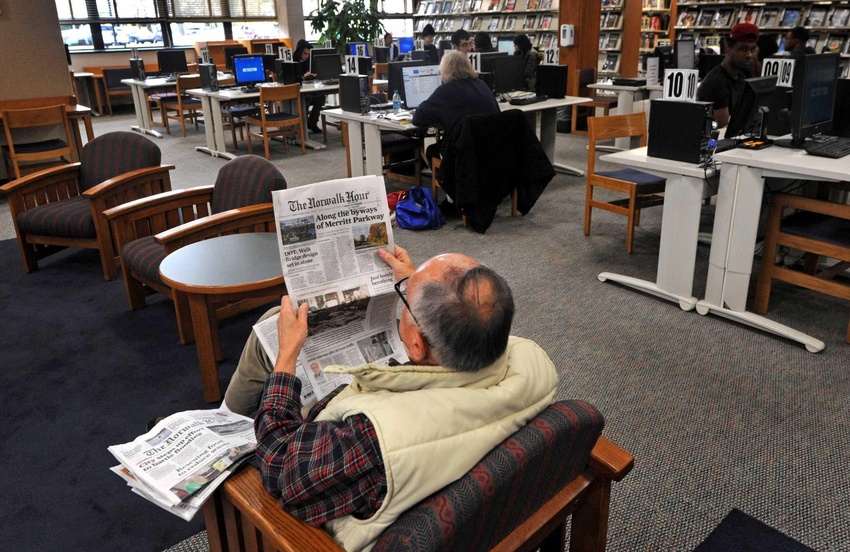
   <title>America’s Libraries Face a Growing Information Crisis</title>
   <updated>2026-09-01T11:20:00+02:00</updated>
   <id>https://www.dailycsr.com/America-s-Libraries-Face-a-Growing-Information-Crisis_a6097.html</id>
   <category term="Companies" />
   <photo:imgsrc>https://www.dailycsr.com/photo/art/imagette/97878980-68131637.jpg</photo:imgsrc>
   <published>2026-09-01T11:19:00+02:00</published>
   <author><name>Debashish Mukherjee</name></author>
   <content type="html">
    <![CDATA[
     <div style="position:relative; text-align : center; padding-bottom: 1em;">
      <img src="https://www.dailycsr.com/photo/art/default/97878980-68131637.jpg?v=1788254434" alt="America’s Libraries Face a Growing Information Crisis" title="America’s Libraries Face a Growing Information Crisis" />
     </div>
     <div>
      <p style="text-align:justify;text-justify:inter-ideograph">Over the past 20 years, the United States has lost more than 270,000 journalism jobs, while nearly 3,500 newspapers have ceased publication. As independent news organizations struggle to survive, another trend has been developing largely out of public view: a financially well-supported network of partisan media outlets that critics have compared to propaganda operations.<o:p></o:p> <br />    <p style="text-align:justify;text-justify:inter-ideograph">For years, media watchdogs have scrutinized Fox News for presenting news through a strongly partisan lens. Critics have argued that the network's ratings-driven approach relies on confrontation and repeatedly reinforces conservative positions on controversial subjects, including climate change and transgender rights. Regular Fox viewers may recognize its political orientation, but newer operations can be considerably harder to identify.<o:p></o:p> <br />    <p style="text-align:justify;text-justify:inter-ideograph">One recent investigation illustrates the concern. Journalist Judd Legum uncovered a collection of Republican-linked news websites apparently designed to influence voters in important swing states while presenting themselves as conventional local news organizations.<o:p></o:p> <br />    <p style="text-align:justify;text-justify:inter-ideograph">According to Legum's Popular Information newsletter, One Nation, the Senate GOP's principal dark-money organization, is behind a network that presents political messaging in the form of journalism. His investigation identified at least six operations serving audiences in Alaska, Georgia, Iowa, Maine, New Hampshire and Ohio ahead of the November midterm elections.<o:p></o:p> <br />    <p style="text-align:justify;text-justify:inter-ideograph">The websites are presented as independent and trustworthy local publications. Examples include Maine Policy Updates, which describes itself as "Maine's News Source," and Iowa Voice, which uses the slogan "Stay Informed. Stay Iowa." Their branding can make their political connections difficult for ordinary readers to recognize. Legum reported that the sites are owned and operated by One Nation and also found factual claims on the platforms that closely mirrored language appearing in One Nation's political advertising.<o:p></o:p> <br />    <p style="text-align:justify;text-justify:inter-ideograph">The erosion of established journalism is only one part of a much broader information problem in the United States. Misinformation has become increasingly widespread, particularly on social media, where more than half of Americans are reportedly exposed to false or misleading information on a daily basis. At the same time, changes under the Donald Trump administration have included the reduction or removal of federal programs and datasets that previously provided evidence-based information to the public.<o:p></o:p> <br />    <p style="text-align:justify;text-justify:inter-ideograph">Amid this deteriorating information environment, one group continues to provide reliable information, digital assistance and community services: public librarians. Often overlooked in discussions about the information crisis, librarians may be playing a more important role than ever.<o:p></o:p> <br />    <h2 style="text-align:justify;text-justify:inter-ideograph">Libraries remain trusted institutions, but resources are under pressure<o:p></o:p></h2>    <p style="text-align:justify;text-justify:inter-ideograph">The Trump administration entered office with a record of criticism toward public libraries and other independent cultural and social institutions. Yet recent figures from the Institute of Museum and Library Services (IMLS) demonstrate the continuing importance of public libraries across the country. IMLS itself became the target of an unsuccessful effort by the administration to eliminate the agency.<o:p></o:p> <br />    <p style="text-align:justify;text-justify:inter-ideograph">The latest IMLS data, covering more than 9,000 public library systems, show that libraries continue to attract enormous numbers of visitors and program participants. More than 800 million visits were recorded, while 93 million people took part in approximately 4.6 million library programs. Those programs addressed areas including early childhood education, digital and financial literacy, employment assistance and public health.<o:p></o:p> <br />    <p style="text-align:justify;text-justify:inter-ideograph">Libraries are also experiencing growing demand for digital services. OverDrive, an Ohio-based company that provides digital lending services, reported that library e-lending reached record levels in 2025 across the 114 countries where it operates. U.S. library systems occupied nine of the top 10 positions among the world's highest-volume providers of e-books, audiobooks and digital magazines.<o:p></o:p> <br />    <p style="text-align:justify;text-justify:inter-ideograph">However, library resources are not expanding at the same rate as public demand. Advocacy organization EveryLibrary has warned that although in-person visits, room bookings and electronic-resource use grew between 2021 and 2024, staffing and funding failed to keep pace. By 2024, library staffing remained 8.2 percent below pre-pandemic levels, while a 5 percent increase in funding was insufficient to offset inflation.<o:p></o:p> <br />    <p style="text-align:justify;text-justify:inter-ideograph">Smaller library systems have faced an even greater squeeze. EveryLibrary reports that their staffing levels fell by 11.5 percent, more than three times the average decline. Unlike larger systems, smaller libraries also experienced declining use of electronic resources.<o:p></o:p> <br />    <h2 style="text-align:justify;text-justify:inter-ideograph">Changes to federal broadband policies could put digital library access at risk<o:p></o:p></h2>    <p style="text-align:justify;text-justify:inter-ideograph">Public libraries have become important centers for digital education, particularly for Americans who lack dependable internet access at home. The American Library Association estimates that roughly 66 million U.S. households have limited digital readiness, while about 33 million households do not use the internet at home. Rural communities, low-income households, people with disabilities and communities of color are among those most affected by these digital-access disparities.<o:p></o:p> <br />    <p style="text-align:justify;text-justify:inter-ideograph">With approximately 120,000 libraries across the country, the ALA considers libraries an essential part of the effort to close these digital gaps and expand broadband adoption and digital skills. However, when funding becomes constrained, smaller libraries are particularly likely to reduce their electronic services.<o:p></o:p> <br />    <p style="text-align:justify;text-justify:inter-ideograph">Concerns over digital access increased in June when the Federal Communications Commission indicated that it intended to propose changes to its E-Rate program, which helps schools and public libraries obtain affordable broadband service.<o:p></o:p> <br />    <p style="text-align:justify;text-justify:inter-ideograph">On August 14, the FCC formally submitted a notice to the Federal Register seeking public input on several proposed changes to the program. Although the agency has previously indicated that no facilities would be removed from E-Rate eligibility, library advocates remain concerned that the program could eventually be reduced or eliminated.<o:p></o:p> <br />    <p style="text-align:justify;text-justify:inter-ideograph">Another issue involves possible restrictions on the type of online material accessible through E-Rate-supported connections. The FCC proposal refers to the Children's Internet Protection Act, or CIPA, a 2000 law intended in part to protect minors from sexually explicit material online. Critics worry that broad interpretations of terms such as "pornography" could potentially extend restrictions to LGBTQ-related information and, in particular, material concerning transgender people.<o:p></o:p> <br />    <p style="text-align:justify;text-justify:inter-ideograph">The concern comes amid broader efforts by the Trump administration to restrict or characterize information about transgender issues in particular ways. Library advocates fear that such policies could eventually contribute to censorship of LGBTQ-related educational and informational resources in public libraries.<o:p></o:p> <br />    <h2 style="text-align:justify;text-justify:inter-ideograph">Library advocates are pushing back<o:p></o:p></h2>    <p style="text-align:justify;text-justify:inter-ideograph">Library organizations are not standing by quietly. During the summer, the American Library Association joined the Schools, Health &amp; Libraries Broadband Coalition in a nationwide campaign urging Americans to contact their members of Congress and support the continuation of E-Rate.<o:p></o:p> <br />    <p style="text-align:justify;text-justify:inter-ideograph">The organizations argue that E-Rate is a program created by Congress and therefore requires congressional support to ensure its continued operation. They have also provided an online resource that allows members of the public to submit comments to the FCC before the October 13 deadline.<o:p></o:p> <br />    <p style="text-align:justify;text-justify:inter-ideograph">It remains unclear how these policy debates will ultimately affect libraries. But bringing attention to the issue is an important starting point.<o:p></o:p> <br />    <p style="text-align:justify;text-justify:inter-ideograph">For communities already dealing with reductions in food assistance and changes to Medicaid eligibility and work requirements, losing another source of free public services could have consequences far beyond access to books. For millions of Americans, the local library is also a place to connect to the internet, find trustworthy information, attend educational programs, develop job skills and access essential community resources. As traditional journalism continues to contract and misinformation becomes more difficult to distinguish from legitimate reporting, preserving that public resource may be more important than ever.<o:p></o:p> <br />  
     </div>
     <br style="clear:both;"/>
    ]]>
   </content>
   <link rel="alternate" href="https://www.dailycsr.com/America-s-Libraries-Face-a-Growing-Information-Crisis_a6097.html" />
  </entry>
  <entry>
   <title>Entergy New Orleans Hosts Energize NOLA Fair with School Supplies &amp; Community Resources</title>
   <updated>2025-08-21T15:07:00+02:00</updated>
   <id>https://www.dailycsr.com/Entergy-New-Orleans-Hosts-Energize-NOLA-Fair-with-School-Supplies-Community-Resources_a5055.html</id>
   <category term="Companies" />
   <photo:imgsrc>https://www.dailycsr.com/photo/art/imagette/90619116-63870817.jpg</photo:imgsrc>
   <published>2025-08-21T15:05:00+02:00</published>
   <author><name>Debashish Mukherjee</name></author>
   <content type="html">
    <![CDATA[
     <div style="position:relative; text-align : center; padding-bottom: 1em;">
      <img src="https://www.dailycsr.com/photo/art/default/90619116-63870817.jpg?v=1755781639" alt="Entergy New Orleans Hosts Energize NOLA Fair with School Supplies &amp; Community Resources" title="Entergy New Orleans Hosts Energize NOLA Fair with School Supplies &amp; Community Resources" />
     </div>
     <div>
      <div style="text-align: justify;">More than 200 residents gathered for Entergy New Orleans’ annual Energize NOLA! Community Fair and Back-to-School Giveaway, which turned The Green at Columbia Parc into a vibrant space filled with family activities, community resources, and school essentials. <br />   <br />  The free event blended fun with learning opportunities. Families enjoyed snowballs, live entertainment, and face-painting, while science lovers experienced the interactive <em>Arcs and Sparks</em> demonstration. To prepare students for the upcoming school year, Entergy distributed backpacks stocked with necessary supplies, giving them a confident start. <br />   <br />  “The Energize NOLA! Community Fair reflects our strong commitment to New Orleans,” said Stephanie Willis, director of public affairs at Entergy New Orleans. “We’re honored to support families with tools and resources that empower them and help students succeed academically.” <br />   <br />  In addition to entertainment, the fair connected families with organizations offering valuable support. United Way of Southeast Louisiana and Green Light New Orleans highlighted local services and sustainability programs, while Energy Smart provided free energy-efficient kits and advice for cutting household energy costs. <br />   <br />  Guests also explored Entergy’s Mobile Command Unit, where they learned about emergency response operations. Adding to the excitement, Entergy linemen demonstrated their work by riding bucket trucks nearly 80 feet in the air, giving attendees a close-up view of how power is safely maintained across communities.</div>  
     </div>
     <br style="clear:both;"/>
    ]]>
   </content>
   <link rel="alternate" href="https://www.dailycsr.com/Entergy-New-Orleans-Hosts-Energize-NOLA-Fair-with-School-Supplies-Community-Resources_a5055.html" />
  </entry>
</feed>