<?xml version="1.0" encoding="UTF-8"?>
<feed xmlns="http://www.w3.org/2005/Atom"  xmlns:media="http://search.yahoo.com/mrss/" xmlns:dc="http://purl.org/dc/elements/1.1/" xmlns:itunes="http://www.itunes.com/dtds/podcast-1.0.dtd" xmlns:geo="http://www.w3.org/2003/01/geo/wgs84_pos#" xmlns:georss="http://www.georss.org/georss" xmlns:photo="http://www.pheed.com/pheed/">
 <title>Daily CSR</title>
 <subtitle><![CDATA[Daily CSR delivers latest news and in-depth coverage about corporate social responsibility, ethics and sustainability]]></subtitle>
 <link rel="alternate" type="text/html" href="https://www.dailycsr.com" />
 <link rel="self" type="text/xml" href="https://www.dailycsr.com/xml/atom.xml" />
 <id>https://www.dailycsr.com/</id>
 <updated>2026-06-12T19:24:09+02:00</updated>
 <generator uri="http://www.wmaker.net">Webzine Maker</generator>
  <icon>https://www.dailycsr.com/favicon.ico</icon>
  <entry>
   <title>The Covid-19 Crisis: Cashless Societies Impede Economic Recovery</title>
   <updated>2022-01-25T09:57:00+01:00</updated>
   <id>https://www.dailycsr.com/The-Covid-19-Crisis-Cashless-Societies-Impede-Economic-Recovery_a1945.html</id>
   <category term="Economics" />
   <photo:imgsrc>https://www.dailycsr.com/photo/art/imagette/61859890-44989360.jpg</photo:imgsrc>
   <published>2022-01-27T07:20:00+01:00</published>
   <author><name>Phil Ruffin </name></author>
   <content type="html">
    <![CDATA[
     <div style="position:relative; text-align : center; padding-bottom: 1em;">
      <img src="https://www.dailycsr.com/photo/art/default/61859890-44989360.jpg?v=1643101588" alt="The Covid-19 Crisis: Cashless Societies Impede Economic Recovery" title="The Covid-19 Crisis: Cashless Societies Impede Economic Recovery" />
     </div>
     <div>
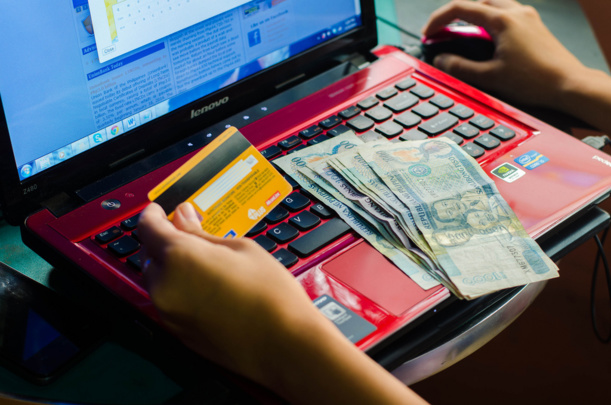
      The sudden, violent outbreak of the global COVID-19 pandemic thrust the cashless debate once again to the forefront of economic discourse around the world. Was now the moment to start doing away with cash for good? Would economic recovery be facilitated through the introduction of digital-only payment systems? <br />   <br />  The “unprecedented demand” for cashless payments certainly <a class="link" href="https://www.cnbc.com/2020/12/03/covid-19-pandemic-accelerating-the-shift-from-cash-to-digital-payments.html">convinced</a>  the cashless lobby that cashless economies would be the best way out of the resulting economic crisis. Dan Schulman, the CEO of PayPal, has asserted that digital payments have gone from “being a nice-to-have capability to a must-have essential service.” <br />   <br />  The reality is, however, somewhat more complicated. In November 2020, the Bank of England released a <a class="link" href="https://www.bankofengland.co.uk/quarterly-bulletin/2020/2020-q4/cash-in-the-time-of-covid">report</a>  stating that although consumer spending has fallen, the total value of banknotes in circulation in the United Kingdom has increased, as people were “withdrawing some extra cash as a precautionary response to heightened uncertainty.” This is a trend that has been <a class="link" href="https://www.statista.com/statistics/1117483/value-of-euro-banknotes-in-circulation-in-europe/">noted</a>  in several countries, and reflects similar behaviors during the 2008 financial crisis. <br />   <br />  Such studies have proven that consumers in many countries have retained trust in liquid cash in a time of economic unpredictability. Surely our economic systems must therefore show more confidence in cash as a tool to reinvigorate struggling economies? <br />  &nbsp; <br />   <br />  <strong>The Rise in Cash Demand Explained</strong> <br />   <br />  Contrary to what one might think, the demand for cash accelerated sharply throughout 2020. Significant cash withdrawals were observed in the days leading up to the lockdown, in what has been <a class="link" href="https://voxeu.org/article/coronavirus-panic-fuels-surge-cash-demand">described</a>  as a ‘dash for cash’. However, consumers were paying more in contactless mode, for fear of contamination with the virus on the coins or bills, in spite of the risk of banknote transmission remaining <a class="link" href="https://www.theguardian.com/world/2020/nov/24/bank-notes-pose-low-risk-of-spreading-covid-19">very low</a>. Faced with an uncertain future, this resulted in an increase in precautionary savings, in its most liquid form. Imagine money saved under the mattress. <br />   <br />  These trends have held true across the globe. In Kenya, for example, the value of cash in circulation outside the banking system <a class="link" href="https://www.cashless-economy.com/Much-more-Cash-in-circulation-in-Kenya-with-the-COVID-19-crisis_a421.html">increased</a>  to Sh231.37 billion at the beginning of 2021. “Because of the pandemic, most Kenyans are continuously being forced to save or redirect their spending mainly because of the containment measures,” Ken Gichinga, the chief economist at Mentoria Economics <a class="link" href="https://www.businessdailyafrica.com/bd/markets/market-news/cash-outside-sh231bn-but-kenyans-stay-broke-3367504">said</a>. This point further highlights the importance of cash as a store of value, critical to confidence in economies across the globe. <br />   <br />   <br />  One reason that storing money in such a manner might be beneficial to advocates is that it cannot be levied by negative interest rates. The Bank of England, for example, has made no secret of its <a class="link" href="https://www.ft.com/content/7967908e-5ded-11e5-9846-de406ccb37f2">desire</a>  to stimulate the UK economy by lowering interest rates into the negative, allowing for more flexibility in the event of another crisis. <br />   <br />   <br />  In Australia, the same anxieties about economic stability have led individuals to act in the same way, with demand for banknotes <a class="link" href="https://www.rba.gov.au/publications/bulletin/2021/mar/cash-demand-during-covid-19.html">“extraordinarily high”</a>  in 2020, despite the marked decline of cash in day-to-day transactional activities. Some people have ended up hoarding large amounts of cash, leaving banks <a class="link" href="https://www.abc.net.au/news/2021-04-07/coronavirus-cash-replaced-by-card-transactions-but-cash-hoarded/100051318">wondering</a>  where it has all gone. <br />   <br />  This widespread increase in the demand for cash in a period where cash transactions are in decline is <a class="link" href="https://cashessentials.org/ecb-the-pandemic-has-amplified-the-cash-paradox/">known</a>  as the “cash paradox”; “by the end of 2020, the value of banknotes in circulation in the euro-area reached €1,435 billion, representing an annual yearly increase of €142 billion or 11%.” The magnitude of this increase in spite of widespread efforts to <a class="link" href="https://cashessentials.org/institutional-hostility-to-cash-and-covid-19/">encourage</a>  digital payments has been surprising. Cash, it would seem, is a sleeping giant waiting to be employed to revitalize the global economy. <br />   <br />   <br />  <strong>Cash is the Key to Recovery</strong> <br />   <br />  According to a Bloomberg <a class="link" href="https://www.bloomberg.com/news/articles/2021-03-03/global-economic-recovery-will-be-driven-by-2-9-trillion-that-consumers-saved">article</a>  published in March 2021, consumers in the world’s largest economies “amassed $2.9 trillion in extra savings during Covid-related lockdowns, a vast cash hoard that creates the potential for a powerful recovery from the pandemic recession.” In the U.S., President Biden’s $1.9 trillion COVID-19 relief bill includes cash handouts to millions of Americans. Coupled with cash savings, that amounts to a significant potential source for a swift economic recovery. <br />   <br />  <em>“Cash helps boost people out of poverty by helping them fend off daily troubles; by greasing the wheels of life and giving them a cushion against risks. Helping them afford the essentials provides breathing room to think about the next step in life.” -</em> Noah Smith, <a class="link" href="https://basicincometoday.com/cash-is-turning-out-to-be-the-most-effective-welfare/">Bloomberg</a>. <br />   <br />  Moreover, according to <a class="link" href="https://www.jpmorgan.com/wealth-management/wealth-partners/insights/covid-19-recovery-5-indicators-show-strong-economic-and-market-activity">research</a>  by JPMorgan Chase, consumption levels in rich countries will rebound to near pre-pandemic levels, resulting in strong economic recovery across the globe. This goes hand-in-hand with the fact that, according to the Economist, households across 21 rich countries “saved $6trn. That implies <span dir="RTL">“</span>excess saving” of about $3trn—a tenth of annual consumer spending in those countries… In America excess savings may soon exceed 10% of&nbsp;GDP.” <br />   <br />  It is highly likely, according to some economists, that all this cash that has been hoarded during the pandemic will be spent when the crisis ends. University of Pennsylvania Professor Jeremy Siegel, for example, <a class="link" href="https://www.bloomberg.com/news/articles/2020-06-27/americans-hold-huge-pile-of-cash-that-s-key-to-economic-recovery">envisions</a>  a huge increase in consumer spending that will reboot the economy and lead to inflation. <br />   <br />  The question is, as outlined by the Economist, whether consumers will treat this excess cash as income or wealth. Gertjan Vlieghe, a member of the Bank of England’s monetary policy committee, stated in a recent <a href="https://www.bankofengland.co.uk/-/media/boe/files/speech/2021/february/an-update-on-the-economic-outlook-speech-by-gertjan-vlieghe.pdf?la=en&amp;hash=4D50354F53FDA4D035082B9B1A844A6B134212D1">speech</a> that this remains highly uncertain, with consumers in general having a higher propensity to spend additional <em>income</em> rather than <em>wealth. </em>So where does cash fit in? <br />   <br />  The jury is still out on the fastest road to economic recovery following such a devastating and unexpected global crisis. But it is unquestionably not the time to hasten calls for a move towards cashless digital systems with so much hard cash in circulation waiting to be spent to rejuvenate vulnerable economies.
     </div>
     <br style="clear:both;"/>
    ]]>
   </content>
   <link rel="alternate" href="https://www.dailycsr.com/The-Covid-19-Crisis-Cashless-Societies-Impede-Economic-Recovery_a1945.html" />
  </entry>
  <entry>
   <title>How scammers and thieves ride the coronavirus wave</title>
   <updated>2020-05-11T13:28:00+02:00</updated>
   <id>https://www.dailycsr.com/How-scammers-and-thieves-ride-the-coronavirus-wave_a1756.html</id>
   <category term="World" />
   <photo:imgsrc>https://www.dailycsr.com/photo/art/imagette/45958488-36905278.jpg</photo:imgsrc>
   <published>2020-05-01T13:20:00+02:00</published>
   <author><name>Jeffrey Ledger</name></author>
   <content type="html">
    <![CDATA[
     <div style="position:relative; text-align : center; padding-bottom: 1em;">
      <img src="https://www.dailycsr.com/photo/art/default/45958488-36905278.jpg?v=1589197333" alt="How scammers and thieves ride the coronavirus wave" title="How scammers and thieves ride the coronavirus wave" />
     </div>
     <div>
      <em>The European Commission and Interpol both indicate that there is an increased risk of cybercrime during the coronavirus pandemic. The rise in attacks comes as fraudsters capitalise on virus fears and the greater security exposure of companies and individuals who are now operating far more through the internet as a result of national stay-at-home orders. Combined with modern trends in moving towards online banking and digital payments, citizens are financially vulnerable.</em> <br />   <br />  Warnings have come from numerous governments in Europe and from around the world. In the US, authorities <a class="link" href="https://www.theguardian.com/world/2020/mar/19/coronavirus-scams-phishing-fake-treatments">grapple with an incidence of phishing attacks</a>. Scammers make use of fake emails pertaining to be from the World Health Organization or the Centers for Disease Control in order to trick people into downloading computer viruses which seek out their online banking details. <br />   <br />  The International Criminal Police Organization, Interpol also warned that even stretched hospitals might be targeted with ransomware. This was the case in Czech Republic, which reported a <a class="link" href="https://www.europol.europa.eu/newsroom/news/how-criminals-profit-covid-19-pandemic">cyberattack on Brno University Hospital</a>. The failure of its IT system led to the disruption of surgery schedules and the ability of its staff to deal effectively with the pressures of the virus. In ransomware attacks, scammers seek to capture vital data before blackmailing their victims into handing over money. <br />   <br />  In the UK, police revealed at the start of March that coronavirus scammers had already tricked the public into <a class="link" href="https://www.theguardian.com/world/2020/mar/06/police-issues-warning-against-coronavirus-fraudsters-in-uk">giving up £800,000</a>  through various illegal strategies. <br />   <br />  In India, police recently launched an investigation into the scammer who tried to <a class="link" href="https://www.reuters.com/article/us-health-coronavirus-india-fraud/scammers-try-selling-worlds-tallest-statue-as-pandemic-boosts-indias-cyber-crime-idUSKBN21P0KH">sell The Statue of Unity for $4 billion</a>  online, claiming to be representing local authorities. This is the most eye-brow raising example of an increase in cybercrime in India of 86 percent. <br />   <br />  <strong>Staying safe</strong> <br />   <br />  With the risk from a rise in phishing attacks and other opportunistic threats, combined with the number of workers now operating from their homes, businesses and individuals are at more risk than ever before. <br />   <br />  “[A] large, immediate migration of people from enterprise and university networks that are closely monitored and secured, to largely unmonitored and often unsecure home Wi-Fi networks, creates a very large target of opportunity for cybercriminals,” <a class="link" href="https://www.theguardian.com/world/2020/mar/19/coronavirus-scams-phishing-fake-treatments">said</a>  Chris Hazelton, the director of security at the cyber firm Lookout. <br />   <br />  What people need to do is be more vigilant than normal. Governments and national agencies are encouraging everyone to follow good online security rules, avoiding clicking on links in emails and never disclosing banking or personal details to the authors of unsolicited text messages or emails. <br />   <br />  <strong>Protecting assets</strong> <br />   <br />  Not everyone can follow the lead of investors who are buying up <a class="link" href="https://markets.businessinsider.com/news/stocks/safe-haven-assets-surging-new-highs-coronavirus-panic-stocks-falling-2020-3-1028972161">long-term bonds and gold</a>, seeking out financial “safe harbours” during the crisis. <br />   <br />  In Germany, however, the public response has been to start <a class="link" href="https://www.ft.com/content/7f88763c-6df0-11ea-89df-41bea055720b">keeping personal cash reserves</a>, with similar trends <a class="link" href="https://www.charlotteobserver.com/news/business/banking/article241139256.html">noted in the US</a>. <br />   <br />  There are, of course, a number of advantages to keeping a hold of your money. <br />   <br />  Firstly, the easiest way to protect money from hackers is to keep it offline: they cannot hack cash. If you use cash more regularly, you also reduce your exposure to hackers by lowering your online banking presence. <br />  Secondly, as a more general rule, you have greater control and certainty about your spending with cash. This can be vital in a crisis, when the risks of losing your job unexpectedly are higher than normal, and when the economy is heading into worrying territory. <br />   <br />  If a recession does hit, having cash on hand can be a powerful safety mechanism. <br />   <br />  “In the event a recession happens and your company downsizes, the emergency reserve can bridge the gap during your unemployment and ensure that you are not using credit cards or your retirement account to fund your living expenses,” explained Matthew Schwartz, a financial planner. <br />   <br />  Furthermore, it your money is in the bank when it fails, your savings disappear with the bank. It is useful and reassuring to have liquidity in times of crisis. <br />   <br />  It is for this reason that the US has seen a shift in how people are holding their assets, with a broad <a class="link" href="https://qz.com/1833706/us-demand-deposits-jump-as-recession-fears-grow/">conversion of stocks to cash equivalents</a>  and an increase in ATM withdrawals, contributing to a greater quantity of cash in circulation. <br />   <br />  While cash payments have been targeted in smear campaigns by payments companies during the crisis, security risks are largely only an issue of cybersecurity, and virus concerns about the safety of contact with cash have been widely <a class="link" href="https://www.wsj.com/articles/as-coronavirus-spreads-should-you-have-more-cashor-less-11583946881">allayed by health experts</a>. <br />   <br />  Given that coronavirus is not thought to be spread by objects like cash any more than card readers or public handrails, avoiding the use of cash on these grounds is not generally deemed logical. Furthermore, if not leveraged, people do miss out on the many benefits of spending in cash — and on the resilience it provides from hackers.&nbsp;&nbsp;
     </div>
     <br style="clear:both;"/>
    ]]>
   </content>
   <link rel="alternate" href="https://www.dailycsr.com/How-scammers-and-thieves-ride-the-coronavirus-wave_a1756.html" />
  </entry>
  <entry>
   <title>In a cashless economy, democracy loses ground</title>
   <updated>2018-03-21T14:34:00+01:00</updated>
   <id>https://www.dailycsr.com/In-a-cashless-economy-democracy-loses-ground_a1291.html</id>
   <category term="Politics" />
   <photo:imgsrc>https://www.dailycsr.com/photo/art/imagette/21016491-24233989.jpg</photo:imgsrc>
   <published>2018-03-16T14:29:00+01:00</published>
   <author><name>Redaction</name></author>
   <content type="html">
    <![CDATA[
The world is approaching the moment when humanity will finally and irrevocably enter the era of a cashless society. Most of Europe has already set foot on this path. India is about to switch to non-cash settlements and increasingly more people in the US are getting used to the new non-cash reality. Soon, our digital world will offer no other options.     <div style="position:relative; text-align : center; padding-bottom: 1em;">
      <img src="https://www.dailycsr.com/photo/art/default/21016491-24233989.jpg?v=1521640192" alt="In a cashless economy, democracy loses ground" title="In a cashless economy, democracy loses ground" />
     </div>
     <div>
      And what lies ahead? Officials, hackers, banks will have complete information on all our transactions, purchasing behavior, our profiles and even the overall political and social background in a particular country. Your bank, not you, owns your account, and it can be blocked due to suspicious or illegal activity, unpaid debts through creditors or unpaid debts to the government. Even if you are sure that you do not belong to any of these cases, the bank may disagree. A similar occasion once <a class="link" href="https://www.thestudentroom.co.uk/showthread.php?t=1367467">happened</a>  with a young man from the UK. His account had gotten suspended and was restored only after he dealt with the bureaucratic red tape and answered a few uncomfortable questions. <br />   <br />  It increasingly becomes clear that soon the sphere of corporate and private payments will provide the government with effective control over legal and private persons. Already, there are global blacklists of organizations that are disconnected from payment networks, such as the Automated Clearing House (ACH) or the Society for Worldwide Interbank Financial Telecommunications (SWIFT). With each step towards cashless society, this surveillance network is gradually expanding and is increasingly being used as a means of influence. <br />   <br />  <strong>How a lost umbrella turns into low social rating</strong> <br />   <br />  Cashless transactions imply that you transmit sensitive information to your bank, and, indirectly, to your government. This data is completely individualized and can be easily used against dissenting or unreliable citizens. Attended a "wrong" protest? Your bank account has been temporarily suspended. Interested in a suspicious book? Your personal file is already being reviewed. Expressed opinion that is contrary to official position? Be sure that your transactions are already being viewed for an excuse to find fault with you. <br />   <br />  Take as an example China, where various sharing services (short-term lease) are very popular. Basically, there are two types of sharing in the world: car-sharing and bicycle-sharing. In China, however, you can also rent umbrellas, and phone chargers, and basketballs. <br />  It may seem that such a business model is extremely inefficient. Renting a bicycle in the biggest bicycle-sharing Byo costs only one and a half yuan per hour, and a basketball can be borrowed for one yuan per hour in Zhulegeqiu. Often, all these things are not equipped with any geolocation sensors to protect the items from theft. For example, Sharing E Umbrella startup recently <a class="link" href="https://www.washingtonpost.com/news/worldviews/wp/2017/07/12/a-chinese-umbrella-sharing-start-up-just-lost-nearly-all-of-its-300000-umbrellas/">lost</a>  almost all of its 300 thousand umbrellas. <br />   <br />  The items are leased through a special mobile application. Therefore, the company receives information about the user. Now, imagine that a hapless client forgot to return or lost a basketball or an umbrella. It is a small sin, yet it can become a sufficient argument in making a decision to grant a loan or in general assessment of the citizen’s reliability. <br />   <br />  Financial writer Dominic Frisby <a class="link" href="https://www.theguardian.com/money/commentisfree/2016/mar/21/fear-cashless-world-contactless">says</a>  : “<em>In a world without cash, every payment you make will be traceable. Do you want governments (which are not always benevolent), banks or payment processors to have potential access to that information? The power this would hand them is enormous and the potential scope for Orwellian levels of surveillance is terrifying. Cash, on the other hand, empowers its users. It enables them to buy and sell, and store their wealth, without being dependent on anyone else. They can stay outside the financial system, if so desired</em>.” <br />   <br />  John Howland Cochrane, an economist and a Senior Fellow of the Hoover Institution at Stanford University, <a class="link" href="https://johnhcochrane.blogspot.ru/2016/08/a-world-without-cash.html">adds</a>  : “<em>The ability to transact with anonymity and privacy has been a central freedom for hundreds of years. It's largely gone already. Losing it entirely and giving the government huge power to enforce any law it passes is not necessarily a good thing</em>”. <br />   <br />  <strong>Is cashless democracy possible?</strong> <br />   <br />  To live in a democratic society is to be an informed citizen, to defend one's point of view and manage discussions in a civilized manner. Is all this really possible when authorities follow each your step, security agencies know to whom you talk, and if you are judged by books you read and things you buy? <br />   <br />  Total monitoring of private transactions is harmful to democratic institutions. It jeopardizes social relations and limits free opinion. In a world where every cent is controlled and traceable, there is no room for basic personal democratic freedoms, that is, inviolability of person and home; privacy of correspondence, telephone conversations, and telegraphic communications; and freedom of conscience. Only chosen ones will have it full. Take, for example, the Bilderberg Club - can you imagine that the police banned them from holding meetings? And what about a similar gathering organized by ordinary people? Will the government be happy about this? <br />  Cash provides a room for maneuver in case of unforeseen events. You can trust your government - until the next election. A failure can occur in any, even the most stable system, and then your country will be ruled by a person with completely different political views. In this case, anonymous cash deals will be useful to you – not to sabotage the system, but to sleep well and be sure that you don’t hear a knock on the door right after you bought a greylisted book. <br />   <br />  Troy Hunt, an independent security researcher, <a class="link" href="http://www.abc.net.au/news/2017-03-28/how-much-privacy-will-you-lose-in-a-cashless-society/8390460">believes</a>  : <em>“[It's] much harder to trace someone when you've been paying cash for things — so privacy as we centralise will always be an issue…It's probably one of those things where people may just want to be a little bit more conscious about what their digital records are actually telling people about themselves</em>.” <br />   <br />  Brett Scott, a journalist, campaigner and the author of The Heretic’s Guide to Global Finance: Hacking the Future of Money (2013), <a class="link" href="https://aeon.co/essays/if-plastic-replaces-cash-much-that-is-good-will-be-lost">says</a>  the same: “<em>As unsexy and analogue as cash is, it is resilient. It is easy to use. It requires little fancy infrastructure. It is not subject to arbitrary algorithmic glitches from incompetent programmers. And, yes, it leaves no data trail that will be used to project the aspirations and neuroses of faceless technocrats and business analysts into my daily existence</em>”.
     </div>
     <br style="clear:both;"/>
    ]]>
   </content>
   <link rel="alternate" href="https://www.dailycsr.com/In-a-cashless-economy-democracy-loses-ground_a1291.html" />
  </entry>
  <entry>
   <title>Cashless society : the golden tip of the iron rod</title>
   <updated>2017-02-03T11:58:00+01:00</updated>
   <id>https://www.dailycsr.com/Cashless-society-the-golden-tip-of-the-iron-rod_a963.html</id>
   <category term="Economics" />
   <published>2017-02-01T11:53:00+01:00</published>
   <author><name>Redaction</name></author>
   <content type="html">
    <![CDATA[
In the past decade, several countries have been tempted by suppressing hard currency from their economies, or have even gone through with it to some extent. Among the advocates for the killing off of cash, some quote the increased economic performance, some the decrease in criminal activity, and some the better financial security. All arguments which are audible, but overlook the high price to pay for such a society. A cashless society won't solve these problems, it will simply move them – and make them worse in some cases.     <div style="position:relative; text-align : center; padding-bottom: 1em;">
      <img src="https://www.dailycsr.com/photo/art/default/11102200-18421552.jpg?v=1486119472" alt="Cashless society : the golden tip of the iron rod" title="Cashless society : the golden tip of the iron rod" />
     </div>
     <div>
      The main selling point is convenience, both for citizens and organizations. A cashless society <a class="link" href="http://www.dailycsr.com/cashless-economy-crime-terrorism-fraud-freedom/">will protect citizens</a>  from petty theft and pickpockets – no cash held means no cash stolen. Because cash escapes state control, an economy with no cash will respond better to government economic policies. Tax evasion will be greatly reduced, with little place for money to hide. Individuals can monitor their entire wealth on one screen. Businesses will reduce the number of their financial channels. And many more where that came from : a cashless society is economic utopia. <br />  &nbsp; <br />  Behind each of these golden nuggets lies a high economic, <a class="link" href="http://www.opednews.com/articles/Political-unease-around-ca-by-James-Halloway-Economy_Economy-Recession_Use-Cash-160913-318.html">social and political risk</a>. Even if some risks materialize and others don't, each one of them is worth considering, and probably backing down. A cashless society would indeed stimy petty criminals and put an end to money-stealing in its physical form, and also help law enforcement identify and arrest criminals. “<em>The use of cash by criminals remains one of the most significant barriers to successful investigations and prosecution</em>,” <a class="link" href="https://www.europol.europa.eu/newsroom/news/cash-still-king-criminals-prefer-cash-for-money-laundering">says</a>  Rob Wainwright, Director of Europol. But it would be naive to think that theft would disappear. The number of online frauds has steadily increased with the rise in electronic payments over the years. Thieves have simply adapted to the new economy and will continue to do so. However, physical theft requires robbing one person at a time – unlike online fraud which can come in a much broader scale. In other words, a cashless society won't extinguish theft, it will expand it. As <a class="link" href="http://www.acg.net/worries-about-payment-card-fraud-mounting-among-us-consumers-according-to-auriemma-consulting-group/">Jaclyn Holmes</a>, who <a class="link" href="http://www.acg.net/worries-about-payment-card-fraud-mounting-among-us-consumers-according-to-auriemma-consulting-group/">surveyed</a>  the recent increase in online fraud, puts it, “<em>consumers appreciate the convenience of being able to breeze through online check-out with a single click, but it may be leading some to wonder whether that same convenience could make them a tempting target for fraud</em>.” Since last year alone, <a class="link" href="http://www.philly.com/philly/business/20161128_Seller_beware__Online_shopping_fraud_is_on_the_rise.html">online fraud</a>  has increased 30%. <br />  &nbsp; <br />  Electronic money has the appearance of security, because it usually comes with a password, or pin code, or relies on complex <a class="link" href="https://www.wired.com/2015/09/big-security-fix-credit-cards-wont-stop-fraud/">cryptograms</a>. Indeed, they are safer, on&nbsp; the individual level, than a bill which can be slipped out of a pocket. But on the larger scale of the nation , it exposes the entire economy to cyberattacks. Over the past years, most Western countries have been showing increasing concern about attacks allegedly coming from Russia, China or Iran, mostly. The <a class="link" href="http://www.newindianexpress.com/business/demonetisation/2016/nov/30/world-computer-security-day-five-biggest-hack-jobs-of-the-decade-and-how-you-can-keep-safe-1544261.html">Indian Express</a>  ' online desk points out that "<em>Accounts have been hacked en masse in many spectacular failures of online security. Many of these involved financial transactions and the leaking of customer data.</em>" And these are only <a class="link" href="http://www.newindianexpress.com/business/demonetisation/2016/nov/30/world-computer-security-day-five-biggest-hack-jobs-of-the-decade-and-how-you-can-keep-safe-1544261.html">targeted attacks</a>  on specific companies and servers. If one major attack were to come through, targeting the general system, we would be left with no alternative for our economies to hold up. Consulting firm McKinsey points at the <a class="link" href="http://www.mckinsey.com/business-functions/digital-mckinsey/our-insights/the-rising-strategic-risks-of-cyberattacks">looming threat</a>  :"<em>in an environment of stepped-up cyberattacks, public clouds would be underutilized, given increased fear of vulnerabilities and higher costs from compliance with stricter policies on third-party access to data and systems. Such problems would delay the adoption of many systems and reduce the potential value from cloud computing by as much as $1.4 trillion."</em> <br />  &nbsp; <br />  Government economic programs and policies do tend to be eluded by the cash segment of the country's money. Wall Street Journal <a class="link" href="http://www.wsj.com/articles/why-chinas-trapped-economy-wont-find-easy-escape-1469089011">Anjani Trivedi</a>  writes, regarding this <a class="link" href="http://www.wsj.com/articles/why-chinas-trapped-economy-wont-find-easy-escape-1469089011">problem occurring in </a>  <a class="link" href="http://www.wsj.com/articles/why-chinas-trapped-economy-wont-find-easy-escape-1469089011">China, </a>  "<em>The circular relationship between fee-starved banks, yield-hungry companies and savings-rich households means cash isn’t being invested in the real economy. Private fixed-asset investment growth shrank in June</em><em>.</em>" And policies reaching all segments of the economy would be more efficient. But the efficiency gain of making a society cashless would be small, as most cash payments are made for small day-to-day operations, not substantial ones. And while boosted economic programs may increase general wealth in the country, the disappearance of cash will impact most those who are vulnerable within each society.&nbsp; Elderly people (who often don't master technological tools as well as their children) and the poorest categories are known to rely the most on cash. The rich would get richer and the poor and isolated would be further outcast. Monetary <a class="link" href="https://www.cgap.org/blog/potential-electronic-money-social-good">think tank CGAP</a>  <a class="link" href="https://www.cgap.org/blog/potential-electronic-money-social-good">details</a>  :"<em>More than 75% percent of the world’s poor are excluded from formal financial services according to 2011 World Bank/Gallup data. They typically work and live in the informal economy and need financial access as much as anyone else to build assets, create livelihoods, manage risks and smooth consumption</em>".&nbsp; Those citizens would quickly be shut out of society. <br />  &nbsp; <br />  The last, least conspicuous, and perhaps most dangerous aspect of a cashless society is the cost on individual freedom. With nowhere to hide from States and banks, the cost to invidual freedom will be devastating – and more, it will be irreversible. Once private and public organizations have established complete control over the citizen's lives, they will not relinquish it. Something worth considering when eyeing this new opportunity for a little more convenience.
     </div>
     <br style="clear:both;"/>
    ]]>
   </content>
   <link rel="alternate" href="https://www.dailycsr.com/Cashless-society-the-golden-tip-of-the-iron-rod_a963.html" />
  </entry>
  <entry>
   <title>Denmark to become the first cashless economy: what about the people?</title>
   <updated>2017-04-19T15:27:00+02:00</updated>
   <id>https://www.dailycsr.com/Denmark-to-become-the-first-cashless-economy-what-about-the-people_a1019.html</id>
   <category term="World" />
   <photo:imgsrc>https://www.dailycsr.com/photo/art/imagette/12364855-19511733.jpg</photo:imgsrc>
   <published>2016-10-23T08:22:00+02:00</published>
   <author><name>Redaction</name></author>
   <content type="html">
    <![CDATA[
Denmark is on track to become the world’ first “cash-free nation”. The government is pushing restaurants, stores and gas stations to not accept cash payments. But for the Danes, this is not Denmark’s way. Denmark could very well be the guinea pig of the European Union which would like to see more and more cashless countries…but that experimentation could end up being a disaster for the Danes.     <div style="position:relative; text-align : center; padding-bottom: 1em;">
      <img src="https://www.dailycsr.com/photo/art/default/12364855-19511733.jpg?v=1492608461" alt="Denmark to become the first cashless economy: what about the people?" title="Denmark to become the first cashless economy: what about the people?" />
     </div>
     <div>
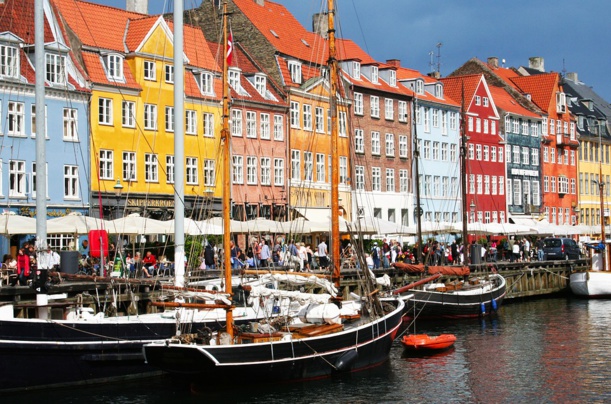
      Today about a third of Danish citizens are using <em>Danske Bank</em>’s official app, MobilePay, to pay for services and transactions. The usage of cash has already been greatly reduced in Denmark but it could come to a complete end very soon. For <em>Danske Bank</em>, it is a great opportunity. It means more customers, and less usage of cash also means more banking transactions… and therefore more fees. <br />  &nbsp; <br />  But for the Danes, the cash crisis comes as the tipping point of the identity crisis that started around 2000. At the time, the annual congress of the nationalist Danish People’s Party exhorted Danes to defend their currency and their very nationhood <em>‘For Krone and Fatherland’</em> screamed giant posters in Copenhagen. <br />  &nbsp; <br />  Since then, Denmark has changed, the country known for its fat cows and flaky pastries, neat streets and nice Queen, is today going through an identity crisis and the cash question is dividing the country. <br />  &nbsp; <br />  In 2000, it was unconceivable for the Danes to let go one of their national pride: the krone, the national currency for hundreds of years. But today the government is getting rid of its paper version progressively and will completely get rid of cash without having asked the Danish citizen how they really felt about it. <br />  &nbsp; <br />  In 2000, the Danes were asked by referendum if they wished to change their money to Euros, and a great majority said no. But today it looks like most of the Danes would say no if they were asked if they want to get rid of the Krone by 2030. So what has changed in 16 years? Globalization and Europeanization. Denmark’s identity seem to slowly disappear along with the usage of cash. <br />  &nbsp; <br />  In world history, no country has ever gone cashless, even for a day, even for a joke. Which makes Denmark the one country everyone is looking at if that transition was to work. <br />  The problem for Denmark is that it is very unlikely to function and may just create more inequalities, more social injustices and political divide. If no country had done it before there is a reason, cash is a freedom and for many unprivileged people it is the only access to their basic needs, getting rid of it would exacerbate problems already faced by the Danish society. <br />  &nbsp; <br />  But then why doing it? The European Union and the European Central Bank (ECB) appear to have engaged in a war against cash. Getting rid of the <a class="link" href="http://www.chicagotribune.com/suburbs/wheaton/community/chi-ugc-article-cashless-economy-should-we-get-rid-of-cash-b-2016-06-03-story.html">500€ banknote</a>  is one of the first steps, one of the first battles that was fought by the pro-cash resistance as the ECB claimed that it was the <em>‘best way to fight terrorism and tax evasion’</em>. <br />  &nbsp; <br />  But beyond that smoke screen, big banks and online payment companies seem to have a great role to play and have managed to influence European policymakers, danish ones especially. Getting rid of cash would benefit them greatly and starting with Denmark could be for them a way to apply their conception of what a world should look like to other countries. <br />   <br />  A world without cash means a world where banks and government have all power. They control your money and you have no say in it because you just don’t have the choice. It might sound a lot like conspiracy theory but it could very well happen to us by 2030. <br />   <br />  Just like the frog that you put in a pot of cold water and that you start heating up slowly until it boils, the Danes seem to have really few options to jump out of the european pot and they might just be boiling by the time they realize that getting rid of cash wasn’t the best idea for them. <br />   <br />  Today this project is creating vigorous debates and is making the political power in place more fragile. The conservative parties are rising up and they aren’t completely ready to get rid of cash. But this crisis transcends political boundaries and the main issue for the Danes seem to be that the decision was made at the top without a care for the krone’s first users: the people. <br />   <br />  Groups are being formed to protest against the disappearance of cash but they are afraid that the powers are now controlling Denmark as a string puppet, and that the Krone’s death, on paper or on coins, is imminent.&nbsp;
     </div>
     <br style="clear:both;"/>
    ]]>
   </content>
   <link rel="alternate" href="https://www.dailycsr.com/Denmark-to-become-the-first-cashless-economy-what-about-the-people_a1019.html" />
  </entry>
</feed>