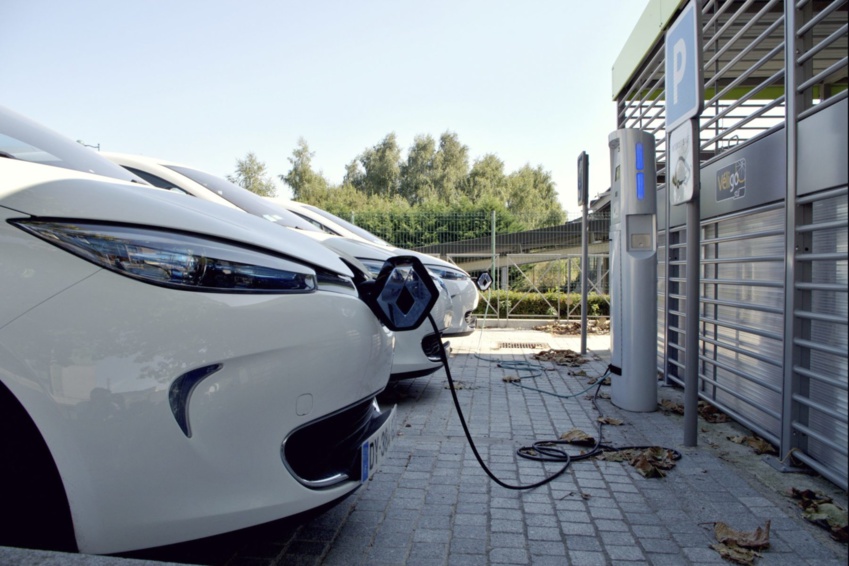
Local, state, and federal infrastructure investment agencies are under increasing pressure to demonstrate progress in addressing climate change and socioeconomic inequities. The opportunity to invest in publicly accessible electric vehicle (EV) charging networks is compelling. However, despite evidence that increased access will both level the economic playing field for individuals and allow public fleets to meet carbon targets more quickly, expanding public charging has proven difficult.
5 Keys to Public Sector EV Charging Success:
- Size is important
- Utilize scale to maximise purchasing power.
- Obtain private capital
- Use public land and facilities to form alliances.
- Make sure everyone has equal access
- Invest in people and power to avoid charging deserts.
- Select the best partner
- Find business partners who share your agency's location strategy.
- Make EV charging stations more accessible.
- Connect cultural and social services using infrastructure.
To meet federal emissions-reduction targets outlined in the Bipartisan Infrastructure Act and the White House's Electric Vehicle Charging Action Plan, half of all vehicles sold in the United States must be zero-emissions by 2030.
To adequately serve these vehicles, 1.2 million public EV chargers must be built and operational by the same year. Federal and state funding at historic levels ($5 billion for national charging networks and $2.5 billion for communities and corridors) will hasten deployment. To improve the equity and environmental efficacy of these EV charging networks, comprehensive front-end coordination across jurisdictions and government agencies will be required.
“EV charging networks are a real estate challenge with a technical tail” - Stephen EngblomSenior Managing Director, CBRE Infrastructure & Public Enterprise
Despite the development of an entire class of technical and engineering solutions to support EV charging networks, deploying charging infrastructure remains a real estate challenge. Before installing charging networks becomes an engineering issue, it is necessary to plan and find locations that meet the needs of the community; form real estate partnerships and power agreements; integrate programme design and implementation; and manage leases, financial data, charging equipment and environments. To ensure that public investments and assets are optimized, as well as executive and field staff resources are prioritized, public agencies require insights from expert partners throughout the entire life cycle of EV charging networks.
Important Success Factors
Optimizing an equitable charging network begins with a thorough understanding of where and when a community requires charging, as well as combining this political and geographic intelligence with equipment and location lease terms, integrated power agreements, and operational savvy.
Real climate impact and social change will occur only when chargers are strategically placed, operated, and managed to provide everyone with quick, affordable, and safe charging access. Public EV networks have the potential to significantly improve the lives and livelihoods of millions of people by identifying where and what type of charging is required, aligning with community and regional demands, and maximizing local job creation.
The five critical success factors for investing in public EV networks for individual or fleet use, as well as best-practice examples, are outlined below.
Size Matters
- Use scale to maximize purchasing power and streamline processes.
- By leveraging large-scale purchasing power and streamlining policies and permitting, public sector real estate portfolios offer an unrivalled opportunity to provide equitable access to charging infrastructure on their sites and within their facilities. Public agencies must collaborate across departments and jurisdictions to ensure a broad reach. Governments have control over dispersed assets that can be used for EV charging.
- Create an EV charging platform to leverage federal, state, and municipal purchasing power, unify legislative policies, streamline permitting processes, create consistent leasing terms for land and facilities, establish purchase and equipment agreements proactively, and monitor management agreements.
As an example, consider the US General Services Administration (GSA). The US federal government is approaching the electrification of the federal fleet, which includes over 450,000 vehicles (excluding Postal Service), by emphasizing the end-to-end solutions required to successfully achieve the federal EV charging plan's goals.
“GSA is working to provide a full spectrum of infrastructure solutions to make planning, acquisition, installation and maintenance of zero-emission and electric vehicle infrastructure as seamless as possible.”
Gaining Access to Private Capital
Use public property and facilities to form public-private partnerships. Government-controlled land sites and public facilities can be used to attract technical and business partners, as well as third-party capital. With the value of these assets recognized, the impact of third-party capital to accelerate technical investments can be optimized, project delivery timelines can be met, and environmental and equity objectives can be met.
Solution: Government agencies should consider how physical and digital assets under their control can be used to attract private partnerships to build, finance, and maintain charging infrastructure.
In urban settings, for example, leveraging existing assets to host curbside charging could result in savings of nearly 70%. For example, Flo, a Quebec-based manufacturer and network operator of electric vehicle charging stations, collaborated with the Los Angeles Bureau of Street Lighting, which was upgrading 220,000 light poles to LED, to make curbside level 2 charging easier to integrate.
Similar level 2 street lighting programmes can be accelerated through agreements with a city transportation agency and a utility, but this would necessitate coordination of authority from both agencies. The Bureau of Street Lighting in Los Angeles plans to add 150 more EV chargers to its streetlights each year, thanks to grants from the California Air Resources Board and the California Energy Commission, as well as partnerships with EV charging networks like Flo.
Equal access
Investing in people and power to avoid charging deserts. More than just a charging portal, charging infrastructure can prioritize and connect historically marginalized urban and rural communities with economic opportunity. The Federal Highway Administration's National Electric Vehicle Infrastructure (FHWA NEVI) Formula program guidance, which required states to submit plans for interstate electric vehicle corridors to the Joint Office of Energy and Transportation by August 1, 2022, set the stage for such interagency collaboration.
While the first phase of this funding is aimed at alternative fuel corridors along interstate highways, the same approach will eventually be used to incentivize EV charging investment in urban and rural areas where marginalized communities would benefit from access to EV charging.
Solution: Publicly accessible EV charging stations should be added to existing multi-agency socioeconomic and environmental databases to ensure that investment prioritizes charging desert locations with the highest climate and equity needs.
Public agencies that want to invest in EV charging for public benefit, for example, could add EV charging locations to the EPA's EJ Screen, which uses 12 environmental indicators and seven demographic indicators to map environmental justice indexes consistently across the United States. Agencies can use this existing tool to identify priority sites for subsidized charging infrastructure to serve historically marginalized communities.
Selecting an appropriate partner
Find business partners who share your agency's location strategy. State and local governments are making bold net-zero pledges. Because of these commitments, investment in EV charging will need to ramp up quickly. In practice, finding the right business partner and negotiating favorable terms for a public EV charging network investment will require a thorough examination of a variety of factors, including the flow of capital, locational intelligence, technical specifications required for the level of charging at each location, and the optimal operational and maintenance model.
The proper alignment across a portfolio will ensure that the deployment of public capital yields the best results. Agencies should determine individual equipment providers' expertise, scope of services, and technology offerings and log this information in a centralised database to inform the public RFP-writing process. This will aid in the development of pragmatic, attainable strategies that inform partnership goals and the establishment of ongoing transparent monitoring and reporting platforms with clear metrics.
Solution: Before investing in an EV charging network to address its organizational mission, a public agency should examine how the physical and digital assets under its control align with internal established performance metrics as well as external EV charging hardware, software, management, and financing options. While there are numerous EV charging business models available, finding one that aligns with an existing location strategy is critical.
Private-sector companies in North America, for example, are rapidly transitioning from an ad hoc approach to EV Network installation, which worked well for early pilot projects, to a strategic EV charging investment framework that considers locational intelligence, demand analysis, usage trends, operational change management, and triple-bottom-line impact analysis to guide decisions and generate ongoing performance reports. With this strategic framework in place, it is possible to confidently negotiate clear terms with Original Equipment Manufacturers (OEMs) and technical consultants, as well as lease and maintenance agreements.
EV charging infrastructure
Connect cultural and social services using infrastructure. It is not enough to simply provide charging infrastructure; users must also find the charging experience safe, dependable, and convenient. While 20-minute high-speed charging clusters have become common in affluent neighborhoods and interstate corridors, historically marginalized neighborhoods remain charging deserts. Public investment in these areas would help to ensure that essential workers, such as Transportation Network Company (TNC) drivers or single parents who require charging while running family errands, have reliable and safe charging access.
Solution: To amplify societal or agency mandates, public agencies should co-locate charging infrastructure with social infrastructure, such as schools, community centers, and community-centered retail. Charging next to employee services for a public agency could help drive organizational participation levels. Co-location in cities could increase foot traffic to social services such as wellness centers or libraries. Many government vehicle fleets are deployed during the day and charged at night. During work hours, while motor-pool vehicles are in use, their charging stations could be made available to public users.
For example, commercial charging networks have developed a strong locational intelligence approach to locating high-speed charging with food and beverage, providing customers with a compelling 20-minute charging experience in higher-income commercial environments and high-traffic corridors. This commercial charging time/amenity provision ratio model could be applied to placing EV charging near cultural and social services, which would work well with level 2 or 3 chargers given the amount of time people spend at those locations.
Changing Trends necessitate end-to-end solutions
The market is already trending toward an electrified future. Lower zero-emission vehicle purchase prices and lifetime maintenance costs put electric vehicle ownership within reach of more consumers and fleet operators. According to some, electric vehicles will soon be cost competitive with internal combustion engine vehicles.
"Range anxiety" appears to be much lower among first-time buyers, coinciding with a generational shift to millennials and Generation Z, who demand environmentally friendly technologies. Public agencies have an opportunity to capitalise on consumer trends in the EV market to meet the needs of their constituents as well as their economic, environmental, and equity mandates. Agencies can better position themselves for success by understanding the current and future landscape of electric vehicle charging from beginning to end.
The industry is also concerned about charger maintenance and operability. According to a recent report, 23% of publicly accessible EV charging stations in the San Francisco Bay Area were not operational. This level of unreliability is a significant impediment for less-affluent drivers who do not have a home charger, as well as taxi and ride-share drivers who rely on public chargers for a living.
Changes in vehicle and fleet ownership are also expected to have an impact on the transportation landscape. Many municipalities across the country are reducing minimum parking requirements in developments well-served by mass transit in response to the high cost of building middle-market and affordable housing. This shift in housing, combined with the continued role of ride-hailing apps, may reduce demand for parking spaces while increasing demand for charging access.
Public agencies have an opportunity to leverage EV market trends to meet the needs of their constituents as well as economic, environmental, and equity mandates. Agencies can better position themselves for success by understanding the current and future landscape of electric vehicle charging from beginning to end.