<?xml version="1.0" encoding="UTF-8"?>
<feed xmlns="http://www.w3.org/2005/Atom"  xmlns:media="http://search.yahoo.com/mrss/" xmlns:dc="http://purl.org/dc/elements/1.1/" xmlns:itunes="http://www.itunes.com/dtds/podcast-1.0.dtd" xmlns:geo="http://www.w3.org/2003/01/geo/wgs84_pos#" xmlns:georss="http://www.georss.org/georss" xmlns:photo="http://www.pheed.com/pheed/">
 <title>Daily CSR</title>
 <subtitle><![CDATA[Daily CSR delivers latest news and in-depth coverage about corporate social responsibility, ethics and sustainability]]></subtitle>
 <link rel="alternate" type="text/html" href="https://www.dailycsr.com" />
 <link rel="self" type="text/xml" href="https://www.dailycsr.com/xml/atom.xml" />
 <id>https://www.dailycsr.com/</id>
 <updated>2026-09-18T15:18:11+02:00</updated>
 <generator uri="http://www.wmaker.net">Webzine Maker</generator>
  <icon>https://www.dailycsr.com/favicon.ico</icon>
  <entry>
   <title>SPOT CKD: Advancing Early Detection and Health Equity</title>
   <updated>2026-09-18T04:28:00+02:00</updated>
   <id>https://www.dailycsr.com/SPOT-CKD-Advancing-Early-Detection-and-Health-Equity_a6147.html</id>
   <category term="Companies" />
   <photo:imgsrc>https://www.dailycsr.com/photo/art/imagette/98070171-68286050.jpg</photo:imgsrc>
   <published>2026-09-18T04:26:00+02:00</published>
   <author><name>Debashish Mukherjee</name></author>
   <content type="html">
    <![CDATA[
     <div style="position:relative; text-align : center; padding-bottom: 1em;">
      <img src="https://www.dailycsr.com/photo/art/default/98070171-68286050.jpg?v=1789698525" alt="SPOT CKD: Advancing Early Detection and Health Equity" title="SPOT CKD: Advancing Early Detection and Health Equity" />
     </div>
     <div>
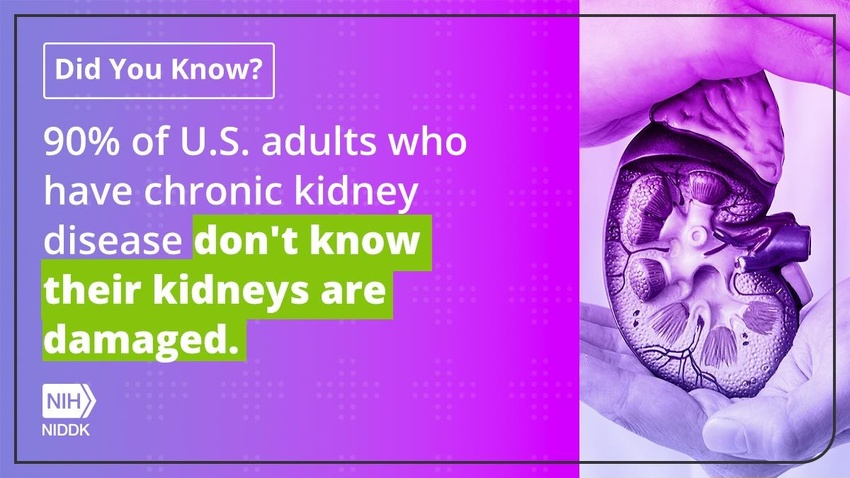
      <p style="text-align:justify;text-justify:inter-ideograph">In healthcare, some of the most consequential opportunities are also the easiest to overlook. They are the moments when an underlying condition could be identified early, but remains undetected.<o:p></o:p> <br />    <p style="text-align:justify;text-justify:inter-ideograph">Chronic kidney disease (CKD) is a clear example. Unlike conditions that produce obvious warning signs, CKD can develop silently, with little or no noticeable symptoms for many years. By the time it is identified, significant kidney damage may already have occurred. As a result, detecting CKD depends heavily on proactive identification and timely testing rather than waiting for symptoms to appear.<o:p></o:p> <br />    <p style="text-align:justify;text-justify:inter-ideograph">Several factors can contribute to missed opportunities, including gaps in clinical coding, limited awareness, and the competing demands placed on healthcare professionals. When these opportunities are overlooked, healthcare systems lose valuable time in which earlier intervention could potentially improve outcomes and help reduce inequalities in care.<o:p></o:p> <br />    <p style="text-align:justify;text-justify:inter-ideograph">For the National Health Service (NHS) in the United Kingdom, these missed opportunities have wider implications. They influence how effectively healthcare resources are deployed, how supported clinicians feel in identifying patients at risk, and how successfully health inequalities can be addressed. For patients, they can determine whether appropriate care begins at an early stage or only after the condition has progressed.<o:p></o:p> <br />    <h3 style="text-align:justify;text-justify:inter-ideograph">Why health equity matters<o:p></o:p></h3>    <p style="text-align:justify;text-justify:inter-ideograph">CKD does not occur at the same rate across all communities. The condition is particularly relevant in populations already experiencing health inequalities, including communities affected by socioeconomic disadvantage and areas with significant ethnic diversity.<o:p></o:p> <br />    <p style="text-align:justify;text-justify:inter-ideograph">Recognising this, the Hampshire and Isle of Wight (HIOW) and North East and North Cumbria (NENC) Integrated Care Boards (ICBs) sought to develop a different approach to identifying CKD—one designed to reduce the likelihood that early opportunities for detection would be missed.<o:p></o:p> <br />    <p style="text-align:justify;text-justify:inter-ideograph">HIOW encompasses a varied geography, including rural market towns, coastal communities such as the Isle of Wight, and diverse urban centres including Portsmouth and Southampton. Accessing healthcare is not equally straightforward for everyone. Language differences, transportation difficulties and limited digital connectivity can create practical barriers. Working patterns, including shift work, and caring responsibilities may make it difficult for some people to attend appointments or complete important tests. In other communities, cultural factors and limited access to online information can present additional challenges when seeking health advice or arranging healthcare.<o:p></o:p> <br />    <p style="text-align:justify;text-justify:inter-ideograph">The NENC Integrated Care System covers one of England’s largest geographical areas. It brings together urban centres with coastal, rural and post-industrial communities, each with distinct characteristics and needs. Strong community networks and local identities coexist with areas experiencing substantial deprivation and significant health challenges. By combining data and research with knowledge from local communities, the region is working to address disparities in health outcomes and expand opportunities for people across all communities.<o:p></o:p> <br />    <h3 style="text-align:justify;text-justify:inter-ideograph">SPOT CKD: Developing a collaborative approach<o:p></o:p></h3>    <p style="text-align:justify;text-justify:inter-ideograph">Against this background, NHS teams in HIOW and NENC, working with Boehringer Ingelheim, established SPOT CKD—Screening, Prevention, Outreach, and Treatment for Health Equity.<o:p></o:p> <br />    <p style="text-align:justify;text-justify:inter-ideograph">SPOT CKD is designed not simply as a conventional pilot programme, but as a collaborative model based on shared responsibility and local ownership. NHS teams identify priorities according to the needs of their populations, while the NHS and Boehringer Ingelheim contribute practical enablers such as data-driven insights, training and coordination. Local communities play an important role in shaping interventions, ensuring that proposed solutions reflect people's experiences of accessing and receiving care.<o:p></o:p> <br />    <p style="text-align:justify;text-justify:inter-ideograph">Healthcare innovators from the NHS, Boehringer Ingelheim and partner organisations then support implementation by introducing appropriate technologies and developing more connected care pathways. These pathways aim to strengthen the relationship between primary care and specialist renal services, helping patients move through the healthcare system in a more integrated way.<o:p></o:p> <br />    <h3 style="text-align:justify;text-justify:inter-ideograph">Key areas of focus<o:p></o:p></h3>    <p style="text-align:justify;text-justify:inter-ideograph"><strong>Priorities</strong><o:p></o:p> <br />    <p style="text-align:justify;text-justify:inter-ideograph">NHS teams identify the most important areas for action by considering local health needs, population characteristics and the challenges faced by individual communities.<o:p></o:p> <br />    <p style="text-align:justify;text-justify:inter-ideograph"><strong>Enablers</strong><o:p></o:p> <br />    <p style="text-align:justify;text-justify:inter-ideograph">Boehringer Ingelheim and NHS teams work together to support delivery through data insights, education and training, coordination, and other practical resources.<o:p></o:p> <br />    <p style="text-align:justify;text-justify:inter-ideograph"><strong>Outreach</strong><o:p></o:p> <br />    <p style="text-align:justify;text-justify:inter-ideograph">Community experiences and perspectives help shape targeted outreach activities, making it possible to address barriers that may otherwise prevent people from accessing appropriate CKD detection and care.<o:p></o:p> <br />    <p style="text-align:justify;text-justify:inter-ideograph"><strong>Innovation</strong><o:p></o:p> <br />    <p style="text-align:justify;text-justify:inter-ideograph">NHS teams, Boehringer Ingelheim and partner organisations work together to introduce new technologies and develop digitally enabled, integrated pathways that connect primary and specialist care more effectively.<o:p></o:p> <br />  
     </div>
     <br style="clear:both;"/>
    ]]>
   </content>
   <link rel="alternate" href="https://www.dailycsr.com/SPOT-CKD-Advancing-Early-Detection-and-Health-Equity_a6147.html" />
  </entry>
  <entry>
   <title>Essity Global Initiatives: Advancing Hygiene, Health &amp; Inclusion</title>
   <updated>2025-07-29T07:41:00+02:00</updated>
   <id>https://www.dailycsr.com/Essity-Global-Initiatives-Advancing-Hygiene-Health-Inclusion_a4988.html</id>
   <category term="Companies" />
   <photo:imgsrc>https://www.dailycsr.com/photo/art/imagette/90198684-63650260.jpg</photo:imgsrc>
   <published>2025-07-29T07:40:00+02:00</published>
   <author><name>Debashish Mukherjee</name></author>
   <content type="html">
    <![CDATA[
     <div style="position:relative; text-align : center; padding-bottom: 1em;">
      <img src="https://www.dailycsr.com/photo/art/default/90198684-63650260.jpg?v=1753767686" alt="Essity Global Initiatives: Advancing Hygiene, Health &amp; Inclusion" title="Essity Global Initiatives: Advancing Hygiene, Health &amp; Inclusion" />
     </div>
     <div>
      <div style="text-align: justify;"><strong>Essity in Action: Global Highlights from July</strong> <br />  Each month, Essity shares inspiring stories from around the globe that demonstrate how we contribute to better health and hygiene, positively impacting lives and communities. Through our products, services, and solutions, we support the well-being of one billion people across 150 countries every day. <br />   <br />  This July, we're spotlighting efforts related to menstrual health, breaking stigmas, and celebrating community through summer festivals. <br />  &nbsp; <br />  <strong>Menstrual Health: A Matter of Well-Being and Workplace Impact</strong> <br />  In Mexico, a new report reveals that 95% of businesses overlook menstrual health in the workplace, contributing to reduced productivity. In partnership with Dalia Empower and Plenna, Essity released <em>“Menstruation and Work Productivity: The Taboo Impacting Business Outcome.”</em> The report highlights that 45% of women have missed work due to menstrual discomfort. This initiative aims to raise awareness and encourage inclusive practices that support women’s health and enhance professional performance. <br />   <br />  In Australia and New Zealand, Essity’s <em>Libra Period Positivity Program</em>, launched in 2019, focuses on removing barriers around menstruation by offering free period care products in schools and workplaces. By tackling stigma and improving access, the program is boosting attendance, morale, and well-being across the region. <br />   <br />  In Peru, Essity teamed up with the Regional Directorate of Education in Lima to train more than 100 educators from San Juan de Lurigancho and El Agustino in addressing menstruation in classroom settings. This initiative is designed to bridge menstrual health education gaps, foster inclusive learning environments, and improve student retention. Essity also joined the Social Pact for Education, aligning with 150 other organizations committed to student wellness in Peru. <br />  &nbsp; <br />  <strong>Improving Care and Tackling Taboos</strong> <br />  In the UK, healthcare professionals warn that poor incontinence care is exacerbating the NHS’s ongoing bed-blocking crisis. Essity research indicates that 29% of medical staff believe enhanced incontinence care could help free up hospital beds more quickly. Following an 18-month campaign, the NHS plans to revise procurement guidelines to prioritize patient outcomes over cost. Essity has shown that investing in high-quality incontinence products can reduce long-term expenses while enhancing dignity and care quality. <br />   <br />  In France, Essity launched the #lymphosanstabou campaign to increase awareness about lymphedema—an often overlooked and misdiagnosed chronic condition. This initiative offers a voice to patients, healthcare providers, and advocacy groups, aiming to dismantle stigma and promote better understanding and treatment of the condition. <br />  &nbsp; <br />  <strong>Summer Celebrations with a Hygienic Twist</strong> <br />  In The Netherlands, research by Libresse (an Essity brand) revealed that half of Dutch women+ feel uneasy attending festivals during their period, with 20% skipping events due to inadequate facilities. To combat this, Essity introduced a special restroom experience at Pinkpop, a major festival with 150,000 attendees. This space offered clean toilets, free period products, and educational content about menstrual hygiene, including a unique “vulva seat” that sparked open discussions. <br />   <br />  Meanwhile, in the United States, Essity is deepening community ties in Fox Cities, Wisconsin, by sponsoring local events throughout summer and fall. As the Official Hygiene Sponsor of the Mile of Music Festival in Appleton, and through support of events like the Fox Cities Marathon, Menasha Harvest Festival, and Neenah Shop &amp; Stroll, Essity is promoting public health and community well-being. Over 300 employees and their families are actively participating in these initiatives, underscoring Essity’s commitment to the communities where its team members live and work.</div>  
     </div>
     <br style="clear:both;"/>
    ]]>
   </content>
   <link rel="alternate" href="https://www.dailycsr.com/Essity-Global-Initiatives-Advancing-Hygiene-Health-Inclusion_a4988.html" />
  </entry>
</feed>