<?xml version="1.0" encoding="UTF-8"?>
<feed xmlns="http://www.w3.org/2005/Atom"  xmlns:media="http://search.yahoo.com/mrss/" xmlns:dc="http://purl.org/dc/elements/1.1/" xmlns:itunes="http://www.itunes.com/dtds/podcast-1.0.dtd" xmlns:geo="http://www.w3.org/2003/01/geo/wgs84_pos#" xmlns:georss="http://www.georss.org/georss" xmlns:photo="http://www.pheed.com/pheed/">
 <title>Daily CSR</title>
 <subtitle><![CDATA[Daily CSR delivers latest news and in-depth coverage about corporate social responsibility, ethics and sustainability]]></subtitle>
 <link rel="alternate" type="text/html" href="https://www.dailycsr.com" />
 <link rel="self" type="text/xml" href="https://www.dailycsr.com/xml/atom.xml" />
 <id>https://www.dailycsr.com/</id>
 <updated>2026-05-10T06:46:12+02:00</updated>
 <generator uri="http://www.wmaker.net">Webzine Maker</generator>
  <icon>https://www.dailycsr.com/favicon.ico</icon>
  <entry>
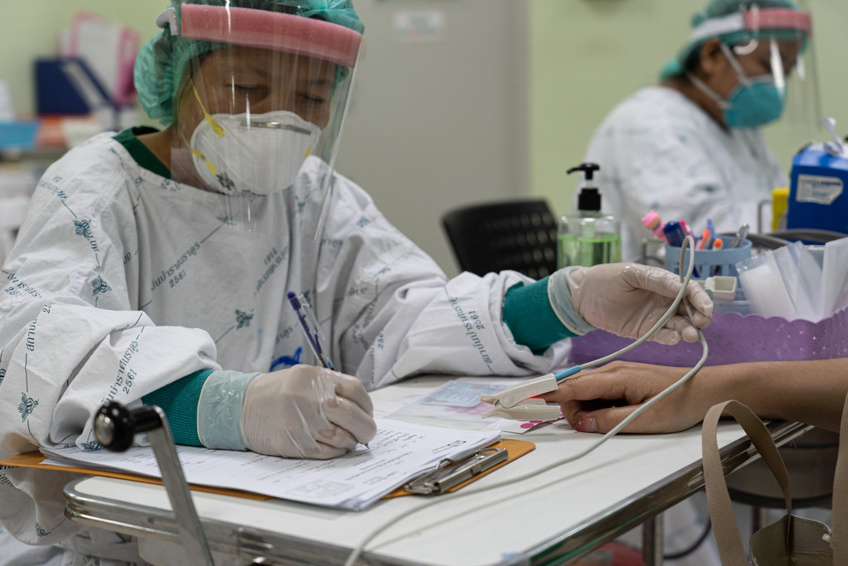
   <title>Virax Biolabs Secures ISO Certifications to Advance Long COVID Diagnostics</title>
   <updated>2026-03-31T13:47:00+02:00</updated>
   <id>https://www.dailycsr.com/Virax-Biolabs-Secures-ISO-Certifications-to-Advance-Long-COVID-Diagnostics_a5661.html</id>
   <category term="Companies" />
   <photo:imgsrc>https://www.dailycsr.com/photo/art/imagette/95741793-66871671.jpg</photo:imgsrc>
   <published>2026-03-31T13:44:00+02:00</published>
   <author><name>Debashish Mukherjee</name></author>
   <content type="html">
    <![CDATA[
     <div style="position:relative; text-align : center; padding-bottom: 1em;">
      <img src="https://www.dailycsr.com/photo/art/default/95741793-66871671.jpg?v=1774957649" alt="Virax Biolabs Secures ISO Certifications to Advance Long COVID Diagnostics" title="Virax Biolabs Secures ISO Certifications to Advance Long COVID Diagnostics" />
     </div>
     <div>
      <div style="text-align: justify;">&nbsp;</div>    <p style="text-align: justify;">Virax Biolabs Group Limited (NASDAQ: VRAX) announced that its fully owned subsidiary, Virax Biolabs (UK) Limited, has secured ISO 13485:2016 and ISO 9001:2015 certifications for its quality management systems. The certifications were granted by LRQA on 18 February 2026 and are valid through 17 February 2029. <br />    <p style="text-align: justify;"><strong>Key highlights:</strong> <br />    <p style="text-align: justify;">Virax states that these enhanced quality standards reinforce its strategy around post-acute infection syndromes (PAIS), improving preparedness for regulated in vitro diagnostic (IVD) development and supporting ongoing U.S. clinical validation efforts. <br />    <p style="text-align: justify;">The company is also exploring potential U.S.-based laboratory testing services, which could include a laboratory-developed test (LDT) pathway. <br />    <p style="text-align: justify;">Under the approved scope, ISO 13485:2016 applies to the design and development of immunological assay components and kits—such as antibody- and peptide-based reagents—for IVD use. ISO 9001:2015, meanwhile, covers the manufacturing, design, and development of Virax’s research-use-only products and related services. <br />    <p style="text-align: justify;">Both ISO 13485 and ISO 9001 are globally recognized standards for quality management. They provide structured frameworks for areas such as design control, risk management, traceability, supplier qualification, and consistent manufacturing processes. While ISO 13485 is specific to medical devices and diagnostics, ISO 9001 is a broader standard used across industries. Virax believes these certifications enhance the controls and documentation required to advance regulated diagnostic programs and support clinical validation. <br />    <p style="text-align: justify;">The company views these achievements as a strong operational base for its quality-driven development initiatives, including its diagnostic technologies targeting PAIS conditions like post-acute sequelae of SARS-CoV-2 (PASC), commonly known as Long COVID. They also support Virax’s broader objective of building a T cell immune-profiling platform with clinical and regulatory reach across both Europe and the United States. <br />    <p style="text-align: justify;">At the same time, Virax continues to move forward with its U.S. clinical validation work, which it believes benefits from the strengthened quality framework. As previously announced, the company has signed a Research Services Agreement (RSA) with Emory University’s ADJUST Center to carry out clinical studies of ViraxImmune™, focusing on immune profiling in individuals with PASC. Under this collaboration, Emory will perform laboratory testing and data analysis to generate clinical insights that may guide Virax’s regulatory strategy and potential commercialization. <br />    <p style="text-align: justify;">Virax emphasizes that improving its quality systems supports disciplined development of critical assay components and associated documentation, which in turn can aid validation processes and future scale-up plans, subject to regulatory requirements. <br />    <p style="text-align: justify;">“Securing ISO 13485 and ISO 9001 certifications marks an important milestone for Virax,” said Chairman and CEO James Foster. “It underscores the progress our team has made in establishing strong quality systems to support the regulated development of our immunological assays. This is particularly significant as we advance our PAIS strategy, strengthen our foundation for IVD development, expand clinical evidence across the UK and U.S., and assess potential U.S. laboratory testing pathways, including an LDT option.” <br />  
     </div>
     <br style="clear:both;"/>
    ]]>
   </content>
   <link rel="alternate" href="https://www.dailycsr.com/Virax-Biolabs-Secures-ISO-Certifications-to-Advance-Long-COVID-Diagnostics_a5661.html" />
  </entry>
  <entry>
   <title>Meet Gilead’s virologists as they hunt COVID-19 variants</title>
   <updated>2023-01-20T06:38:00+01:00</updated>
   <id>https://www.dailycsr.com/Meet-Gilead-s-virologists-as-they-hunt-COVID-19-variants_a2397.html</id>
   <category term="Companies" />
   <photo:imgsrc>https://www.dailycsr.com/photo/art/imagette/70254758-49020839.jpg</photo:imgsrc>
   <published>2023-01-20T05:33:00+01:00</published>
   <author><name>Debashish Mukherjee</name></author>
   <content type="html">
    <![CDATA[
     <div style="position:relative; text-align : center; padding-bottom: 1em;">
      <img src="https://www.dailycsr.com/photo/art/default/70254758-49020839.jpg?v=1674194271" alt="Meet Gilead’s virologists as they hunt COVID-19 variants" title="Meet Gilead’s virologists as they hunt COVID-19 variants" />
     </div>
     <div>
      <p style="text-align:justify;text-justify:inter-ideograph"><span style="color:black;letter-spacing:.25pt">When a new COVID-19 virus variant is discovered, Gilead virologists Charlotte Hedskog and John Bilello, along with their teams, mobilize as "variant hunters."<o:p></o:p></span> <br />    <p style="text-align:justify;text-justify:inter-ideograph"><span style="color:black;letter-spacing:.25pt">Their mission is to see if COVID-19 therapeutics will still be effective against new strains. The process necessitates perseverance and collaboration, as the results have far-reaching implications for treating people with COVID-19 all over the world.<o:p></o:p></span> <br />    <p style="text-align:justify;text-justify:inter-ideograph"><span style="color:black;letter-spacing:.25pt">“It can be a challenging process for sure as some variants are harder to find,” says Charlotte, Senior Research Scientist on the Clinical Virology team.<o:p></o:p></span> <br />    <p style="text-align:justify;text-justify:inter-ideograph"><span style="color:black;letter-spacing:.25pt">However, expert teams are up to the task. Since COVID-19 emerged and spread around the world in late 2019 and early 2020, scientists have tested more than 15 different genetic variants of SARS-CoV-2, the virus that causes COVID-19.<o:p></o:p></span> <br />    <p style="text-align:justify;text-justify:inter-ideograph"><span style="color:black;letter-spacing:.25pt">“This is a process that involves many people with a commitment to collaboration – internally and externally,” says John, Director of Virology, who leads the COVID-19 Discovery Virology team. “We all rely on each other to find these isolates and identify which ones to go after.”<o:p></o:p></span> <br />    <p style="text-align:justify;text-justify:inter-ideograph"><span style="color:black;letter-spacing:.25pt">The work begins when the Centers for Disease Control and Prevention (CDC) or the World Health Organization (WHO) issues an alert indicating the presence of a new SARS-CoV-2 "variant of concern" - a genetically distinct virus strain that is increasing in transmission rate, causing more severe disease, or may be capable of evading vaccines, therapeutic antibodies, or antivirals.<o:p></o:p></span> <br />    <p style="text-align:justify;text-justify:inter-ideograph"><span style="color:black;letter-spacing:.25pt">“When we hear that there is something new, we immediately reach out to our collaborators,” says Charlotte.<o:p></o:p></span> <br />    <p style="text-align:justify;text-justify:inter-ideograph"><span style="color:black;letter-spacing:.25pt">Over time, John, Charlotte, and their colleagues have made numerous connections with domestic and international academic collaborators who have isolated new variants they were looking for. Early in the pandemic, for example, the scientists collaborated with collaborators to obtain the isolated strain from the first reported case of COVID-19 in the United States, which was identified in Washington State.<o:p></o:p></span> <br />    <p style="text-align:justify;text-justify:inter-ideograph"><span style="color:black;letter-spacing:.25pt">“Recently, the team has established a partner in India and is also reaching out to other potential partners around the world,” says Charlotte. “This includes South Africa, where the Omicron virus was first identified.”<o:p></o:p></span> <br />    <p style="text-align:justify;text-justify:inter-ideograph"><strong><span style="color:black;letter-spacing:.25pt">Testing a New Variant</span></strong> <br />  <span style="color:black;letter-spacing:.25pt">The virus continues to reappear in various forms around the world, and it can be difficult to identify an isolated sample of a new variant. When the variant is discovered, Gilead applies to the CDC for a special permit to ship it to its Foster City labs.<o:p></o:p></span> <br />    <p style="text-align:justify;text-justify:inter-ideograph"><span style="color:black;letter-spacing:.25pt">Once received, it is examined by trained laboratory personnel from both the Clinical and Discovery Virology teams in a specialized biosafety lab built in 2020 for the study of SARS-CoV-2. They examine how virus samples react when exposed to various levels of COVID-19 therapeutics. If the amount of therapeutics required to inhibit the virus does not change, this indicates that the drug retains its full activity against the new variant in a laboratory setting. This method was used to test all of the major prior variants as well as the more recent Omicron BA.4 and BA.5 subvariants.<o:p></o:p></span> <br />    <p style="text-align:justify;text-justify:inter-ideograph"><span style="color:black;letter-spacing:.25pt">To speed up the testing process, the researchers are now working on a method that will allow them to create an engineered version of a variant in the lab using available genetic sequencing data. These 'replicons' are an important alternative method for testing COVID-19 therapeutics against novel strains.<o:p></o:p></span> <br />    <p style="text-align:justify;text-justify:inter-ideograph"><span style="color:black;letter-spacing:.25pt">“The 'replicons' would support producing results much faster, which is important to ultimately help people with a new COVID-19 variant, faster,” says Charlotte. “As the COVID-19 pandemic continues to evolve, new variants of concern will certainly emerge. We need to continue to monitor these variants and generate antiviral data for potential future variants of concern.”<o:p></o:p></span> <br />  
     </div>
     <br style="clear:both;"/>
    ]]>
   </content>
   <link rel="alternate" href="https://www.dailycsr.com/Meet-Gilead-s-virologists-as-they-hunt-COVID-19-variants_a2397.html" />
  </entry>
</feed>