<?xml version="1.0" encoding="UTF-8"?>
<feed xmlns="http://www.w3.org/2005/Atom"  xmlns:media="http://search.yahoo.com/mrss/" xmlns:dc="http://purl.org/dc/elements/1.1/" xmlns:itunes="http://www.itunes.com/dtds/podcast-1.0.dtd" xmlns:geo="http://www.w3.org/2003/01/geo/wgs84_pos#" xmlns:georss="http://www.georss.org/georss" xmlns:photo="http://www.pheed.com/pheed/">
 <title>Daily CSR</title>
 <subtitle><![CDATA[Daily CSR delivers latest news and in-depth coverage about corporate social responsibility, ethics and sustainability]]></subtitle>
 <link rel="alternate" type="text/html" href="https://www.dailycsr.com" />
 <link rel="self" type="text/xml" href="https://www.dailycsr.com/xml/atom.xml" />
 <id>https://www.dailycsr.com/</id>
 <updated>2026-05-20T23:58:12+02:00</updated>
 <generator uri="http://www.wmaker.net">Webzine Maker</generator>
  <icon>https://www.dailycsr.com/favicon.ico</icon>
  <entry>
   <title>Is There A Data Gap Breaching Business Value?</title>
   <updated>2019-11-27T21:42:00+01:00</updated>
   <id>https://www.dailycsr.com/Is-There-A-Data-Gap-Breaching-Business-Value_a1656.html</id>
   <category term="Companies" />
   <photo:imgsrc>https://www.dailycsr.com/photo/art/imagette/40131075-34236634.jpg</photo:imgsrc>
   <published>2019-11-27T21:39:00+01:00</published>
   <author><name>Lorene Stevens</name></author>
   <content type="html">
    <![CDATA[
CSR leaders needs to leave out many information when presenting before senior management due to time constraints.     <div style="position:relative; float:left; padding-right: 1ex;">
      <img src="https://www.dailycsr.com/photo/art/default/40131075-34236634.jpg?v=1574888340" alt="Is There A Data Gap Breaching Business Value?" title="Is There A Data Gap Breaching Business Value?" />
     </div>
     <div>
      <div style="text-align: justify;">Dailycsr.com – 27 November 2019 – Data lovers cannot satisfy themselves even with “too many metrics”. Therefore, it is evident that no matter in which sequence you get to arrange your number, we are stuck with twenty four hours a day, seven days a week and twelve months a year. <br />  &nbsp; <br />  CSR leaders face time constraints while presenting their information with corporate senior executive, which means the formers’ output has a limitation. As a result, mostly “only the vital few metrics” which point towards “strategy performance” as well as gives a picture of the benefit of the work done towards the “society and business goals” comes in the light. <br />  &nbsp; <br />  With this, CSR leaders need to “make tough choices” as to what to mention and what to leave out. Over the years, after conducting numerous conversations on the topic CECP finds a common priority area which comes from “senior management teams”. The matter is to find “what’s the ROI for the business”. <br />  &nbsp; <br />  In the words of Data Insights’ Senior Director, Carmen Perez: <br />  “Academic proof of various types of business value driven by CSR, social efforts, sustainability, and studies on specific components of each have been available for quite some time”. <br />  &nbsp; <br />  But the question remains as to: <br />  “What is the gap that makes the existing proof of value miss the mark with senior management?”, questions Parez. <br />  &nbsp; <br />  Learn about Perez’s take on the same: <br />  <a class="link" href="https://cecp.me/2qJSVeq">https://cecp.me/2qJSVeq</a>  <br />  &nbsp; <br />  &nbsp; <br />  &nbsp; <br />  &nbsp; <br />  <strong>References:</strong> <br />  3blmedia.com</div>  
     </div>
     <br style="clear:both;"/>
    ]]>
   </content>
   <link rel="alternate" href="https://www.dailycsr.com/Is-There-A-Data-Gap-Breaching-Business-Value_a1656.html" />
  </entry>
  <entry>
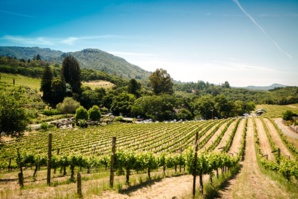
   <title>Is FMNR The ‘Fastest Way To Restore Degraded Landscapes’?</title>
   <updated>2018-07-30T21:36:00+02:00</updated>
   <id>https://www.dailycsr.com/Is-FMNR-The-Fastest-Way-To-Restore-Degraded-Landscapes_a1412.html</id>
   <category term="Environment" />
   <photo:imgsrc>https://www.dailycsr.com/photo/art/imagette/24154908-26102740.jpg</photo:imgsrc>
   <published>2018-07-30T21:34:00+02:00</published>
   <author><name>Lorene Stevens</name></author>
   <content type="html">
    <![CDATA[
Experts talk about the sustainable effects of FMNR which had flooded the scientists with hope to a cost effective and low carbon restoration method to re-introduce greenery in degraded soils.     <div style="position:relative; float:left; padding-right: 1ex;">
      <img src="https://www.dailycsr.com/photo/art/default/24154908-26102740.jpg?v=1532980272" alt="Is FMNR The ‘Fastest Way To Restore Degraded Landscapes’?" title="Is FMNR The ‘Fastest Way To Restore Degraded Landscapes’?" />
     </div>
     <div>
      <div style="text-align: justify;">Dailycsr.com – 30 July 2018 – FMNR stands for ‘farmer-managed natural regeneration’ process. The method came under the lime light a few years ago, as the world witnessed “5 million hectares of Niger” being clothed with restored greenery with the help of this above mentioned practice. <br />  &nbsp; <br />  FMNR encourages regeneration followed by management of trees as well as shrubs sprouting from “stumps, roots, and seeds” in an area with degraded soils, like the ones under current agricultural production. <br />  &nbsp; <br />  After these “woody plants” establish themselves in farm yards, they enhance soil fertility besides retaining moisture whereby helping the crops that are planted in the field. This combination is known as a system called agro-forestry. <br />  &nbsp; <br />  Many years of trial to plant trees had met with failure. Therefore the restored land of Niger brought in hopes for a successful future of “a low-tech and low-cost approach” for greenery restoration. Soon the researchers flocked in that area and discovered that the FMNR practice boosted 30% grain yield, besides hiking up incomes and proved to be climate friendly. <br />  &nbsp; <br />  However, even after a decade, Burkina Faso’s two scientists who are associated with the “World Agroforestry Centre”, in short ICRAF, are still scrutinising the data and digging deeper into it. Dr. Jules Bayala is the chief scientist for Sahel while Dr Patrice Sawadogo is a “senior scientist”. <br />  &nbsp; <br />  In an interview, Cathy Watson, the chief of programme development at ICRAF, caught up with the two scientists to know about “trees, soil carbon, and productivity” and to “discuss whether FMNR is the fastest way to restore degraded landscapes, and if it has utility beyond drylands”. <br />  &nbsp; <br />  For catching the full interview, kindly visit: <br />  <a class="link" href="https://news.mongabay.com/2018/06/farmer-managed-natural-regeneration-the-fastest-way-to-restore-trees-to-degraded-landscapes/">https://news.mongabay.com/2018/06/farmer-managed-natural-regeneration-the-fastest-way-to-restore-trees-to-degraded-landscapes/</a>  <br />  &nbsp; <br />  &nbsp; <br />  &nbsp; <br />  <strong>References:</strong> <br />  news.mongabay.com</div>  
     </div>
     <br style="clear:both;"/>
    ]]>
   </content>
   <link rel="alternate" href="https://www.dailycsr.com/Is-FMNR-The-Fastest-Way-To-Restore-Degraded-Landscapes_a1412.html" />
  </entry>
  <entry>
   <title>Addressing The Management Of ‘Core Human Factors’</title>
   <updated>2017-10-28T21:41:00+02:00</updated>
   <id>https://www.dailycsr.com/Addressing-The-Management-Of-Core-Human-Factors_a1179.html</id>
   <category term="Ethics &amp; Compliance" />
   <photo:imgsrc>https://www.dailycsr.com/photo/art/imagette/17909356-22254766.jpg</photo:imgsrc>
   <published>2017-10-28T21:39:00+02:00</published>
   <author><name>Lorene Stevens</name></author>
   <content type="html">
    <![CDATA[
“Human Factors in Health and Safety” could improve corporate performance and enhance safety at work site.     <div style="position:relative; float:left; padding-right: 1ex;">
      <img src="https://www.dailycsr.com/photo/art/default/17909356-22254766.jpg?v=1509219669" alt="Addressing The Management Of ‘Core Human Factors’" title="Addressing The Management Of ‘Core Human Factors’" />
     </div>
     <div>
      <div style="text-align: justify;">Dailycsr.com – 28 October 2017 – Chemical and process industries, even the ones in Buncefield and Texas City, have been affected by human and “organisational factors” as they led to “several major incidents”. <br />  &nbsp; <br />  In order to manage these scenarios, the “Institution of Chemical Engineers” offers training modules regarding “core human factors” along with the ways of their effective management with safety parameters, thus creating “a safety management system”. <br />  &nbsp; <br />  The said training modular, called the “Human Factors in Health and Safety” has its focus on “how a better understanding of human factors can drive safety standards and overall business performance”. <br />  &nbsp; <br />  Here are some of the topics covered in the training, as mentioned by the HSE: <br />  “…organisational change, safety culture, safety-critical communications, human error, stress and fatigue, training and competence, staffing and workload, supervision and leadership, and integrating human factors at the design stage”. <br />  &nbsp; <br />  &nbsp; <br />  &nbsp; <br />  <strong>References:</strong> <br />  www.healthandsafetyatwork.com</div>  
     </div>
     <br style="clear:both;"/>
    ]]>
   </content>
   <link rel="alternate" href="https://www.dailycsr.com/Addressing-The-Management-Of-Core-Human-Factors_a1179.html" />
  </entry>
  <entry>
   <title>Educating On How To Retain Aesthesis &amp; Protect Natural Landscape Without Compromising On Utilitarian Control Over Vegetation Growth For Safe Powerline Transmission</title>
   <updated>2017-10-23T20:09:00+02:00</updated>
   <id>https://www.dailycsr.com/Educating-On-How-To-Retain-Aesthesis-Protect-Natural-Landscape-Without-Compromising-On-Utilitarian-Control-Over_a1168.html</id>
   <category term="Environment" />
   <photo:imgsrc>https://www.dailycsr.com/photo/art/imagette/17820488-22192071.jpg</photo:imgsrc>
   <published>2017-10-23T20:07:00+02:00</published>
   <author><name>Lorene Stevens</name></author>
   <content type="html">
    <![CDATA[
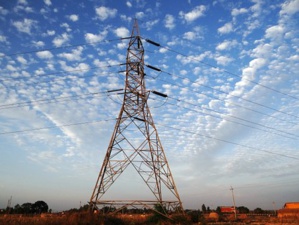
Often safety and utility come at the cost of natural landscape. But with IVM, it is now possible to bridge the seemingly opposite issues as far as the electricity and gas transmission systems running across the country are concerned.     <div style="position:relative; float:left; padding-right: 1ex;">
      <img src="https://www.dailycsr.com/photo/art/default/17820488-22192071.jpg?v=1508782143" alt="Educating On How To Retain Aesthesis &amp; Protect Natural Landscape Without Compromising On Utilitarian Control Over Vegetation Growth For Safe Powerline Transmission" title="Educating On How To Retain Aesthesis &amp; Protect Natural Landscape Without Compromising On Utilitarian Control Over Vegetation Growth For Safe Powerline Transmission" />
     </div>
     <div>
      <div style="text-align: justify;">Dailycsr.com – 23 October 2017 – Electricity and gas are the two items on which the whole of North America banks as electricity is needed for cooking, gas heats up houses, streetlights as well as traffic lights run on power. Therefore, Utility Arborist Association’s executive Ph.D. director, Phil Charlton, says: <br />  “Our jobs, factories, and every other part of life are possible because of the electric and gas infrastructure that supplies our homes and businesses”. <br />  &nbsp; <br />  It is unfortunate that planting vegetation everywhere may not always contribute to “our energy needs”. Crisscrossing the country of North America “high-voltage distribution lines” network covering around “5 million miles”, has around “300,000 miles” underground network carrying “liquid and gas pipelines” while, “450,000 miles of very high-voltage transmission lines” run on “natural landscape”. <br />  &nbsp; <br />  Given this scenario, trees near such “enormous system” are undesirable and harbinger of “several” problems. For example Charlton adds: <br />  “Kids climb trees and can be exposed to dangerous electrical lines. Tree care workers and homeowners might not know the danger that these lines pose to them as they do their daily work. Trees can interfere with and damage overhead powerlines, interrupting service to our homes and businesses. Tree roots can damage underground gas and liquid fuel lines. Forest fires in the west are often attributed to trees contacting powerlines”. <br />  &nbsp; <br />  Therefore, there should be a utilitarian control over vegetation growth, says Charlton, whereby one can “ensure public and worker safety as well as service reliability”. In fact, the blackout faced by the city of New York and the “surrounding states” were caused by “three electric transmission lines contacting three trees” which resulted in “11 fatalities” and landed a blow on the economy damaging worth “billions of dollars”. <br />  &nbsp; <br />  Sadly, balancing “vegetation maintenance” keeping safety in mind often comes at the cost of aesthesis or “energy conservation” while other times it effects the “diverse wildlife habitats”. However, Charlton encourages saying: <br />  “The good news is that utilities, communities, environmental groups, and the public are learning that some strategies can help minimize the conflicts and generate so many positive benefits. Utilities and communities are working together to plant trees compatible with utility lines and promote sustainable ecosystem services such as energy conservation, CO2 sequestration, aesthetics, and storm water management”. <br />  &nbsp; <br />  When met with conflicting “utility corridors” encroaching into landscapes, companies are turning to IVM, meaning “integrated vegetation management”. In this endeavour, government as well as environmental NGOs along with the public and landowners are collaborating with corporate bodies, whereby synthesising utility with “protection of cultural resources; protection and encouragement of rare, threatened and endangered species; creation of improved wildlife habitat” to name a few. <br />  &nbsp; <br />  Furthermore, Charlton informs: <br />  “To help ensure that challenges and successes with IVM are being shared more broadly, the Arbor Day Foundation and the Utility Arborist Association developed the Trees &amp; Utilities Conference. This will be the premier education, training, and networking event bringing together utility vegetation managers with other stakeholders interested in both the urban forest and rural landscape”. <br />  &nbsp; <br />  &nbsp; <br />  <strong>References:</strong> <br />  ethicalperformance.com</div>  
     </div>
     <br style="clear:both;"/>
    ]]>
   </content>
   <link rel="alternate" href="https://www.dailycsr.com/Educating-On-How-To-Retain-Aesthesis-Protect-Natural-Landscape-Without-Compromising-On-Utilitarian-Control-Over_a1168.html" />
  </entry>
  <entry>
   <title>Hospitals Can Now Identify Waste Plastics In Their Systems For Recycling With ‘Plastics Mapping’ Tool</title>
   <updated>2017-01-27T11:30:00+01:00</updated>
   <id>https://www.dailycsr.com/Hospitals-Can-Now-Identify-Waste-Plastics-In-Their-Systems-For-Recycling-With-Plastics-Mapping-Tool_a947.html</id>
   <category term="Environment" />
   <photo:imgsrc>https://www.dailycsr.com/photo/art/imagette/11051127-18324791.jpg</photo:imgsrc>
   <published>2017-01-27T11:29:00+01:00</published>
   <author><name>Lorene Stevens</name></author>
   <content type="html">
    <![CDATA[
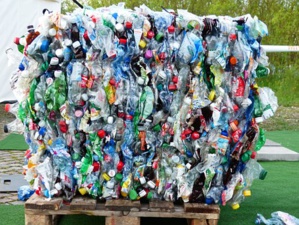
HPRC has come up with new tools that can help the hospitals become more sustainable in their operations, whereby saving the world in turn.     <div style="position:relative; float:left; padding-right: 1ex;">
      <img src="https://www.dailycsr.com/photo/art/default/11051127-18324791.jpg?v=1485513042" alt="Hospitals Can Now Identify Waste Plastics In Their Systems For Recycling With ‘Plastics Mapping’ Tool" title="Hospitals Can Now Identify Waste Plastics In Their Systems For Recycling With ‘Plastics Mapping’ Tool" />
     </div>
     <div>
      <div style="text-align: justify;">Dailycsr.com – 26 January 2017 – In an attempt to comprehend the “overall flow of plastic materials” in the hospitals, the plastics mapping was created, whereby it monitors the plastic starting from its entry in the hospital right through its usage till its “exit as waste streams”. <br />  &nbsp; <br />  In a hospital environment mapping the plastic flow enables one to “identify non-patient contact healthcare plastic materials” as these can be recycled easily, while these also turns out to be “the optimum points to collect these materials for recycling”. <br />  Healthcare Plastics Recycling Council, HPRC in short, reports that:​ <br />  “We have developed the Plastics Mapping Process Template to help you gather information to develop plastics waste inventories for various parts of the facility. As the information is gathered, it can be transitioned into a detailed map to show the flow of plastics throughout the hospital”. <br />  ​ <br />  The administration can utilise the “mapping template” for going around “various departments” in their administration and enlist the details of the materials that are “being moved into waste streams”, followed by the “opportunities for recycling in each department”. <br />  &nbsp; <br />  With this information, one can “identify easy-to-collect, clean, non-infectious healthcare plastic materials” that can be recycled besides the “optimal locations” for the collection. Moreover, the said process can also allow one to kick start “assessing processes” for collecting and transferring the waste plastics materials to “a central dock-out area”. <br />  &nbsp; <br />  &nbsp; <br />  &nbsp; <br />  <strong>References:</strong> <br />  <a class="link" href="http://www.hprc.org/">http://www.hprc.org/</a> </div>  
     </div>
     <br style="clear:both;"/>
    ]]>
   </content>
   <link rel="alternate" href="https://www.dailycsr.com/Hospitals-Can-Now-Identify-Waste-Plastics-In-Their-Systems-For-Recycling-With-Plastics-Mapping-Tool_a947.html" />
  </entry>
</feed>