<?xml version="1.0" encoding="UTF-8"?>
<feed xmlns="http://www.w3.org/2005/Atom"  xmlns:media="http://search.yahoo.com/mrss/" xmlns:dc="http://purl.org/dc/elements/1.1/" xmlns:itunes="http://www.itunes.com/dtds/podcast-1.0.dtd" xmlns:geo="http://www.w3.org/2003/01/geo/wgs84_pos#" xmlns:georss="http://www.georss.org/georss" xmlns:photo="http://www.pheed.com/pheed/">
 <title>Daily CSR</title>
 <subtitle><![CDATA[Daily CSR delivers latest news and in-depth coverage about corporate social responsibility, ethics and sustainability]]></subtitle>
 <link rel="alternate" type="text/html" href="https://www.dailycsr.com" />
 <link rel="self" type="text/xml" href="https://www.dailycsr.com/xml/atom.xml" />
 <id>https://www.dailycsr.com/</id>
 <updated>2026-09-12T15:08:19+02:00</updated>
 <generator uri="http://www.wmaker.net">Webzine Maker</generator>
  <icon>https://www.dailycsr.com/favicon.ico</icon>
  <entry>
   <title>Baker Hughes Advances Inclusion Through Reconciliation</title>
   <updated>2026-09-10T03:03:00+02:00</updated>
   <id>https://www.dailycsr.com/Baker-Hughes-Advances-Inclusion-Through-Reconciliation_a6122.html</id>
   <category term="Companies" />
   <photo:imgsrc>https://www.dailycsr.com/photo/art/imagette/97978575-68214095.jpg</photo:imgsrc>
   <published>2026-09-10T03:01:00+02:00</published>
   <author><name>Debashish Mukherjee</name></author>
   <content type="html">
    <![CDATA[
     <div style="position:relative; text-align : center; padding-bottom: 1em;">
      <img src="https://www.dailycsr.com/photo/art/default/97978575-68214095.jpg?v=1789002230" alt="Baker Hughes Advances Inclusion Through Reconciliation" title="Baker Hughes Advances Inclusion Through Reconciliation" />
     </div>
     <div>
      <div style="text-align: justify;">Inclusion and belonging are closely connected. Inclusion means creating a workplace where people from different backgrounds are respected, valued and given meaningful opportunities to participate in decisions. Belonging goes a step further, describing the sense of acceptance and connection people experience as employees, customers and members of the communities in which they live and work. Together, these principles help establish a workplace culture where everyone can contribute and thrive. <br />   <br />  Baker Hughes highlights a range of initiatives designed to promote diversity, inclusion and a stronger sense of belonging in its 2025 Corporate Sustainability Report. One of the notable developments featured in 2025 was the company's progress in Australia through the introduction of its first Reconciliation Action Plan. <br />   <br />  <strong>Launching Baker Hughes' First Australian Reconciliation Action Plan</strong> <br />  In 2025, Baker Hughes introduced its inaugural Australian <strong>Reconciliation Action Plan (RAP)</strong>, marking a formal commitment to building stronger relationships with Aboriginal and Torres Strait Islander peoples, organizations and communities. <br />   <br />  The RAP provides a framework for advancing cultural understanding while supporting economic opportunity and community well-being. At its core is the recognition that reconciliation is a collective responsibility and an ongoing process that requires collaboration, listening and mutual respect. <br />   <br />  A key focus of the plan is learning from the knowledge and experience of Aboriginal and Torres Strait Islander peoples. Their connection to Country and longstanding practices in land care and management extend back more than 65,000 years. For Baker Hughes, whose operations intersect with land, natural resources and local communities, recognizing and learning from this heritage is an important part of responsible business. <br />   <br />  The initiative has been endorsed by Reconciliation Australia and adds to Baker Hughes' broader global inclusion efforts. These include the company's Partnership Accreditation in Aboriginal Relations (PAIR) program in Canada. Together, these initiatives support the company's wider purpose of advancing energy in ways that are safer, cleaner and more efficient for people and the planet. <br />   <br />  <strong>Building Lasting Partnerships</strong> <br />  Baker Hughes plans to continue working with industry partners and local communities to strengthen reconciliation efforts. Through knowledge-sharing, active listening and collaboration, the company aims to build relationships that deliver meaningful and lasting benefits. <br />   <br />  The Australian RAP represents another step toward creating a workplace and business culture where inclusion and belonging extend beyond the organization and into the communities in which Baker Hughes operates.</div>  
     </div>
     <br style="clear:both;"/>
    ]]>
   </content>
   <link rel="alternate" href="https://www.dailycsr.com/Baker-Hughes-Advances-Inclusion-Through-Reconciliation_a6122.html" />
  </entry>
  <entry>
   <title>Reviving the Andes: Acción Andina’s Mission to Restore Ecosystems and Secure Water</title>
   <updated>2025-04-17T15:52:00+02:00</updated>
   <id>https://www.dailycsr.com/Reviving-the-Andes-Accion-Andina-s-Mission-to-Restore-Ecosystems-and-Secure-Water_a4700.html</id>
   <category term="Companies" />
   <photo:imgsrc>https://www.dailycsr.com/photo/art/imagette/87974946-62333121.jpg</photo:imgsrc>
   <published>2025-04-17T15:50:00+02:00</published>
   <author><name>Debashish Mukherjee</name></author>
   <content type="html">
    <![CDATA[
     <div style="position:relative; text-align : center; padding-bottom: 1em;">
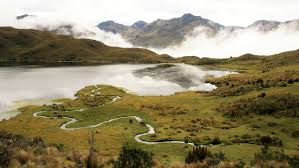
      <img src="https://www.dailycsr.com/photo/art/default/87974946-62333121.jpg?v=1744897925" alt="Reviving the Andes: Acción Andina’s Mission to Restore Ecosystems and Secure Water" title="Reviving the Andes: Acción Andina’s Mission to Restore Ecosystems and Secure Water" />
     </div>
     <div>
      <div style="text-align: justify;">While sitting high in the Andes with a local elder and chewing coca leaves, Peruvian biologist Constantino Aucca Chutas listened as his companion pointed toward a mountain known as Demon Mountain. The elder recounted how the peak, now bare, used to be blanketed in snow. He explained that Pachamama—Mother Earth—had grown frustrated with humanity and withheld snow as a result. He believed replanting trees was the only way to bring back the water desperately needed by farmers in the valleys below. <br />   <br />  As Aucca gazed at the desolate slopes, he began to envision a way to merge his scientific understanding of biodiversity with the traditional ecological wisdom of Indigenous communities to restore forests and heal the fragile mountain ecosystems. <br />   <br />  “In the era of the Inca Empire, we faced climate challenges too, but we addressed them by planting millions of trees and working together,” said Aucca, who is based in Cusco. Inspired by this legacy, he made a commitment to unite his people in a shared mission to reforest the mountains and ensure water access for all. <br />   <br />  In 2000, Aucca co-founded the Asociación Ecosistemas Andinos (ECOAN), an organization focused on restoring the High Andes. In 2018, his efforts expanded through a partnership with three other environmental leaders to launch Global Forest Generation (GFG) and the Acción Andina initiative—a bold plan to regenerate forests and secure water across the Andean region. Florent Kaiser later stepped in to lead GFG, helping to advance Aucca’s vision. <br />  Under this collaboration, ECOAN contributed its in-depth restoration expertise and grassroots leadership across the Andes, while GFG facilitated global connections, funding, and technical support to amplify local efforts. <br />   <br />  By 2025, Acción Andina had successfully planted 12 million native Polylepis trees and was working to restore one million hectares throughout the Andes—from Venezuela in the north to the Patagonian south. <br />   <br />  In 2024, the Mastercard-led Priceless Planet Coalition—dedicated to planting 100 million trees globally—expanded its efforts to include nearly 1,000 acres in Peru and Ecuador, with a goal of planting 1.1 million trees. By the end of that year, 579,306 trees had already been planted across 11 Acción Andina projects by five local partners. <br />   <br />  With 95% of native Andean forests gone and half the glaciers disappearing, the initiative is building climate resilience through a community-driven model that values Indigenous knowledge. The broader goal is to adapt this model to other regions, respecting cultural context and developing tools that benefit local communities. <br />   <br />  Today, Acción Andina’s 26 active projects have mobilized around 40,000 people. These efforts focus on planting native trees that help retain rain and glacial meltwater, reducing floods and droughts. <br />   <br />  “This isn’t just about conservation or tree planting,” Kaiser explains. “It’s a long-term mission to improve water security across the Andes by reviving degraded ecosystems.” <br />   <br />  However, gaining support from local communities wasn't easy at first. Many farmers, already burdened by climate-related hardships, were hesitant. Aucca drew on ancestral traditions—<strong>ayni</strong> and <strong>minka</strong>, principles of mutual aid—to reconnect communities with their Inca heritage. He reminded them that planting trees was their modern fight for survival. He organized large-scale planting events, where hundreds climbed the mountains to plant tens of thousands of trees in a single day, energized by music and cultural celebration. <br />   <br />  Although Polylepis trees grow slowly, each sapling planted helps direct water into the land. Despite their small size, these young trees begin forming micro-ecosystems, their mossy branches drawing in moisture and attracting wildlife. <br />   <br />  A key focus of the project remains empowering local communities. Seedlings, which cost roughly $1.50 each, are bought from community nurseries, with profits going toward local initiatives like school repairs and solar panel installations. With support from the Coalition, Acción Andina has also hosted workshops to teach water conservation techniques and implemented a drip irrigation system to assist hundreds of families in Peru. <br />   <br />  Having earned global recognition with the 2023 Earthshot Prize and designation as a U.N. World Restoration Flagship in 2024, Acción Andina is now exploring how to blend Indigenous wisdom with advanced technologies like AI and satellite imaging to find optimal tree-planting sites that protect key water sources in cities like Lima and Quito. <br />   <br />  The Priceless Planet Coalition, in collaboration with Conservation International and the World Resources Institute, is prioritizing these areas. Their goal is to safeguard water resources and carbon sinks, foster local employment, bolster fire prevention efforts, and conserve biodiversity. High Andean forests, according to the International Union for Conservation of Nature, are home to over 40 vulnerable species. <br />   <br />  Private sector involvement has proven crucial, with coalition partners offering funding and spreading awareness about the importance of community-led restoration. <br />   <br />  Kaiser highlights that Acción Andina's strength lies in its collective spirit. “What truly drives this project is community,” he says. “It’s the relationships we’ve built over time—with each other and with partners like the Priceless Planet Coalition—that have enabled us to grow beyond our dreams. Acción Andina stands as a testament to what’s possible when people unite with a shared purpose.”</div>  
     </div>
     <br style="clear:both;"/>
    ]]>
   </content>
   <link rel="alternate" href="https://www.dailycsr.com/Reviving-the-Andes-Accion-Andina-s-Mission-to-Restore-Ecosystems-and-Secure-Water_a4700.html" />
  </entry>
</feed>