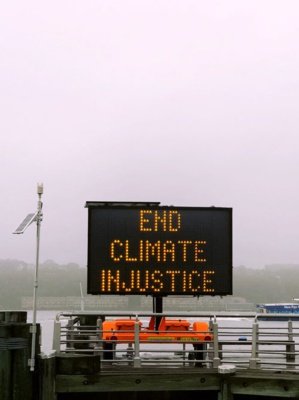
Dailycsr.com – 12 April 2019 – Jessie Arnell works at Ceres, a non-profit sustainable organisation, as a “Federal Policy and Campaigns Associate”, who wrote that irrespective of political stance, the corporate world of the U.S. is well aware of the “significant risk” imposed on the country’s economy due to the climate change phenomenon. In fact, the urgency for action is equally understood.
In the words of the Climate Change Communication’s Director at Yale Programme, Anthony Leiserowitz:
“One of the most important things that companies can do is to continue to elevate the voices that say ‘this is beyond politics’”.
Jessie agrees with Leiserowitz and exclaimed:
“Sadly, climate change has become a deeply partisan issue over the last few years, and the responses to proposals like the Green New Deal threaten to further politicize this global challenge. Businesses, however, don’t view taking action on climate as a political issue: they treat climate change as an economic risk—and an opportunity”.
Businesses from various sectors are aware of the climate change’s economic reality, while delay in taking appropriate action or “denying science” altogether is “no longer a viable economic possibility”.
Following the reports presented at fall last year, the “Intergovernmental Panel on Climate Change” issued a warning to curb the global temperature growth within “1.5 degrees Celsius” so as to “avoid dire consequences”. Moreover, the report also gave a detailed account on how the climate change is affecting the health and the economy of the country. While, Arnell added:
“Together, these reports underscore that avoiding the worst effects of climate change will require dramatically increasing the pace and scale of greenhouse gas emission reductions”.
The corporate world has been taking action in this matter through commitments and work to bring down the emissions in their “operations and across their supply chains”. Many major companies, including “Apple, Bank of America, Citigroup, Coca-Cola, Mars Incorporated, and Nike”, have pledged to source hundred percent green energy. Some companies sought “ambitious science-based targets” for emissions reduction while others poured in their money in electric vehicles.
These actions are taken not only to mitigate the looming risks but also “to take advantage of the opportunities throughout every sector of the economy”, as told by Leiserowitz. There is an accelerated move towards low carbon economy as the corporate sector regards it to be the future.
Arnell stressed on the fact that Americans consider “companies not simply as providers of a specific service, but also as partners in helping meet larger sustainability goals”. As per the findings of “Yale Program for Climate Change Communications”, said Arnell, “Americans overwhelmingly believe that policies that promote clean energy will improve economic growth and create jobs”.
Nevertheless, the existent U.S. policy fails to support the Americans’ enthusiasm. Therefore, Arnell added that companies “have a leadership role to play in sharing their sustainability stories and making the business case for addressing climate change, engaging with policymakers on both sides of the aisle”.
References:
3blmedia.com
In the words of the Climate Change Communication’s Director at Yale Programme, Anthony Leiserowitz:
“One of the most important things that companies can do is to continue to elevate the voices that say ‘this is beyond politics’”.
Jessie agrees with Leiserowitz and exclaimed:
“Sadly, climate change has become a deeply partisan issue over the last few years, and the responses to proposals like the Green New Deal threaten to further politicize this global challenge. Businesses, however, don’t view taking action on climate as a political issue: they treat climate change as an economic risk—and an opportunity”.
Businesses from various sectors are aware of the climate change’s economic reality, while delay in taking appropriate action or “denying science” altogether is “no longer a viable economic possibility”.
Following the reports presented at fall last year, the “Intergovernmental Panel on Climate Change” issued a warning to curb the global temperature growth within “1.5 degrees Celsius” so as to “avoid dire consequences”. Moreover, the report also gave a detailed account on how the climate change is affecting the health and the economy of the country. While, Arnell added:
“Together, these reports underscore that avoiding the worst effects of climate change will require dramatically increasing the pace and scale of greenhouse gas emission reductions”.
The corporate world has been taking action in this matter through commitments and work to bring down the emissions in their “operations and across their supply chains”. Many major companies, including “Apple, Bank of America, Citigroup, Coca-Cola, Mars Incorporated, and Nike”, have pledged to source hundred percent green energy. Some companies sought “ambitious science-based targets” for emissions reduction while others poured in their money in electric vehicles.
These actions are taken not only to mitigate the looming risks but also “to take advantage of the opportunities throughout every sector of the economy”, as told by Leiserowitz. There is an accelerated move towards low carbon economy as the corporate sector regards it to be the future.
Arnell stressed on the fact that Americans consider “companies not simply as providers of a specific service, but also as partners in helping meet larger sustainability goals”. As per the findings of “Yale Program for Climate Change Communications”, said Arnell, “Americans overwhelmingly believe that policies that promote clean energy will improve economic growth and create jobs”.
Nevertheless, the existent U.S. policy fails to support the Americans’ enthusiasm. Therefore, Arnell added that companies “have a leadership role to play in sharing their sustainability stories and making the business case for addressing climate change, engaging with policymakers on both sides of the aisle”.
References:
3blmedia.com
]]>
