

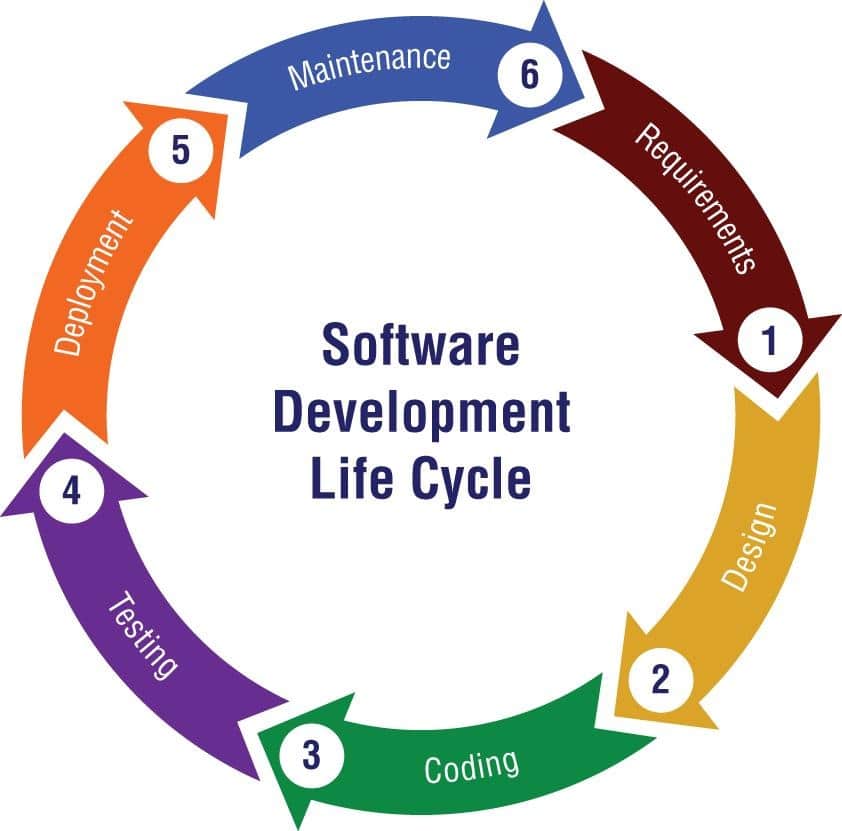
Software delivery is accelerating with the growing adoption of artificial intelligence, creating new challenges for enterprise security and compliance. Kosli has launched Control Center, a new capability designed to bring automated SDLC governance to enterprise engineering teams by evaluating software development activities against established organisational controls in real time.
The company says the new capability will help enterprises maintain security and compliance without relying on manual governance processes that can slow down software releases.
Why Automated SDLC Governance Is Becoming Important
The increasing speed of software development, particularly through AI-assisted workflows, is putting pressure on traditional approaches to software development lifecycle (SDLC) governance.
Manual reviews and compliance checks can struggle to keep pace with the volume and frequency of software changes. They can also introduce delays, encourage rushed decisions under pressure and increase the possibility of insecure or non-compliant changes reaching production environments.
Kosli argues that enterprises need a more scalable approach in which governance decisions are based on automatically collected, verifiable evidence rather than manual checks.
Its approach uses cryptographic evidence to support automated governance, with the aim of allowing engineering teams to release software faster while maintaining stronger controls.
How Kosli Control Center Automates SDLC Controls
Control Center is the latest addition to Kosli’s enterprise Governance Engineering stack. It builds on the company’s Evidence Store, which records events and activities across the software development lifecycle.
The new capability allows enterprises to take the controls already defined in their internal risk catalogues and translate their requirements into code. Kosli then evaluates evidence generated throughout the SDLC against these policies in real time.
This enables organisations to automate decisions about whether software changes satisfy their established requirements.
Compliant changes can proceed towards production deployment across thousands of live applications, while changes that fail to meet the specified controls are stopped at the relevant gate.
By connecting existing enterprise risk policies with evidence from software development activities, Control Center is intended to make governance more consistent and scalable across large engineering environments.
Audit Trails and Evidence-Based Compliance
Auditability is another important component of Control Center.
Every governance decision is recorded alongside the policy applied and the evidence used to reach that decision. This creates a traceable record that enterprises can use to reconstruct and explain why a particular software change was approved or blocked.
The approach is designed to make compliance reviews and audit processes more transparent by linking individual decisions directly to their underlying requirements and supporting evidence.
Rather than treating evidence collection and policy enforcement as separate activities, Kosli brings them together within its governance framework.
Development Informed by Enterprise Customers and Financial Institutions
Kosli developed Control Center in close collaboration with existing enterprise customers. The company also drew on its work with tier-one financial institutions participating in FINOS, where Kosli co-leads the SDLC Controls Framework Working Group.
According to the company, feedback from these customers and industry partners helped shape a governance stack intended to address the requirements of enterprise engineering teams across different sectors.
Mike Long, CEO of Kosli, highlighted the distinction between collecting software development evidence and using that information to automate governance decisions.
“It’s not uncommon for enterprise teams to build some form of evidence-gathering capability for their SDLC, but that’s only the first step to fully automated governance,” said Long.
“The real challenge is connecting that evidence with the existing controls in your enterprise catalogue. This is what really unlocks the speed and security offered by an AI-assisted SDLC, and it’s what we’ve been able to build thanks to feedback from customers and partners.”
Kosli Control Center Availability
Kosli confirmed that Control Center is already in production and available to all its enterprise customers.
The launch adds an automated policy-enforcement layer to the company’s existing SDLC evidence infrastructure. Its central proposition is to help enterprises manage software governance at scale by connecting development evidence, organisational risk controls and deployment decisions within a single framework.
As AI-assisted software development increases the pace of software delivery, solutions such as Control Center are intended to help enterprises maintain governance and compliance without making manual approval processes a bottleneck.
Click here to know more.